

NASA’s 2028 Mars Nuclear Craft Could Change Deep-Space Travel
NASA has outlined a mission called Space Reactor-1 Freedom, targeted for launch before the end of 2028, as a demonstration of advanced nuclear electric propulsion. The agency has tied the concept to longer-range exploration goals, including lunar surface systems and eventually human missions farther from Earth. In this version of Mars exploration, the destination is important, but the machinery is the real story.
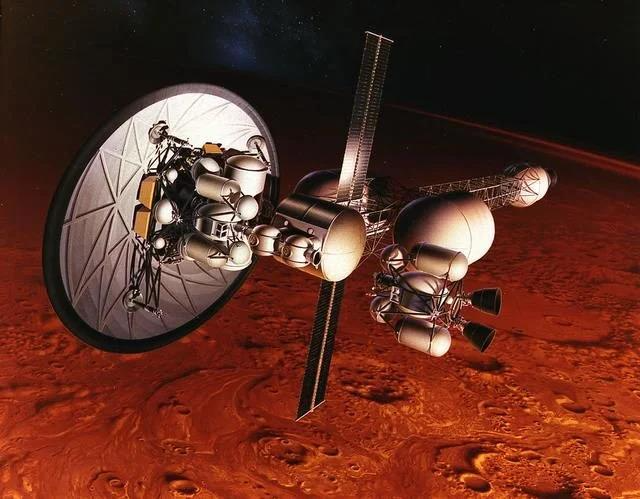
The attraction of nuclear propulsion is straightforward. Chemical propulsion delivers high thrust but burns through propellant quickly, while solar-electric systems lose practical power as missions travel farther from the sun. NASA has described nuclear electric propulsion as a system that uses a reactor to generate electricity, which then accelerates charged propellant for sustained thrust over long periods. That does not produce the dramatic push of a launch vehicle, but it can provide exceptional efficiency in space, where gradual acceleration compounds over time. NASA has also said the technology enables high-power missions beyond Jupiter, where solar arrays become far less effective. For mission designers, that opens a different class of spacecraft architecture: larger payloads, longer operating lifetimes, and more flexibility in how science equipment, power systems, and surface assets are delivered.
That efficiency comes with engineering penalties, especially heat. A reactor-driven electric spacecraft must dump large amounts of waste heat, and that requirement drives the size of its radiator system. NASA Langley’s MARVL effort has been examining how radiator hardware for nuclear electric vehicles could be assembled robotically in space, rather than forced into a single rocket fairing. The concept matters because future vehicles may need sprawling thermal-control structures that are impractical to launch fully folded.
NASA’s Mars plan also keeps the aviation thread alive. Once at Mars, Space Reactor-1 Freedom is expected to deploy helicopters inspired by Ingenuity, the small rotorcraft that completed 72 flights on Mars before damage ended operations. That gives the mission an immediate public hook, but it also serves a technical purpose: pairing a propulsion demonstration with aerial scouting tools that can cover terrain a rover cannot.
Safety remains central to any nuclear spacecraft discussion. European Space Agency work on nuclear propulsion notes that, in nuclear thermal concepts, the reactor is not activated until the spacecraft is in a safe orbit far from Earth, limiting return risk to the atmosphere. The same broad design philosophy shapes public acceptance of space nuclear systems: keep launch conditions controlled, isolate activation to space, and prove that regulation can keep pace with hardware. NASA has said the Mars demonstration would help establish that precedent while supporting future fission-based propulsion, surface power, and long-duration missions.
There is also a larger strategic reason this effort stands out. Nuclear systems are often discussed as the route to missions that solar power struggles to support, including operations in the outer solar system and extended human expeditions. NASA’s archived work on nuclear thermal propulsion framed the broader case clearly: faster trip times can reduce astronaut exposure to cosmic radiation and long periods in microgravity. Space Reactor-1 Freedom is not a crewed transport, but it sits inside that same long arc. If the spacecraft works, the headline will not just be about Mars. It will be about whether nuclear propulsion is finally moving from decades of studies into actual flight hardware.