

Why Vertical-Landing Jets Create 140-Decibel Shock Traps
“Only a tiny fraction of the jet’s energy is transformed into sound, but this small fraction has a major impact,” Professor Farrukh S. Alvi said as engineers worked on this particularly intractable problem. The challenge is an interplay between propulsion systems, fluid dynamics, and flight operations.

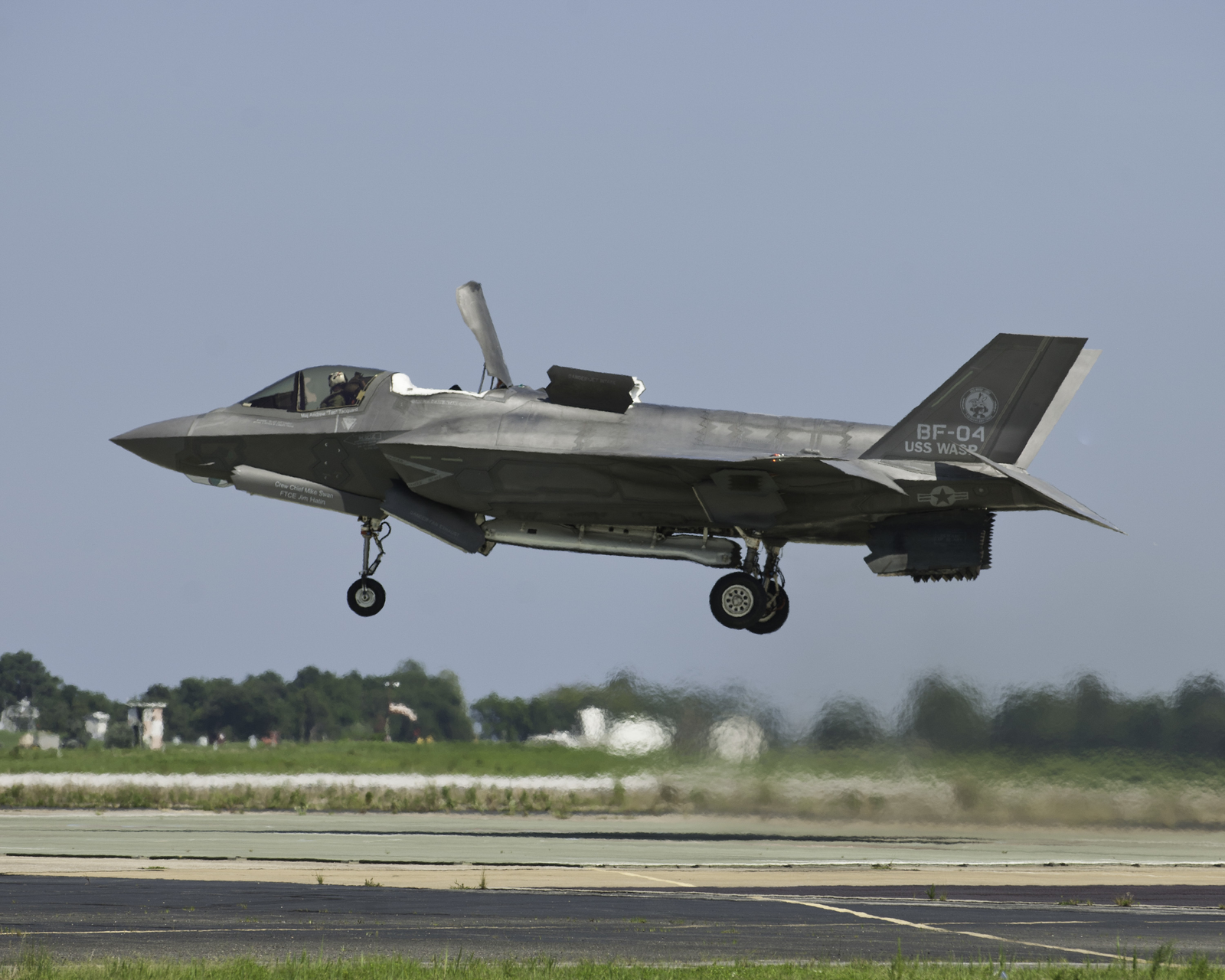
The STOVL aircraft gives the military unique basing capabilities in the field, especially in areas where it is not feasible to build a runway. The operational flexibility of the STOVL aircraft is balanced by the significant drawback of the extreme acoustic field generated by the meeting of the exhaust plume and the ground. The extreme acoustic field has the potential to create a feedback loop resulting in an acoustic field greater than 140 decibels. The level of acoustic energy is associated with hearing damage and fatigue as well as pressure effects on the aircraft.
The latest research conducted by the Florida State University FAMU-FSU College of Engineering and the Florida Center for Advanced Aero-Propulsion is not as significant from an overall research standpoint as it is in regard to the greater contribution given by the research team in regard to identifying an operational constraint. In regard to testing the operational constraints, the researchers conducted a Mach 1.5 jet test where they simulated the landing flow environment. The researchers then observed the pressure field in real-time using high-speed imaging and microphone equipment. The research was published in the Journal of Fluid Mechanics.
The major discovery is an interesting correction of presumptions that were made in the past. It was assumed that the speed of the large turbulent structures in the plume was the major factor in the pitch of the noise produced by the aircraft. However, it has now been determined that the acoustic standing waves between the aircraft and the ground are much more important in the control of the pitch of the noise, while the size and speed of the flow disturbances control the level of the noise produced by the aircraft. According to Myungjun Song, the lead author of the study, “found that these acoustic standing waves are much more important in determining the pitch, while the size and speed of the disturbances decide the level or ‘loudness’ of the noise produced.” This is significant.
Now that the pitch and level of the noise produced by the aircraft have been determined to be two parts of the same event in the instability, it has become much easier for the engineers to control the event in the design of the aircraft, including the changes in the nozzle, the height of the hover, the shape of the landing pad, and the procedures that are followed in the landing so that the resonance of the sound produced by the aircraft would be less likely to happen. This is significant in the aircraft that has already reached the limits of thermal, structural, and control stability.
The overall aerodynamics involved in this situation also offer some explanation for the difficulties in controlling this situation. In supersonic flight, changes in pressure in the airflow ahead of an aircraft are not smooth changes but compress into shock waves with sudden changes in pressure, density, and temperature. When the aircraft’s exhaust is deflected by the ground and hits back onto the aircraft, it is not just an interaction between the aircraft and its own exhaust gases. It is an interaction between the aircraft and an acoustic cavity. The landing pad becomes part of the propulsion system.
This explains why the results of the present research have implications beyond a specific type of aircraft. Vertical lift combat aircraft, future distributed basing concepts, and future naval operations all demand good performance in confined spaces. The cleaner the industry can make the last seconds before touchdown, the more usable supersonic-capable vertical flight will be.