

India’s ERSS to Gain AI-Driven Drone Swarm Integration Under ideaForge–C-DAC Pact

The issue of how to shave precious minutes off emergency response times in the Indian context may have a high-tech solution knocking on the doors. A memorandum of understanding has been signed between ideaForge Technology Limited and the Centre for the Development of Advanced Computing (C-DAC), paving the way for the integration of ideaForge’s FLYGHT drone network across the country and the ERSS Dial 112 emergency response support system of C-DAC. While the integration of the two will aim to automate distribution of drones to police, fire, and medical emergencies, it also seeks to jointly develop “next generation UAV flight control, swarm control, and data analytics solutions.”
1. Linking FLYGHT’s Drone-as-a-Service Model to ERSS
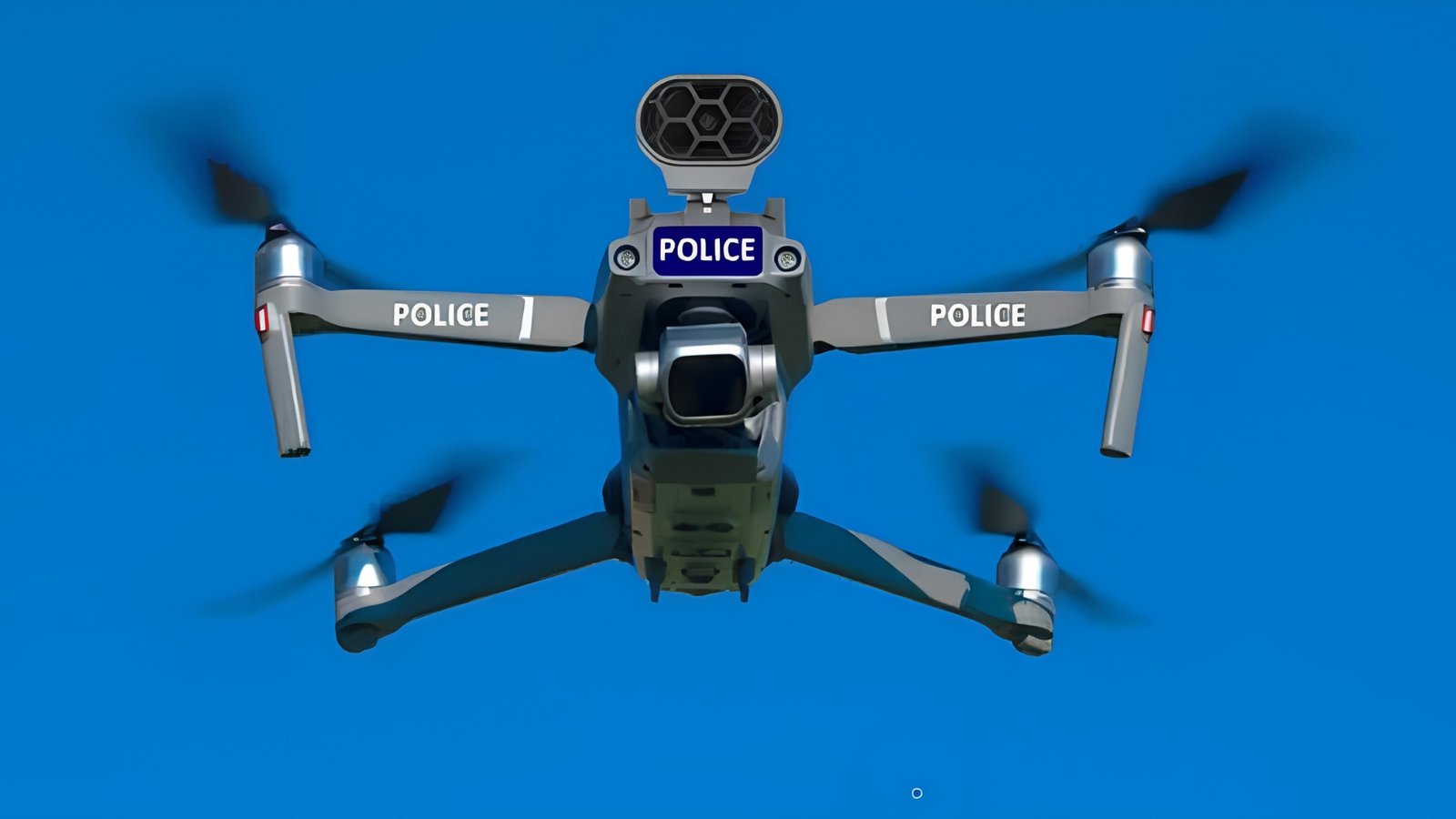
The FLYGHT solution functions on the pay-per-use business model and allows public safety organizations to have the benefit of aerial support without the need to invest in hardware and software or train their own pilots. This means there will be no capital expenditure hurdle to scaling the solution; also, response will occur by drones within minutes of an emergency call irrespective of traffic or difficult terrain. This will help the average response time for emergencies in India close to 20 minutes substantially decrease.
2. Operational Scope Outside of Emergencies
FLYGHT’s applications already cover traffic monitoring, sanitation inspection, security of assets and infrastructure, urban disaster assessment, and mapping. Extending into mission-critical incidents with the integration with the ERSS includes such uses. This has already found its application in avoiding duplication of efforts or entering danger zones, as has been indicated in the frameworks for drone use in public safety.
3. VEGA Processor and Indigenous Flight Control SoCs
“One of the major research activities under the MoU is the assessment of the indigenous VEGA processor developed by C-DAC for incorporation in the ideaForge UAVs. The parties involved in the MoU have plans to explore system on-chip designs for flight controls targeting the Atmanirbhar Bharat mission in India. This approach is expected to ensure minimal dependence on foreign chip technology while facilitating the integration of hardware with the AI control system.”
4. AI Enabled Autonomous Swarm Drones
Joint research will also investigate autonomous swarm drone technology. “Swarm” technology, in which a number of UAVs work in a coordinated, decentralized manner, has proved to be a transformative area in disaster response. With their arrays of sensors ranging from thermal imaging through GPS to chemical sensors, swarms are able to survey a wide area fast and dynamically adjust when conditions change and can heal their ranks if members fail through redundancy. Machine learning can be incorporated to enable these swarms to provide optimal search paths, locate survivors, and transmit multi-modal information in real time.
5. Real-Time Situational Awareness, Data Sovereignty
C-DAC is stressing that the partnership is aimed at supporting frameworks that are able to process, analyze, and safeguard drone data. In India, it is a move that serves the policies aimed at having a secured digital infrastructure, including processing and analyzing imagery and telemetry that is relevant within the country’s jurisdiction. Real-time situational awareness, as seen in the SARCOP system, provides decision-makers with information that is eight seconds old compared to previous information.
6. Public Safety Coordination Benefits
The integration of aerial intelligence into the operational processes of ERSS may improve joint responses from police, fire, health, and utilities during emergencies. The joint operational views enable quick detection of potential dangers, like flood areas or building instability, thereby eliminating inefficient resource deployments. This is based on best practices derived from a GIS crossdepartmental integration, where it was found that each department already had suitable resources to leverage.
7. Future Applications in Firefighting and Urban Safety
Apart from rescue missions, AI-enabled drones may carry firefighting payloads for tower and distant fires. Owing to predictive models for fires and GIS mapping, authorities could forecast potential hazards even before ignition. For Indian cities that are rapidly urbanizing and experiencing exponentially increased fire risks, this is not an innovative but an imperative measure for enhanced fire-resilient building designs.
8. Ethical and Regulatory Considerations
Although it has great speed and precision capabilities, the application raises certain concerns regarding both its privacy and accountability aspects. These actions of high-resolution sweeps conducted in emergencies often tend to produce equally high-resolution imaging, which calls for extreme care on the aspect of data minimization. The application should be subject to certain legal standards on consent, retention, or interAgency sharing. The autonomous swarm decisions on prioritizing targets to rescue should be subject to human control to be justified on ethical grounds. The coming together of ideaForge and C-DAC is expected to throw India a technological lifeline, propelling it forward as it utilizes its hardware advancements along with Artificial Intelligence-based autonomy. By integrating drones into the country’s ERSS, it is poised to set new standards for itself regarding the pace and efficacy of its response when it comes to emergencies.