

Bezos vs. Musk: The High-Stakes Race for AI Data Centers in Orbit

The question asked years ago, considered only in the realm of sci-fi, “Will the future of AI be constructed in space?” is now the central theme of a competition being waged by two men: Jeff Bezos, the founder of Amazon, and Elon Musk, the pioneer behind PayPal, Tesla Motors, and SpaceX. Their existing rivalry, already the stuff of legends, has entered a new domain: the development of orbital data centers for AI.
1. The New Battleground
Bezos’ Blue Origin has been quietly working on technology for hosting AI compute clusters for over a year now in orbit. Musk’s SpaceX is developing enhanced Starlink satellites with the potential to bear AI payloads and is lining up the satellites as part of an overall plan that could see the company’s market value hit $1 trillion. Both companies view data centers in orbit as the way out for the limitations on Earth that are restraining the development of AI—in other words, lack of land and cooling.
2. Energy Strain Pushing the Energy Transition
AI data centers are massive power devourers. In 2024, AI data centers in the U.S. did 183 TWh of energy, more than 4% of total energy. This could increase to 426 TWh by 2030. Gigantic AI data centers devour as much energy as 100,000 homes per year, and bigger ones devour twenty times more energy. Already, localized AI data centers have impacted local energy supplies—26% was supplied by AI data centers in 2023 in Virginia’s energy needs. AI data centers are going to benefit significantly from orbital technology and unlimited solar power.
3. Bezos’ Solar Vision
“In 10 to 20 years, I see us having gigawatt-sized computing facilities in space, where solar power is available 24/7.” A “giant machine learning compute cluster” would “be better made in space, where we have access to solar power 24/7. There are no clouds or rain, so there is no weather.” “In fact, solar power in sun-synchronous orbit can produce eight times as much as it can on Earth because it won’t be intermittant.” “In 10 to 20 years, I see us having gigawatt-sized computing facilities in space, where solar power is available 24/7.”
4. Musk’s Starlink Advantage
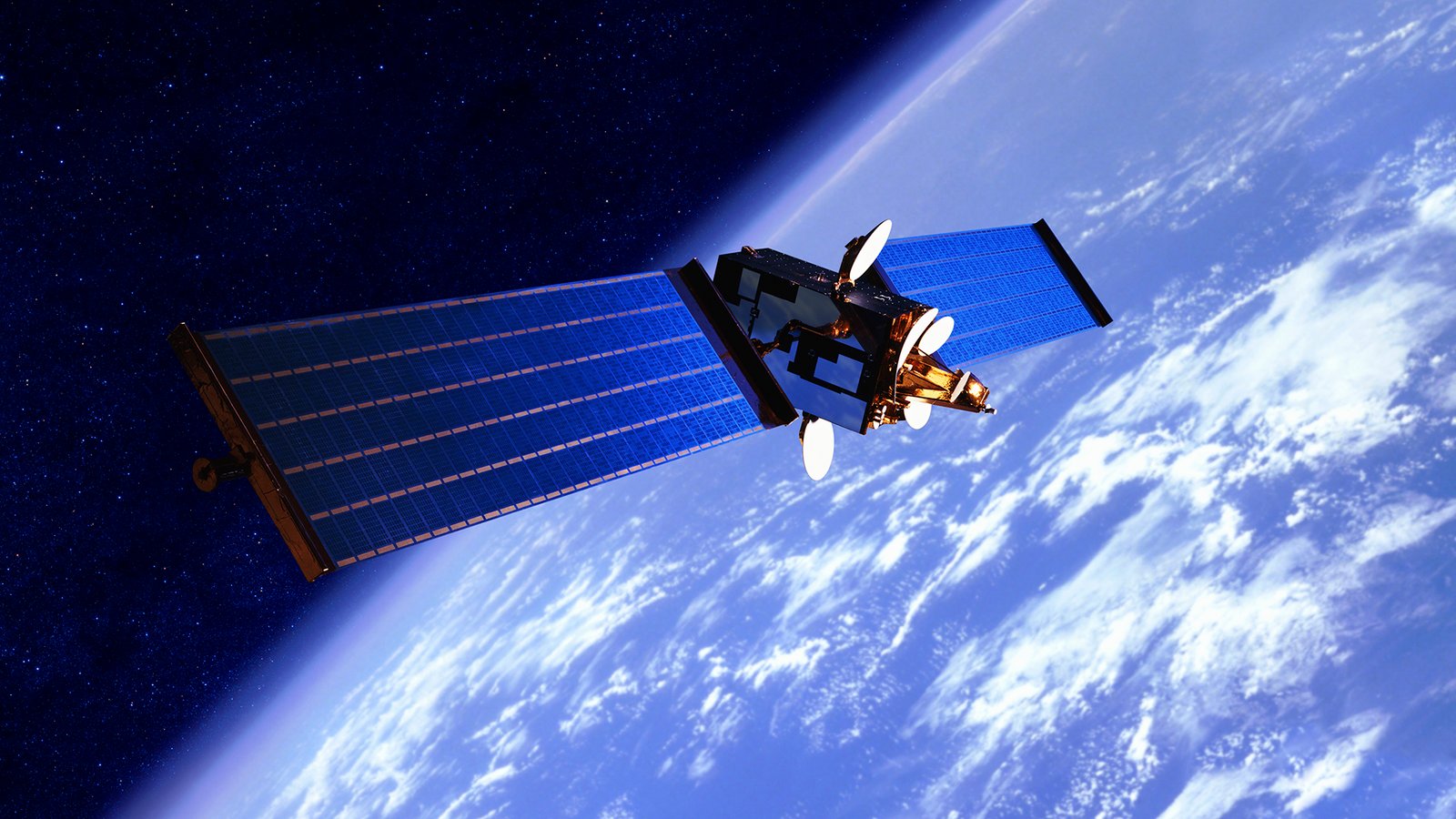
While companies like Google and others are working on the prototypes, SpaceX has an already operating global communication mesh consisting of its Starlink satellites with a total of 7,600 satellites and an average latency of 25.7 ms and an aggregated throughput of 450 Tbps. Its upcoming V3 satellites will support downlinks greater than 1 Tbps and will enable the onboard edge computers and AI inference capabilities. Regarding the orbital data centers, the communication infrastructure doesn’t have to be rebuilt from scratch due to the high-bandwidth backbone provided by the Starlink network.
5. Technical Challenges
Radiation, thermal, and maintenance budgets remain tough challenges. The hardware is exposed to cosmic rays all the time. This leads to degradation of the chips. Cooling is even more challenging since there is no air, and the only method of removing the heat is by radiation. According to NASA, the power of the radiator can contribute more than 40% of the spacecraft power system’s mass. Maintainability is another challenge since repairs of hardware in space are not easy.
6. Proof-of-Concept Missions
Google’s Project Suncatcher will launch two satellite prototypes in 2027 to evaluate the TPU accelerators for resistance to radiation and heat transfer as well as optical networking in space. In laboratory testing, TPUs were probed with proton beams to simulate five years in space; the TPU could withstand levels of radiation almost three times stronger than what would normally be needed for the mission. The Nvidia-supported Starcloud satellite previously used an H100 GPU to train an AI model in orbit, the first time any large language model had been executed with one in space.
7. Economics of Orbit
Traditionally, the cost of launching satellites and hence the cost of orbital computing had been prohibitively expensive. SpaceX’s Starship, fully reusable, expects the cost of accessing space to go below $200 per kilogram by the mid-2030s, a 7.5x reduction from the cost of the Falcon Heavy launch service and sufficiently low for orbital data centers. Moreover, Starship’s weight capacity will allow large computing clusters and not just lab-scale projects.
8. Environmental and Strategic Appeal
Orbital data centers would be able to reduce the demand for energy on Earth, the consumption of water for cooling, and the release of greenhouse gases. There is also its strategic importance: access to intelligence in real time from space, quick detection of disasters, and secure military communications. For instance, the star cloud network is capable of detecting the heat trace of a wildfire the instant it is kindled.
9. Risks and Rivalry
There are risks associated with space debris, regulations, and the governance of data, according to analysts. There are also cybersecurity risks associated with the integrated satellite and ground systems networks. Nevertheless, the rivalry between Bezos and Elon Musk could prove to be the catalyst for innovation with both trying to control a trillion dollar industry in the space economy. McKinsey forecast the space industry to be a $1.8 trillion industry by 2035. “The competition to establish AI data centers in orbit is now from speculation to reality,” with this mission being pursued by “two of the most visionary entrepreneurs of this century so far,” writes Nathan M. White, depending on “overcoming seemingly insurmountable physics-based engineering challenges, reducing launch costs dramatically, and demonstrating successful compute in orbit with resulting benefits in both economics and sustainability.” Until this happens, “the clock is ticking.”