


Ultra-Light LYNX Payload Boosts UAV Endurance and ISR Precision
When it comes to UAV’s, every gram counts—and the new LYNX payload from Gremsy is a strong statement that going small can indeed open up new mission opportunities. LYNX is the first-ever spherical payload in its size class, according to the manufacturer, offering operators extended flight time and imagery performance that is unmatched. There has been a long-standing industry need for lighter, smarter, and more versatile mission equipment.
Gremsy’s R&D Manager, Mr. Tu Do, emphasized the key consideration behind this product’s development: “The mission performance and endurance values have always been amongst the highest priorities for mission accomplishment. We have always had the vision to provide our customers with highly adaptable and versatile payload solutions addressing their latest ever-evolving demands and requirements.” The result of this vision has been the creation of a payload weighing as low as 190 grams, as compliant with the NDAA regulations, and 235 grams maximum, with regards to its size, not exceeding an egg’s size, thereby ensuring extended UAV mission times and allowing customers to cover increased mission areas and remain ‘stationary for longer durations.’
These durability improvements also reflect the industry trend to optimize the use of UAVs. Just as the miniaturized EO/IR sensors of the WESCAM MX-8D reduced the size of the platform without compromising the ability to employ multiple sensors, the LYNX takes advantage of size reduction to provide operational effectiveness. The LYNX also comes with an IP54 rating to withstand dust and weather in the environment of operation.
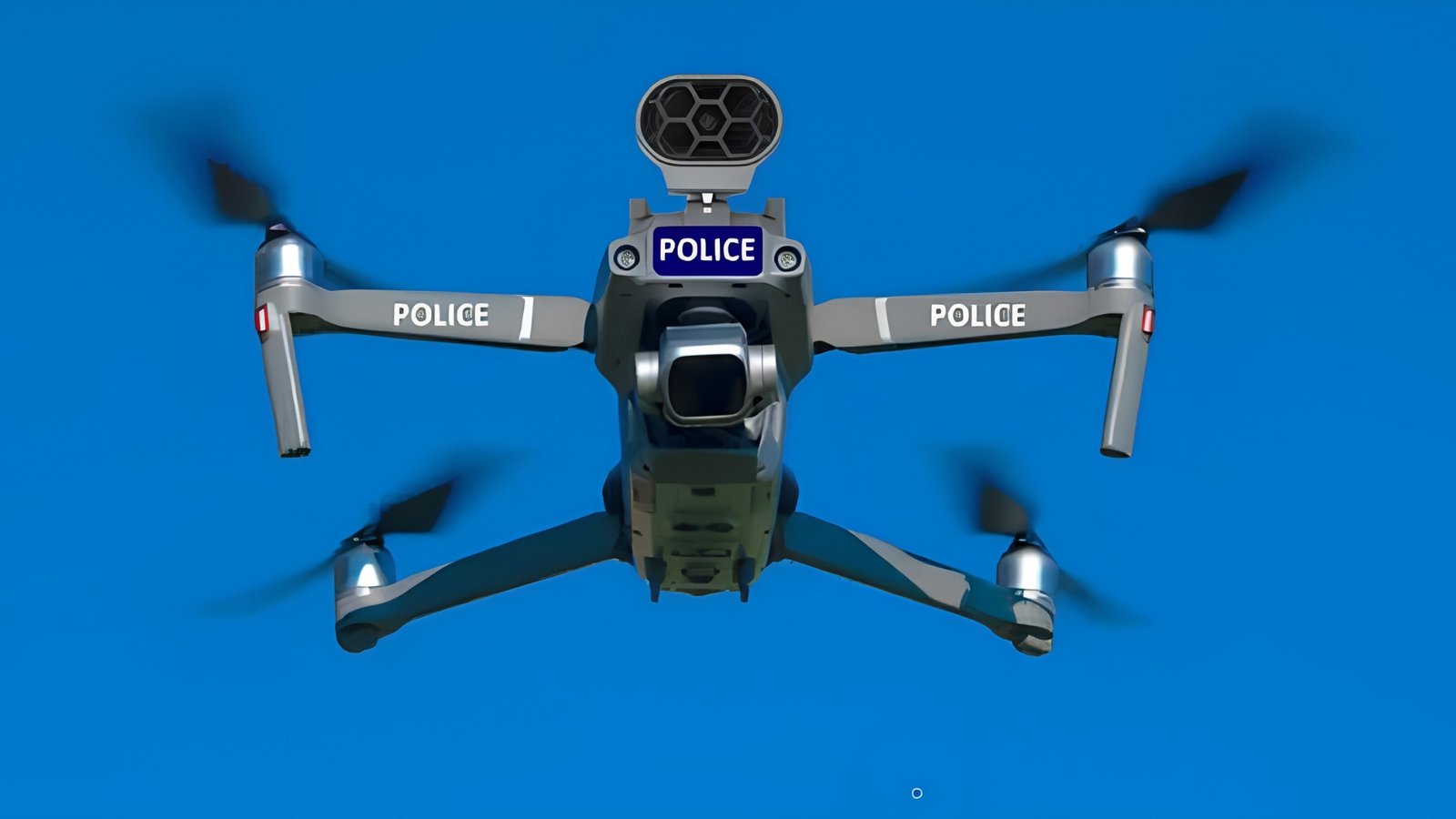
LYNX’s dual-spectrum capability is also one of its main attractions. This is because its payload has been integrated with EO-IR sensors, 4K and 60fps HDR video cameras, and AI-based autonomous detection and tracking capabilities. Its enhanced night and low-light capabilities give its users the capability to collect clear and useful images in night or low-light settings, which is important for surveillance and missions involving search and rescue and responding to tactical situations. In a public safety setting, LYNX is expected to provide similar benefits as those attained by Drone-First Responder (DFR). These drone-based initiatives have seen an average reduction of up to 24% in incidents that did not require deployment by ground responders.
The flexibility to integrate the LYNX offers UAV community professionals and ISR professionals the ability to seamlessly fit the system into any platform without the need for technical retrofits. This makes the LYNX useful in any mission from inspection to surveillance beyond borders, in instances that require compact systems to perform without limits in terms of range. The LYNX is ideal for high-shear environments in public safety due to its compactness and rapid deployability abilities.
The AI-aided track of the payload can be likened to technological developments regarding automatic video-tracking found within prominent EO/IR sensors that can conduct multiple target tracking simultaneously. This goes a great way in lessening the burden on the operator while ensuring enhanced mission success, especially within challenging city or multi-threat scenarios. Coupled with LYNX’s support in boosted UAV endurances, this permits UAV teams to continuously observe developing situations without constantly redeploying them.
Gremsy’s approach can also be related to agencies that are spending on counter UAS preparedness. The increasing threat posed by malicious use of drones has led public safety buyers to begin incorporating ISR mission payloads that can detect and recognize aerial threats and contribute to intelligence efforts. The imaging resolution and night vision offered by LYNX can enhance these efforts and allow for proper recognition of potential hazards. When it comes to high-risk ISR missions, where the ability to reach high-risk or covert observation points is the difference between success and failure, the small size of the LYNX UAV series presents opportunities that were not possible due to size and weight constraints. Operators can now fly smaller UAVs into tighter spaces, loiter for longer periods, and gather high-quality intel while not sacrificing mobility or the ability to quickly extract in case of an incident.