


Saab’s AI-Built, 3D-Printed Fuselage Signals Software-Like Hardware Evolution

It’s often said that “the slowest part in a fighter jet is the factory that built it.” Saab’s newest reveal will make that adage extinct. In what could be termed the cross between aerospace engineering and accelerated agile software development, Saab, the Swedish aerospace and defense company, has designed the world’s first aircraft fuselage using AI and 3D printing, and it shall be flight-ready by 2026.
1. From Gripen E’s Digital DNA to a Printed Airframe
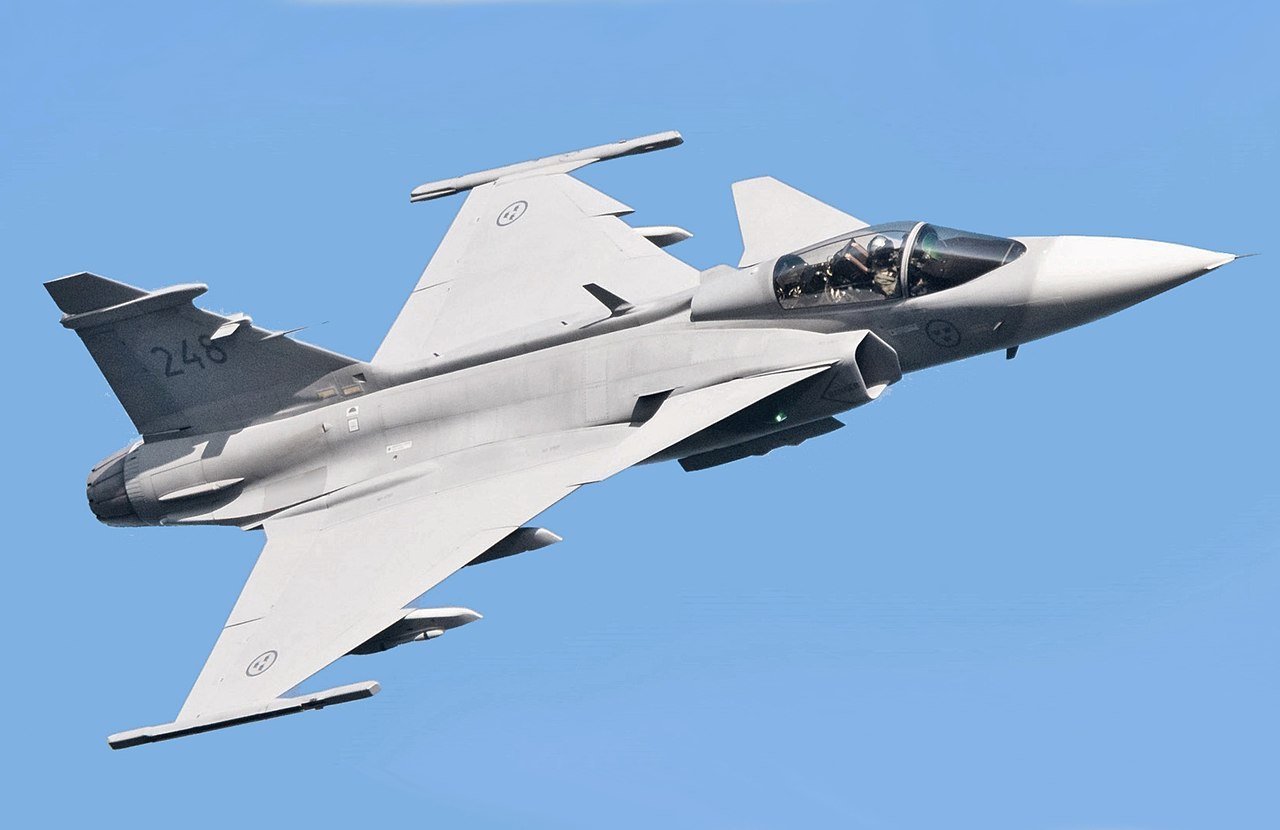
This was an innovation whose roots lay with the Gripen E program, the implementation of MBE, and an integrated digital twin for aeronautical and vehicle control systems by Saab. All disciplines could collaborate on a common, highly detailed model that allowed simulation, rapid trade analysis, and detailed integration before production. From paper plans came a comprehensive 3D digital definition with an identifiable avionics architecture, separating flight and mission-critical software, down to hardware independence. According to Saab, Gripen E is “the first production fighter aircraft ever to have an AI agent on board, running on standard avionics computers.” It was a radical question: can innovations on the software side have similar developments on the hardware side at a comparative rate?
2. Rainforest and Birth of Software-Defined Hardware
Inside Saab’s Rainforest innovation unit, engineers began exploring how to integrate MBE and additive manufacturing as a means to “Software-Defined Hardware Manufacturing.” As Axel Bååthe, the head of Saab’s Rainforest organization, described, “How do we give them the same level of software flexibility, but for actual hardware?” The fact that traditional manufacturing relied on specialized tools, molds, and jigs was precisely the problem.
3. Collaboration with Divergent’s Adaptive Production System
The solution was enabled by Divergent Technologies’ Divergent Adaptive Production System, DAPS™, an AI-powered, laser powder-bed additive manufacturing and fixtureless robotic assembly solution. A collaboration between Saab and Divergent produced a five-meter aircraft fuselage using a mere 26 printed metal components. This constituted one of the world’s largest additive components ever produced and prepared for powered flight. “It’s impossible for a human to design these components,” Bååthe said. “Artificial intelligence-created organic shapes comply with optimal paths instead, eliminating ribs, spars, and stringers.”
4. Structural Integration and Part Count Collapse
The aircraft body reduces components by 100 times compared to traditional methods, which eliminates thousands of rivets. The idea of function integration works in a very revolutionary manner because wiring conduit paths, thermal transport paths, and hydraulic routings are put directly into the structure. It aligns with the emergence of designs for aircraft structure made possible by AI algorithms that target weight, strength, and manufacturability.
5. Digital Twins as the Factory Operating System
The aircraft structure represents more than a manufactured product; it represents a showcase for Saab’s notion of a flexible, digital twin-based factory. “Saab’s future production factory will be our most critical product, and we will adapt it instantly to build whatever our common digital twin defines,” Bååthe added. Saab innovates here with a notion that parallels next-gen aerospace digital factories that may adapt production lines on a design changeover within seconds and turn “CAD in the Morning, Fly in the Afternoon” from an advertising slogan into fact.
6. Implications for Future Fighters and Unmanned Systems
Although Saab has not associated the aircraft structure with a particular manned fighter, it seems that there are meaningful implications here. Software-defined hardware might make it possible to develop very rapid versions of structural changes, mission-variant unmanned aircraft, and mid-life redesigns that are not prohibitively expensive.
7. Certification and Changes in Regulations Coming
The aircraft of 2026 will be a defining project for certification as a primary additive structure. So far, 3-D printing within aviation has been mostly confined to parts not critical from a safety perspective. A successful demonstration project could prompt regulators to create new models for inspection and certification, capitalizing on the traceability and predictively assured nature of digital twin analysis.
8. Strategic Context: Speed as a Weapon
Contemporary warfare and the advent of autonomous technologies proved that adaptability could be an equalizer and sometimes even a better performer in terms of warfare capability. Saab’s strategy clearly addresses this-to make flying machines as modifiable as software designed for them.
According to Lukas Czinger, Divergent’s CEO, “this partnership has been able to move at a speed and with an adaptability and structure that traditional partnerships can’t.” Should 2026’s test flight prove successful with regards to both structural integrity and production model, Saab and Divergent would have shown not only a new method for airplane production but a new philosophy for aerospace hardware, which develops at a software rate.