


America’s Waste Could Become Its Rare Earth Lifeline
What if the materials holding up advanced manufacturing were already sitting in landfills, ash ponds, scrapyards, and old mine waste? That question matters because rare earths are not optional inputs anymore. They sit inside phones, electric motors, wind turbines, fiber optics, medical equipment, and high-performance defense systems. The bottleneck has never been simple geological scarcity. It has been the difficulty of concentrating, separating, and purifying a chemically stubborn family of 17 elements at industrial scale. That is why the United States, despite having resources in the ground, still faces supply pressure in a market where 85% of processing remains concentrated in China.

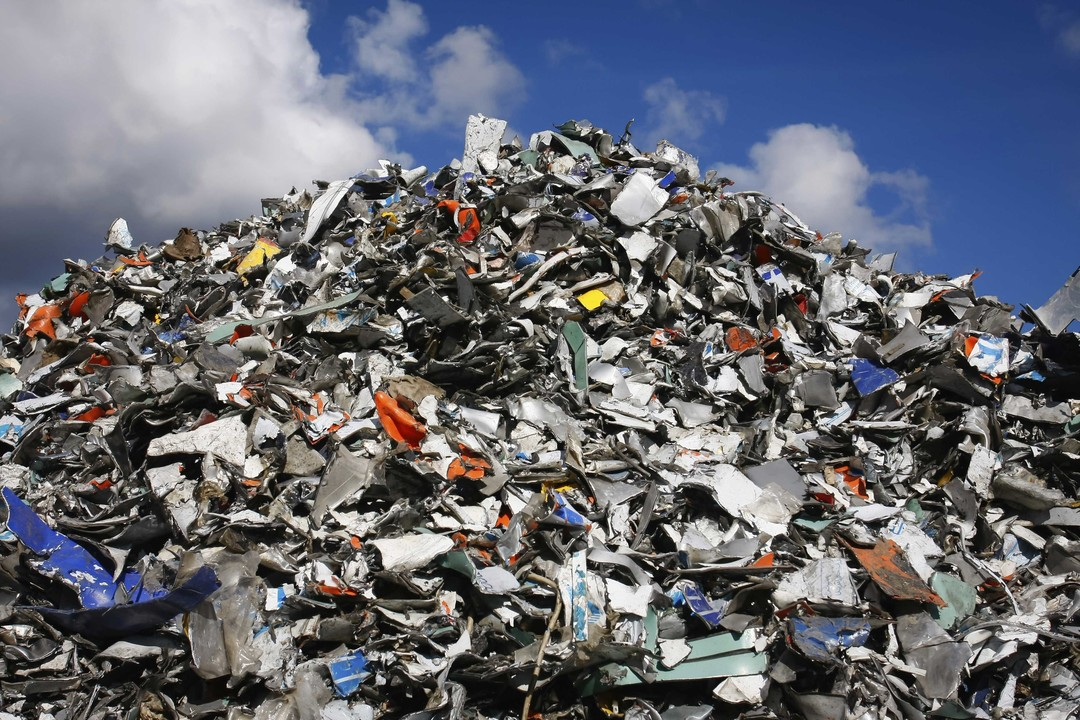
The more provocative shift is that researchers and manufacturers are increasingly treating waste as ore. Julie Klinger of the University of Wisconsin–Madison has argued that decades of disposal created a stockpile hidden in plain sight, noting that less than 1% of consumed rare earths are recycled. In practical terms, that stockpile includes discarded electronics, permanent magnets from retired motors, fluorescent lighting waste from an earlier era, mine tailings, coal ash, red mud from aluminum refining, and even acidic industrial wastewater.
Some of the strongest near-term opportunities are the least glamorous. Coal ash and bauxite residue exist in enormous volumes, and combustion or refining often leaves rare earths more concentrated than they were in raw material. Researchers at the University of Texas have estimated $8.4 billion in rare earths in U.S. coal ash piles, while the U.S. Geological Survey has noted that annual fly ash output plus stored ash together form a substantial potential resource. The appeal is obvious: the material is already dug up, already crushed, and often already sitting in managed waste sites. That can reduce energy, water, and land disturbance compared with opening a new mine, though separation and purification remain difficult.
Electronics are another overlooked reservoir. Oak Ridge National Laboratory researchers demonstrated a membrane-based extraction process that recovered high-purity rare earth oxides from scrap permanent magnets with yields as high as 95% and purity up to 99%. Apple and MP Materials are also building a more direct industrial loop around magnets, pairing device disassembly with refining and remanufacturing in California and Texas. The point is less about any single gadget than about restoring magnet material to domestic production without repeating the full mining chain.
Newer approaches are pushing even further beyond conventional chemistry. A University of Texas startup, Supra Elemental Recovery, is commercializing a 3D-printed porous cartridge designed to recover critical minerals from mine tailings, industrial byproducts, and e-waste. At UC Davis, an ARPA-E-backed team is engineering microbes to capture rare earths from acidic wastewater streams. Other groups are testing flash joule heating, mild-acid leaching, supercritical CO2, and even fungi-based “mycomining” as ways to turn diffuse waste into usable feedstock.
The obstacle is no longer identifying where rare earths are. It is proving which recovery systems can operate cheaply, cleanly, and continuously enough to matter. Federal support reflects that transition from theory to scale, with the Energy Department offering up to $134 million for projects recovering rare earths from discarded electronics, mine tailings, and other waste streams.
If that scale arrives, the strategic effect is larger than recycling. It would turn old waste liabilities into feedstocks, reduce dependence on imported processing, and move rare earth supply closer to a circular manufacturing model. America’s most important untapped mineral reserve may not be underground at all.