

AIAA Volunteer Leaders Drive Grassroots Aerospace Growth and Strategic Vision
“Dynamic local communities are the core of AIAA member engagement.” With that, AIAA Executive Vice President Angelo Iasiello framed a day in Las Vegas where more than 40 volunteer leaders from the United States and Australia convened for the 2025 AIAA Regional Leadership Conference. Held just prior to the AIAA AVIATION Forum and ASC.
AIAA CEO Clay Mowry opened the conference by affirming that “our local sections and student branches are where the action happens,” emphasizing that volunteer leaders are not merely participants but architects of the organization’s future. The event provided a platform for exchanging best practices that would enable attendees to strengthen their regional aerospace communities through shared experience and collaborative planning.
Strategic updates featured as the core part of the agenda. Leaders discussed the plan for the implementation of AIAA’s new logo and branding, a move meant to unify the Institute’s visual identity and reinforce its presence around the world. Similarly, upcoming events were discussed in detail, aligning local activities with the Institute’s broader organizational direction. This ensures that grassroots activities contribute to national and international aerospace priorities, from advocacy to education.
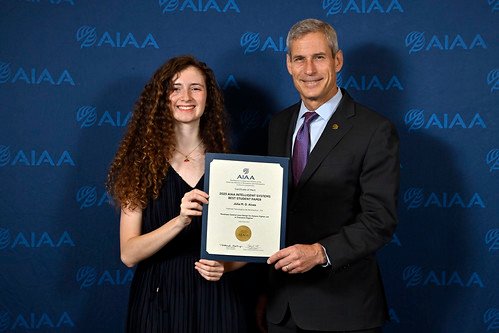
Another highlight was recognition. Annual AIAA Section Awards recognized sections whose activities best exemplified excellence in the fulfillment of the Institute’s mission. With 58 sections worldwide, these awards underlined the diversity and vitality of local engagement. Such recognition not only celebrates achievement but also motivates sections to extend their impact, fostering a culture of continuous improvement.
The benefits of AIAA volunteering go far beyond service to the organization. In developing professional growth perspectives, volunteering has been called an incubator for leadership, sharpening decision-making skills and expanding collaboration competencies. These opportunities mean a great deal to aerospace professionals, offering career-rewarding experiences such as strategic thinking, managing projects, and leading teams. These are competencies no less valued in industry and government than within the Institute’s volunteer structure.
The volunteer leadership is very important for maintaining the aerospace pipeline. The local sections provide an avenue to start engaging students and early-career professionals by helping to foster the next generation of engineers, scientists, and innovators. Outreach activities may be similar to those described under STEM organization leadership practices, including hosting technical talks, organizing hands-on workshops, or teaming with schools to promote education in aerospace. These activities help to inspire young minds and bind the community together so that aerospace remains relevant and accessible.
The Las Vegas conference also reflected some key principles lying at the heart of highly effective volunteer organizations: clearly articulating vision, providing resources, and acknowledging contributions. Leaders talked about how to “create, build, and activate section potential,” and much of the discussion centered on how to tap local enthusiasm for aerospace and convert it into long-term involvement. This reflects time-tested best practices in volunteer management, where clarity, trust, and predictable support are key to sustaining highly valued contributors.
This is reinforced by the role that AIAA plays in the broader aerospace ecosystem: spanning industry, government, and academia, the membership contributes upwards of and represents 2.21 million professionals worldwide. AIAA develops local leaders through events and programs, thereby ensuring that the Institute’s influence stretches from the halls of Congress to university classrooms, and from research labs out into the community. All of these activities are amplified through AIAA’s director of Communications, Rebecca Gray, who leads the Institute’s brand voice to “ignite and celebrate aerospace ingenuity and its importance to our way of life.”
The work she does lets stories such as those of volunteer leaders and their communities be told on a wide platform and further cements the importance of grassroots engagement in the future shaping of aerospace. As the conference came to a close, Clay Mowry’s words still echoed: “Thank you for your dedication to the aerospace community. We can’t wait to see the impact of your leadership on the Institute in the next year.” To the volunteer leaders present, the message was clear: local action, strategic vision, and professional growth are inseparable in the mission of moving aerospace forward.