

TUSA? Advances ANKA-III UCAV Toward Operational Readiness
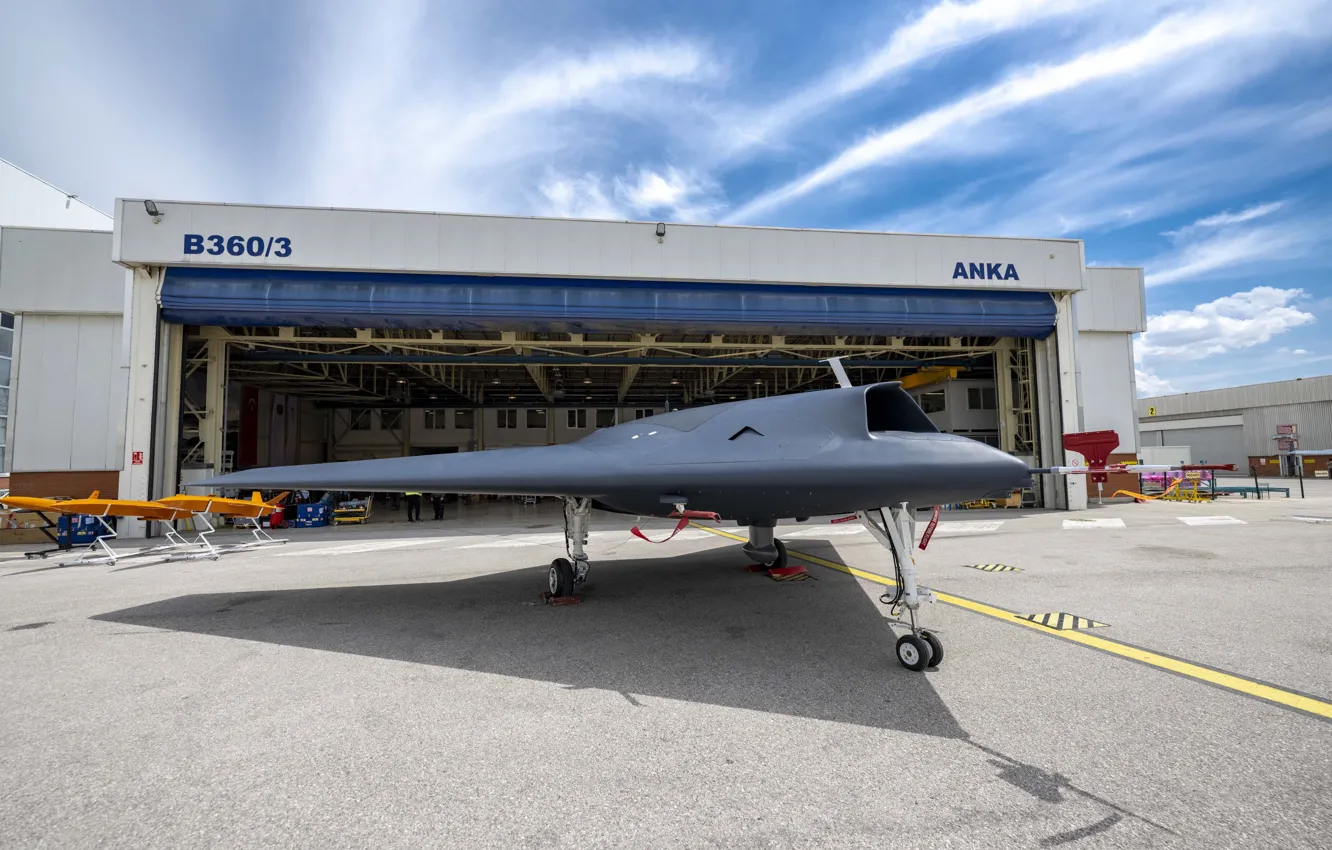
Developed entirely with internal resources by Turkish Aerospace Industries (TUSA?), the ANKA-III unmanned combat aerial vehicle represents a significant step in the nation’s next-generation UAV capabilities. Approximately 200 engineers have been engaged in the program, which began to take visible shape in mid-2022. The first flight of a scale model occurred in June 2022, marking an early milestone in the development cycle. The designation ANKA-III was publicly revealed in December 2022 by Vice President Fuat Oktay, signaling the program’s transition from internal development to national attention.

The airframe made its public debut on May 1, 2023, during the “Century of the Future” event at TUSA?’s Kahramankazan facilities near Ankara. This unveiling provided the first opportunity for the public and invited officials to view the full-scale platform. On the sidelines of the event, detailed program insights were shared by Ömer Y?ld?z, Deputy General Manager for Unmanned Aerial Vehicles at TUSA?, and Nevzat Polat, Systems Engineering Manager in the UAV Office. Both emphasized the pace of development and the integration of advanced systems.
High-speed taxi tests were scheduled to begin on May 2, 2023, following the release of initial taxi imagery on April 25. The rapid readiness for these trials—achieved within a week—was attributed to the maturity of the autopilot software and the ground systems. The first flight was targeted for the second week of May 2023, with a structured expansion of the flight envelope planned thereafter. This phased approach would allow engineers to progressively validate aerodynamic performance, control laws, and system reliability before moving to more complex mission profiles.
Weapon integration tests were slated to take place within 2023, underscoring the program’s intent to field a fully operational combat platform rather than a technology demonstrator. According to Y?ld?z, the Turkish Air Force has already provided feedback after evaluating the ANKA-III, resulting in a set of requested modifications. These changes will be incorporated in close coordination with the service, ensuring that the final configuration aligns with operational requirements.
From a technical perspective, the ANKA-III’s development reflects a broader trend in unmanned systems toward higher survivability and multi-role capability. While specific performance figures were not disclosed, the platform’s configuration suggests an emphasis on reduced radar cross-section, internal payload carriage, and endurance suitable for both strike and intelligence missions. The integration of indigenous avionics and mission systems supports Turkey’s strategic goal of minimizing foreign dependency in critical defense technologies.
The decision to conduct early taxi and flight tests with a near-production configuration allows for rapid iteration based on real-world data. This approach mirrors practices seen in other advanced UAV programs, where concurrent testing and refinement accelerate the path to operational readiness. The use of an in-house autopilot system also enables tighter control over software updates and mission-specific adaptations, a factor increasingly important in contested electronic environments.
The ANKA-III is part of a broader ecosystem of unmanned platforms under development by TUSA?, including the SUPER ??M?EK program. While details on the latter were limited during the May 1 event, its mention alongside ANKA-III highlights the company’s multi-tiered approach to unmanned aerial warfare, covering a spectrum from high-speed target drones to long-endurance strike assets.
Industry observers note that the rapid progression from concept to public unveiling within a year underscores both the engineering capacity and the strategic prioritization of unmanned systems within Turkey’s defense sector. The program’s reliance on domestic resources also positions it as a potential export candidate, subject to national policy and international regulations.
As flight testing advances, the integration of weapons, sensors, and communications systems will be critical in determining the ANKA-III’s ultimate role within the Turkish Air Force’s order of battle. The feedback loop between developers and operators, already established in the early stages, is expected to remain a defining feature of the program’s evolution.