

Artemis II’s crewed lunar flyby: the hardware trials that matter most
“We have important steps remaining on our path to launch and crew safety will remain our top priority at every turn, as we near humanity’s return to the Moon,” said Lori Glaze, acting associate administrator for NASA’s Exploration Systems Development Mission Directorate.

This is a wise focus because Artemis II is not a lunar landing mission. It is a carefully scoped, ~10-day crewed test flight designed to answer a more limited question: Can the Space Launch System and Orion spacecraft safely send four astronauts beyond low Earth orbit, sustain them in a healthy and functional state, and return them via high-speed re-entry and ocean recovery?
The mission design follows the pre-Apollo rhythm: first, prove the stack, then prove the procedures, and finally, stretch the goals. Artemis II will be crewed by NASA astronauts Reid Wiseman (commander), Victor J. Glover Jr. (pilot), and Christina Koch (mission specialist), along with Canadian Space Agency astronaut Jeremy Hansen (mission specialist). Their Orion spacecraft is named Integrity, and their destination is a lunar flyby on a free-return trajectory close enough to provide a sweeping view of the far side, but planned such that the Moon’s gravity assists the return trajectory.
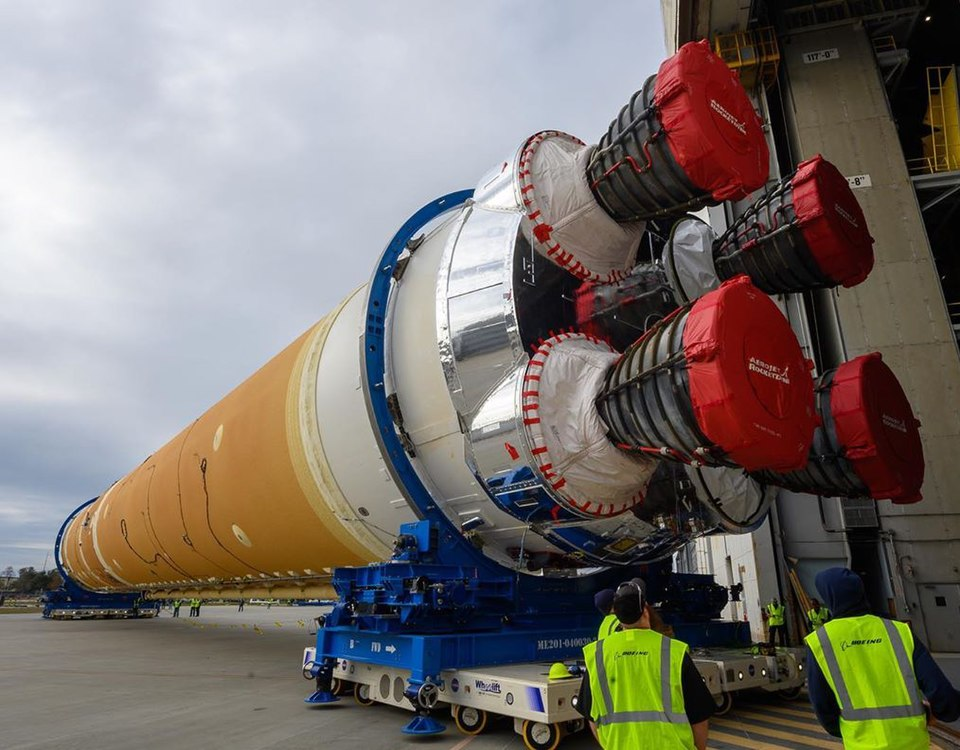
The most important work is being done on the ground in the unglamorous areas between flight hardware and the launch site. NASA has been working to roll the integrated vehicle out of the Vehicle Assembly Building and move it to Pad 39B, with rollout planned no earlier than Saturday, Jan. 17, 2026, for the four-mile journey using the crawler. During the move, the team has been working to close out “small” problems that are large in terms of operations: a damaged cable related to the flight termination system, a valve related to Orion hatch pressurization, and leaks in ground support equipment used to load gaseous oxygen for breathing air. It is these types of problems that rarely result in changes to a spacecraft design but often drive the launch tempo on the ground.
The critical rehearsal is tanking. The wet dress rehearsal at NASA is intended to show the capability to load more than 700,000 gallons of cryogenic propellants, conduct countdown holds and recycles, and then safely drain the vehicle without an astronaut on board. Artemis I revealed just how sensitive the liquid hydrogen process can be, so the Artemis II countdown sequence focuses on leak detection and new approaches to managing gaseous nitrogen accumulation in the small volume between Orion’s crew module and the launch abort system hatches. A successful wet dress rehearsal also opens the door to a Flight Readiness Review, where the program evaluates whether the hardware, ground systems, people, and procedures are ready enough to commit to a particular launch attempt.
In orbit, the Artemis II mission sequence is designed to be an operational exercise, not a tourist trip. Orion spends only a brief time in low Earth orbit after liftoff before increasing to a higher orbit for system checks and a proximity operations demonstration, allowing the crew to have manual control during orbital proximity operations around the upper stage. After completion of those system checks, Orion performs the translunar injection maneuver and spends three days en route. The lunar encounter, which takes place thousands of miles above the lunar surface, precedes both navigation validation and human observation. NASA considers this the first opportunity since 1972 to reintroduce trained human observation to close lunar reconnaissance.
Artemis II is also a biomedical mission in disguise. The astronauts will help with research that goes well beyond low Earth orbit, including wearable sleep and activity tracking, immune biomarker sampling via saliva and blood samples taken throughout the mission, and organ-on-chip research that goes beyond the Van Allen belts. Radiation is tracked via cabin sensors and personal dosimeters, including a new German model that provides six times the resolution of the one used on Artemis I to distinguish particle energies.
The return is where the pass/fail happens. The service module separates, and the heat shield takes the hit during re-entry, with parachutes targeting a Pacific Ocean splashdown off the coast of San Diego. NASA’s recovery strategy is to get the astronauts into a ship’s medical bay within about two hours of splashdown an operational consideration that is important since Artemis II is not only testing vehicles, but the entire end-to-end process of a deep space crewed mission.
All the things that Artemis II will validate have downstream applications. Artemis III is designed to include the human landing system and advanced spacesuits to reach the south polar region of the moon, where two astronauts are expected to spend about a week near the South Pole as part of a mission that will last about a month. But what Artemis II will do is something much more fundamental: it will prove that the lunar transportation system functions as a system, not as a set of components.