

See how SpaceX’s GPS launch slots reveal a quieter change in U.S. space logistics
The most interesting aspect of a GPS satellite launch today is not the ascent into orbit, but the paperwork that goes into assigning which rocket will launch it. A changeover of a third-generation GPS satellite from one launch contractor to another highlights a system that is increasingly operated not as a fixed schedule but as a living supply chain, in which satellites, rockets, and personnel must quickly rearrange themselves without sacrificing performance.

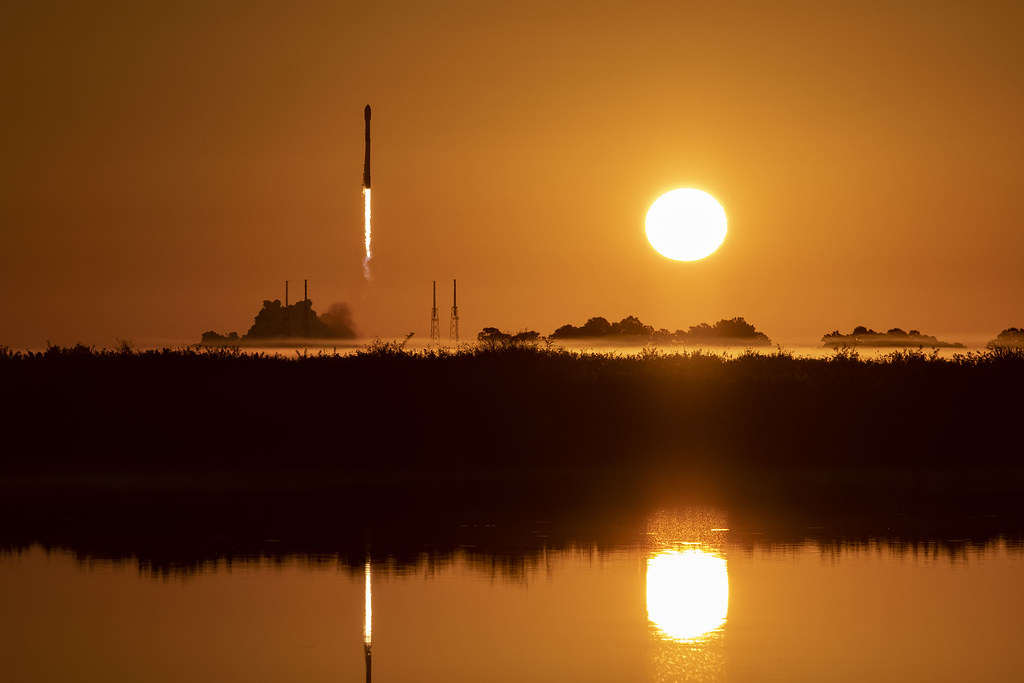
This dynamic is behind the launch of GPS III Space Vehicle 09 (SV09), the ninth of a planned 10 GPS III satellites. SV09 was designed and built by Lockheed Martin, and it carries the U.S. military’s encrypted “M-Code” signal, which Space Force officials say is more jamming-resistant than previous versions. The Falcon 9 rocket also has a known tempo: a booster landing about 8.5 minutes after liftoff on the droneship “A Shortfall of Gravitas,” followed by the deployment of the spacecraft itself into medium Earth orbit about 90 minutes after liftoff.
The significance of SV09’s launch is that it did not remain on its original schedule. It was originally planned for United Launch Alliance’s Vulcan Centaur, but was traded to the Falcon 9, while a subsequent GPS IIIF mission was traded in the opposite direction, summarized by Col. Ryan Hiserote of Space Systems Command’s System Delta 80: “For this launch, we traded a GPS III mission from a Vulcan to a Falcon 9, then exchanged a later GPS IIIF mission from a Falcon Heavy to a Vulcan.” He continued, “Our commitment to keeping things flexible – programmatically and contractually – means that we can pivot when necessary to changing circumstances.”
What has changed in the last two years is that these missions are no longer the exception. Space Force teams have already shown that they can take a GPS III satellite from storage and put it into orbit on an aggressively compressed timeline. In one effort, it was reported that the time required to prepare for a GPS III launch, which normally took up to 24 months, was reduced to three months, made possible by coordinated transport, rapid processing, and rapid integration of the launch vehicle.
The technology pipeline that supports these missions is also in transition. The GPS III program is nearing the end of its initial production phase, and the next generation is designed to take the system well beyond an evolutionary upgrade. The next block, GPS Block IIIF, is scheduled to begin launching in 2027 and features a 100% digital navigation payload and a new satellite bus design, starting with later production units. It also increases hosted payloads that coexist with the navigation function, including a new U.S. Nuclear Detonation Detection System and an Energetic Charged Particle sensor designed to help separate space weather effects from other satellite anomalies. From an operator’s perspective, this means that each launch not only provides timing and positioning, but it also provides sensing capability that can help inform how the system is managed on a day-to-day basis.
GPS III-F also expands the role of global rescue infrastructure. The series is designed so that all spacecraft enable the Cospas-Sarsat system for the detection of 406 MHz distress signals, and it includes laser retroreflectors to enhance the accuracy of the satellites’ own location to improve timing and location fixes for users on the ground.
But the significance of SV09 itself is layered: it was named “Ellison Onizuka” by the Space Force in honor of the astronaut lost in the 1986 Challenger disaster. This is a pattern that continues with satellites named after Neil Armstrong and Sally Ride, weaving the fabric of human history through a starfield that most of us know only as a blue dot on a smartphone screen.
The point of the editorial, however, is functional. GPS satellites have become a proving ground for how quickly the U.S. space community can get high-value assets from storage to orbit, and to switch missions between rockets when the schedule gets tight. The launch is one thing, said a former NASA official. The thing is the ability to launch when the plan changes.