

1,300-pound NASA probe fell to Earth years early after solar storms
Spacecraft do not usually keep their retirement dates when the sun gets involved. NASA’s Van Allen Probe A, a 1,300-pound science spacecraft launched in 2012, came down far earlier than mission planners once expected. After the probe ran out of fuel in 2019, the forecast had it remaining in orbit until 2034. Instead, stronger-than-anticipated activity during the current solar cycle thickened the upper atmosphere enough to drag the satellite lower, ending its long decline in an uncontrolled reentry over the Pacific.

The episode was a compact demonstration of a larger orbital reality. Satellites in low Earth orbit do not move through empty space; they skim through an extremely thin outer atmosphere whose density changes with solar conditions. During geomagnetic storms, the thermosphere heats and expands, and that extra density acts like a headwind. For operators, that can shorten orbital lifetimes, scramble tracking forecasts, and force sudden adjustments across crowded traffic lanes in orbit.
That same process has been tied to other high-profile losses. A 2022 study found that a geomagnetic storm drove drag up to 50% higher during a Starlink deployment, contributing to the loss of 38 satellites. More recently, researchers reported that future storms may produce even larger relative swings in upper-atmosphere density as the thermosphere changes over time, making the space environment less predictable for spacecraft designed around older assumptions.
The Van Allen probes were built for a two-year mission but worked for about seven. Their target was one of near-Earth space’s most consequential regions: the twin radiation belts encircling the planet, where charged particles become trapped by Earth’s magnetic field. Those belts matter because they shape the environment through which satellites operate and astronauts travel, while also helping shield the planet from harmful incoming radiation and solar particles.
The mission delivered several standout results. NASA said the spacecraft returned “the first data showing the existence of a transient third radiation belt”, a structure that appears during intense solar activity. The probes also helped show that electrons in the belts can be accelerated to near light speed by interacting with plasma waves. Findings like those turned a mission built to map a hazardous region into one that explained how that hazard changes in real time.
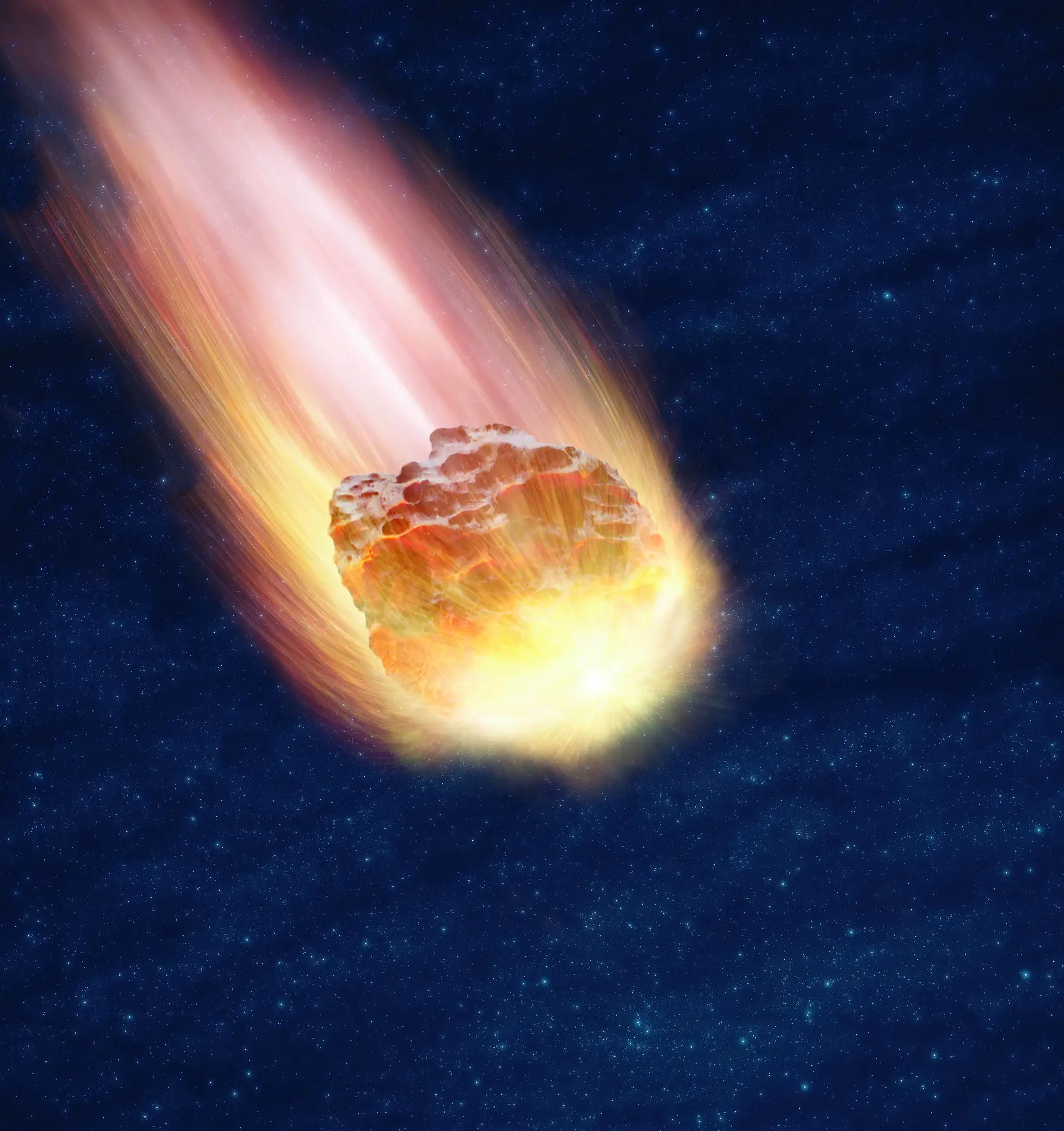
The reentry itself was never treated as extraordinary in engineering terms. Uncontrolled descents of dead satellites and rocket hardware happen regularly, and most material burns up before reaching the surface. NASA estimated the odds of harm from this event at 1 in 4,200, with some components expected to survive atmospheric passage. That number is still low, but it also reflects a growing issue in orbit: old hardware is coming down while new spacecraft continue to go up.
That pressure is only increasing. The European and U.S. space communities have spent the past several years tightening focus on debris mitigation, reentry survival, and post-mission disposal, partly because moderate-size reentries happen almost daily. Van Allen Probe A was designed in an earlier period of orbital traffic. Today, the same mission would likely be judged not only by the science it returned, but also by how completely it could disappear on the way home. Its twin, Van Allen Probe B, is still expected to reenter later. The timing will depend less on a calendar date than on the shifting boundary where solar weather meets orbital mechanics.