

Ineos Secures Hambach Plant for Grenadier Production
Ineos Automotive has finalized the acquisition of Daimler’s Hambach manufacturing facility in France, marking a significant shift in the company’s production strategy. Located near the German border, the plant—known as Smartville—has long been associated with the assembly of the compact Smart ForTwo. Under the new arrangement, Ineos will continue producing the ForTwo on a contract basis, alongside manufacturing selected Mercedes-Benz components.
The Hambach site currently supports approximately 1,000 direct employees, with an additional 600 engaged through supplier operations. According to Ineos, integrating its own manufacturing plans with ongoing Mercedes-Benz activities will sustain around 1,300 additional jobs, including those tied to on-site suppliers. This acquisition replaces Ineos’ earlier intention to establish its Grenadier production line in Bridgend, UK, where the company had pledged to employ 500 people.
“Hambach presented us with a unique opportunity that we simply could not ignore: to buy a modern automotive manufacturing facility with a world-class workforce,” stated Sir Jim Ratcliffe, chairman of Ineos Group. He added, “Ineos Automotive set out a vision to build the world’s best utilitarian 4×4, and at our new home in Hambach, we will do just that.”
Mercedes-Benz had originally planned to use Hambach for its upcoming all-electric EQA or EQB models. Those vehicles will now be produced at the company’s Rastatt plant in Germany, freeing Hambach for Ineos’ ambitious off-road program.
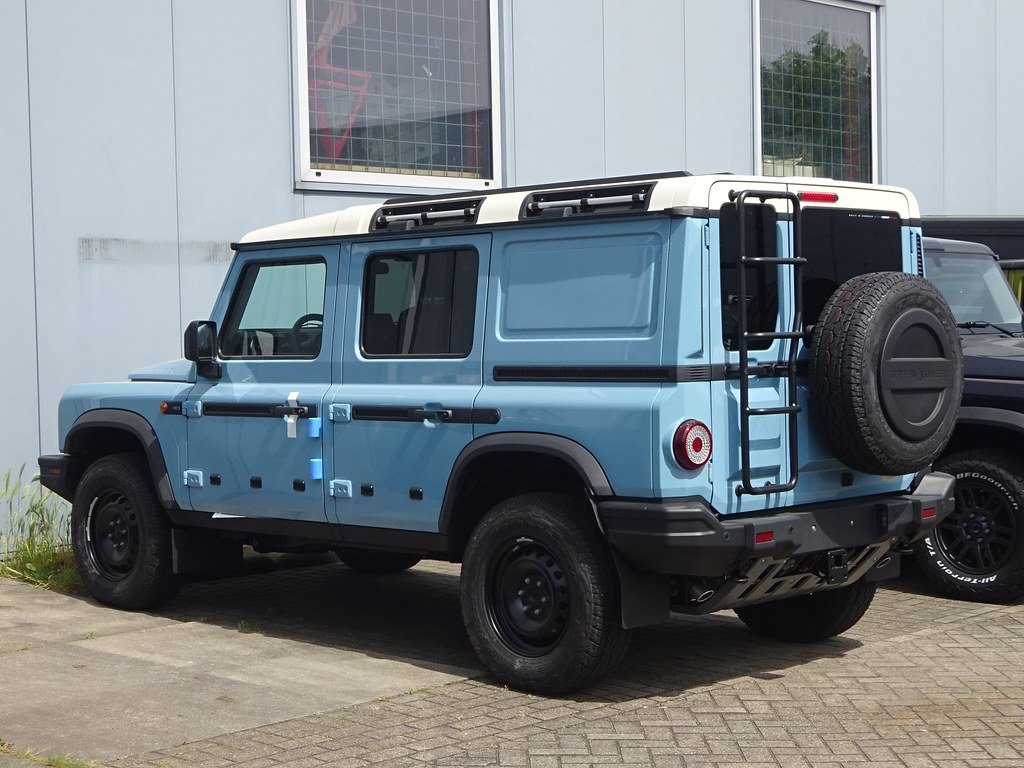
The Grenadier, drawing clear inspiration from the classic Land Rover Defender, is engineered as a body-on-frame 4×4 available in both wagon and dual-cab pickup configurations. Technical specifications include low-range gearing, multiple differential locks, and a stripped-back suspension system optimized for durability in demanding terrain. While the factory’s heritage lies with Mercedes-Benz, propulsion will come from BMW-sourced inline six-cylinder engines—one petrol and one turbo-diesel—chosen for their balance of torque delivery, refinement, and proven reliability.
From an engineering standpoint, the decision to employ a body-on-frame architecture underscores Ineos’ focus on ruggedness and serviceability. This construction method, common in heavy-duty off-road and commercial vehicles, allows for greater torsional resistance under extreme load conditions and simplifies repair after structural damage. The inclusion of multiple locking differentials and low-range gearing reflects a commitment to mechanical solutions for traction management, avoiding over-reliance on electronic systems that can be vulnerable in remote environments.
Beyond conventional powertrains, Ineos is exploring advanced propulsion technologies through a collaboration with Hyundai. The two companies are evaluating the feasibility of a hydrogen fuel-cell variant of the Grenadier. This initiative leverages Ineos’ substantial hydrogen production capacity—around 300,000 tons annually as a by-product of its chemical operations—and its leadership in electrolysis technology via subsidiary Inovyn. Electrolysis, particularly when powered by renewable energy sources, offers a pathway to low-carbon hydrogen suitable for fuel-cell applications.
Hyundai brings to the partnership extensive experience in hydrogen mobility, having introduced fuel-cell vehicles to the market in 2013. The integration of hydrogen technology into a utilitarian 4×4 presents engineering challenges, notably in packaging high-pressure storage tanks and ensuring system durability under off-road conditions. However, it also offers potential advantages in refueling speed and operational range compared to battery-electric alternatives, especially in regions where charging infrastructure is limited.
The Hambach acquisition situates Ineos within a facility equipped for high-quality automotive production, with established supply chains and a skilled workforce. For engineers and enthusiasts, the move illustrates how strategic facility purchases can accelerate product timelines while mitigating the risks and costs associated with building new plants from the ground up. It also highlights the intersection of traditional mechanical engineering with emerging energy technologies, as the Grenadier project balances proven off-road design principles with the exploration of hydrogen fuel-cell propulsion.