

Starliner’s Uncrewed ISS Run Turns Propulsion Fixes Into the Whole Program’s Test
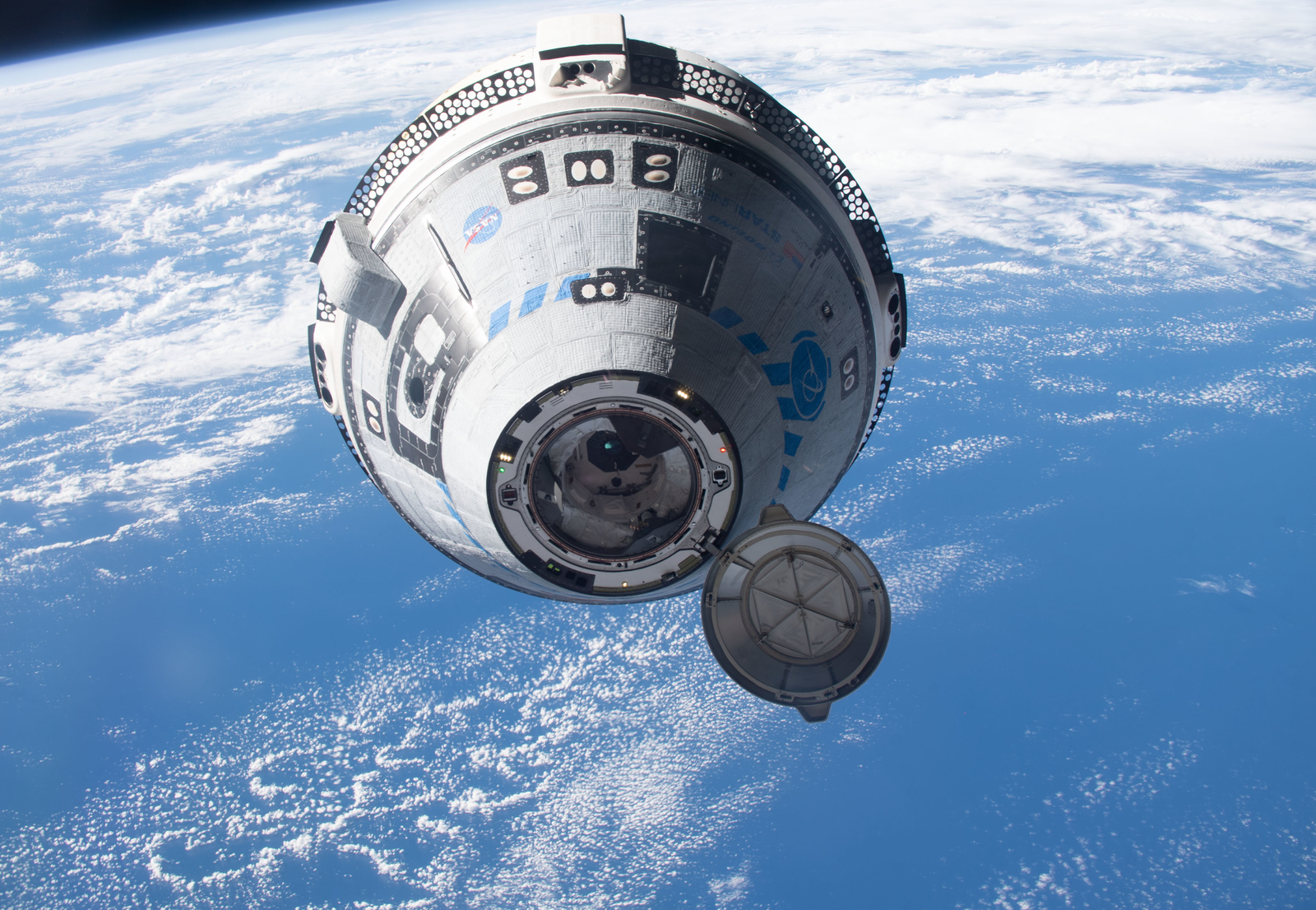
The best lesson of the initial astronaut mission of Starliner was not the precision of docking or the amount of work required by the crew. It was that a spacecraft can go all the way to the International Space Station and still not achieve the more inexorable demand: proving sufficient propulsion capacity and predictability to take people home in due course.

That limitation now determines the future adventure of the vehicle. NASA has re-scoped Starliner-1 to an uncrewed flight to carry cargo as a test of propulsion upgrades that will be used to test and certify and review Starliner before no earlier than April 2026. With a slightly different Commercial Crew Transportation Capability arrangement, the final contract was decreased by two to four missions, with two actually being an option, and NASA has quoted the cost of that contract as $3.732 billion with a scope-related cut of $768 million.
The nature of the Crew Flight Test on what went wrong bothers what forces an uncrewed “cargo framing.” The service module of Starliner has 28 reaction control thrusters and 20 larger orbital maneuver and attitude control thrusters, which are working under stringent thermal and plumbing conditions. Five of the reaction-control thrusters became non-functional enough that the spacecraft could turn them off and four were re-started later during the approach to the ISS. There was an experiment at NASA White Sands Test Facility to reproduce one of the critical processes: the heat accumulation within the thruster valves propelled small Teflon poppet seals to deform and limit the flow of propellant. The thermal environment was also important such as repeated firings and exposure which did not allow the system much time to cool and recuperate.
Those thruster behaviors did not exist independently. Starliner too had 5 leaks of helium on its reaction-control system on the service module, one of which was observed prior to launch and four during orbit. The propellant feed is pressurised with helium, leakage is no longer a housekeeping concern but it reduces the operating envelope in maneuvering and deorbit. The factor of concern in NASA was the dynamics of these effects coupled to create an “integrated failure mechanism,” such that leakage effect and thruster degradation would be multiplied during vital stages like the deorbit burn, and the uncertainty factor in attitude control and targeting upon entry.
According to Steve Stich, manager of NASA Commercial Crew Program, this change will enable NASA and Boeing to be able to safely certify the system by the year 2026.
The history of verification also works to shape the case of certification at Starliner. The issues with the 2019 Orbital Flight Test program are used to indicate that Boeing did not have the capability to conduct a single comprehensive integrated avionics and software test at that moment. Subsequently, the corrosion of oxidizer valves postponed a 2021 launch effort of OFT-2, and subsequent audits found parachute link concerns and wiring harness tape flammability in aerospace testing and verification so-called “process escapes.”
That is in that context that NASA has insisted on program philosophy as dissimilar redundancy, which has been more about calendar math than program philosophy. It is also estimated that the ISS will be retired by approximately 2030 and the agency usually launches two U.S. crews annually and this means that there are less slots left to an on-ramp once a vehicle ever passes through the certification test. In the meantime, Crew Dragon has a history of successfully completed operational missions with no similarly propulsion issue, and its design does not include Starliner version expendable service module, a piece of hardware that, by design, cannot be inspected after reentry as a direct failure forensic.
The engineering urgency is strengthened by financial pressure. Under the fixed-price structure, which Boeing has publicly reported over 2 billion in red- ink on Starliner, there is a reported 523 million loss in 2024. That would imply that the outcome of the propulsion system ground-tests, the leak-rate characterization, and thermal remedies are no longer supporting information, but the point through which the rest of the operational flights have to go.
In case of successful launching of Starliner-1, it will not just prove that it works in real orbital thermal cycle, that the redesigned thruster assemblies and helium plumbing can withstand the actual orbital thermal cycle, that the updated impulse can be repeatable, and that the mission profile ceases being gentle.