


How Rubin’s Giant Sky Survey Could Rewrite the Dark Energy Debate
Dark energy is currently the biggest conundrum in modern cosmology since it appears within the equations describing the expansion of the universe while refusing to receive a physical explanation. It was discovered thanks to Type Ia supernovas, which are essentially the explosive death throes of white dwarf stars within binary systems. The star may rob the other celestial object of its material until it detonates, causing a flare that can be used as a standard candle to measure the distance across the universe. It was the discovery of these events in the late 1990s that led to realizing that the expansion is not only ongoing but accelerating, thus making dark energy one of the leading questions in astrophysics.

Unfortunately, the use of supernovae in measuring distances involves making assumptions that are very difficult to confirm. It relies on using “standard candles” and thus assumes that all events are similar to each other. However, it turns out that supernovae are not completely consistent their relative intensity changes depending on such parameters as the age of the galaxies where they occur and the abundance of metals there. Additionally, dust and selection effects create some uncertainties in calculations as well.
Researchers decided to introduce a solution to this challenge by creating a CIGaRS approach that substitutes the traditional use of spectroscopic analysis of stars and galaxies with image processing and computer simulations. This approach makes it possible to take into account the factors mentioned above in a single model that also describes cosmic evolution. “A powerful way of modeling the universe is to simulate it in the computer” noted Raúl Jiménez of the University of Barcelona. “This provides a way to vary all possible parameters at the same time to predict what universe we live in.” He also added that using simulations allows detecting such hidden flaws as “unknown unknown’ systematics” that frequently hamper precision cosmology rather than lack of data.
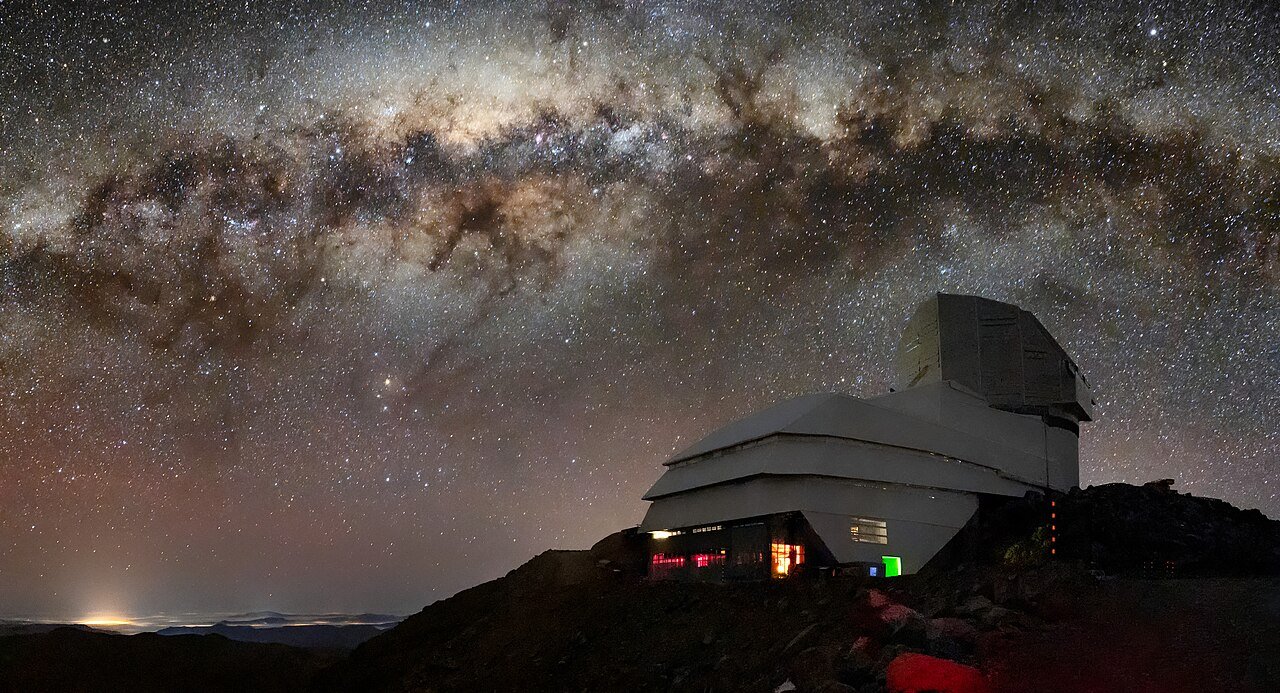
That is why Rubin Observatory matters so much it has been built to generate enormous amounts of data that cannot be collected by other means. Utilizing an 8.4-meter diameter telescope with the largest digital camera ever created, Rubin’s Legacy Survey of Space and Time will repeatedly scan the whole south sky during a ten-year period and collect information on billions of galaxies and their shape. As a consequence, the number of supernovae discovered would become incredibly large. Thus, the mission of Rubin will make it possible to understand whether the accelerated expansion really exists due to the presence of some energy component (cosmological constant) or because of incorrect gravity models.
But Rubin has something else up its sleeve. Since the observatory will collect data using multiple methods (weak and strong gravitational lensing, redshifting, galaxy clustering, etc.), it will be possible to conduct comparative analysis and discover if the obtained results contradict each other. Since all the methods respond to the geometry and evolution of space-time and cosmic structures in different ways, comparing them might lead to uncovering not only data gaps but flaws in the underlying theoretical models as well.