

SLS and Orion Roll to Pad as Artemis II Tests Deep-Space Readiness
Artemis II is the first time in more than 50 years that a human-rated U.S. spacecraft system is being readied for a crewed flight beyond low Earth orbit and NASA is treating it like a full-up test campaign rather than a ceremonial return.

As the International Space Station nears end-of-life planning and much of the routine crew transport is being handed over to commercial vendors, NASA human spaceflight center of gravity has returned to the Moon. The 10-day Artemis II mission, which carries 4 astronauts round the Moon, is designed to answer a practical question: can the systems on the Orion, ground processing and the launch vehicle work together with deep-space margins, with margins that can be credible once schedules and budgets become tighter?
The mission itself is also a step of closure to Orion: a 20-year development effort, estimated to cost up to $20 billion and being driven by Lockheed Martin is finally heading to its first crewed flight. The previous flights in which Orion has taken place had already defined two envelope ends. In 2014, the Exploration Flight Test-1 was flown to orbit on a short high-energy reentry demonstration aboard a Delta IV Heavy. In 2022, Artemis I combined Orion with the Space Launch System on a 25-day mission that propelled the spacecraft up to approximately 40,000 miles past the far side of the Moon and back at lunar velocities. The launch of the SLS was generally clean, yet the instrumentation of the return of the Artemis I revealed a small thermal-protection issue which would have been hard to identify without flight.
Postflight analysis and tests attributed the loss of heat-shield char on Orion to gases that had built up in Avcoat that did not escape the material, and that pressure caused the material to crack. NASA simulated the entry conditions in arc jet facilities at NASA Ames Research center, and found that the skip-entry profile might produce intervals of reduced heating rate but allowed thermal energy to remain trapped in the ablator -conditions that retarded char growth and localised gases. Flight instrumentation and sampling was intensive with only some 200 samples of Avcoat being sampled off and 121 individual tests on different campaigns. NASA determined that cabin temperatures would not have exceeded limits during Artemis I, but the agency nevertheless opted to add more uncertainty to the situation by adjusting the entry operations of Artemis II and attempting to make future shields with more consistent permeability considerations.
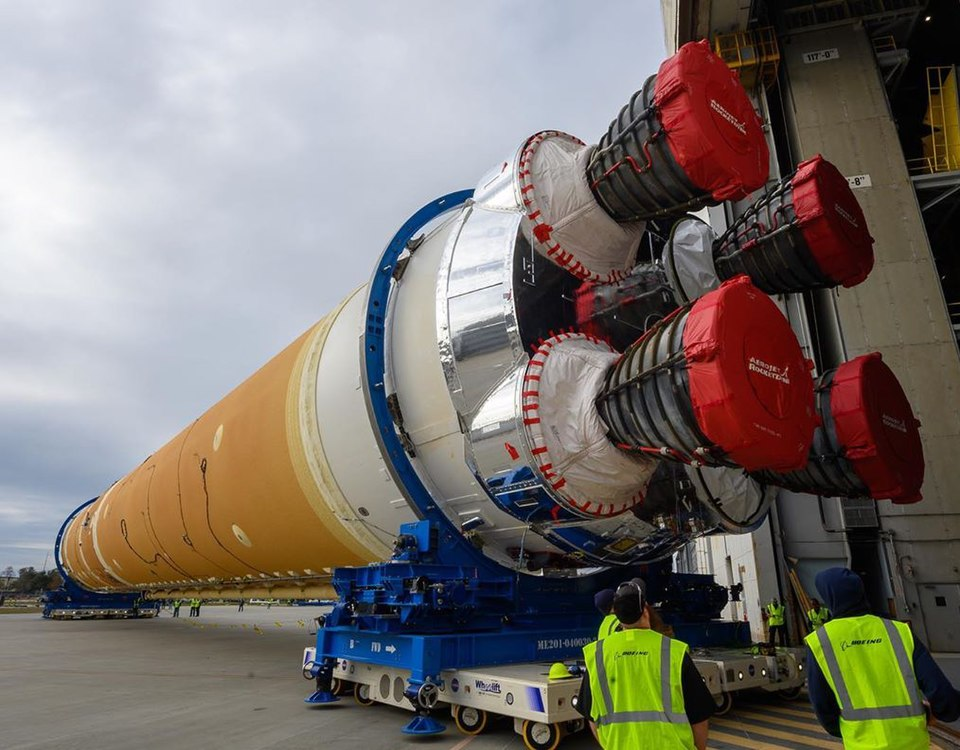
Then that engineering posture is already on the pad. On Jan. 17, the Artemis II stack was rolled to Launch Complex 39B to prepare a wet dress rehearsal, the fueling-and-countdown exercise that has developed to be the gateway item to launch preparedness. Crews started pad turn-on operations featuring communications checks with the range, swing tests of the crew-access arm, and also incorporation of the emergency egress baskets.
The wet dress will show that the load capacity of the more than 700,000 gallons of cryogenic propellants can be loaded, the countdown can be made and then safely detanked- without the crew on board. Meanwhile, technicians are executing late-load tasks on behalf of Orion, including crew tablets, medical kits and payload components and are also servicing parts of the rocket that are in need of hazardous commodities.
The technical pacing of Artemis II is at the same level with a more familiar pressure: sustainability. In December 2019, NASA Office of Inspector General has cautioned that the combined SLS, Orion, and auxiliary ground systems costs will exceed 90 billion dollars by Artemis IV with over 55 billion dollars expended by September 2025. That tension is becoming more evident in the way NASA is framing Artemis II as not a one-shot victory, but rather a risk-mitigation measure intended to safeguard Artemis III, where surface systems, docking operations, and long-duration deep-space logistics multiply rapidly.
The Moon-landing architecture is based downstream on a group of high-cadence providers. The plan as supported by NASA now also involves the process of transferring a crew on board Orion in lunar orbit to a commercial lander followed by a return back to Earth at lunar reentry velocities which are only enabled by Orion today. SpaceX also needs to prove complicated processes like on-orbit propellant refueling of its Starship-based lander, whereas Blue Origin is developing cargo and crewed lander components that involve the Blue Moon Mark 1 cargo lander and BE-7 engine tests in several locations. In the case of Artemis II, though, NASA has a shorter story nearby, more consequential: demonstrate the deep-space stack, complete the heat-shield issue with functional discipline, and put a crew through the first full dress rehearsal of a lunar return.