


Falcon 9 Brings the Boom, Then Builds a Different Spy Satellite Era
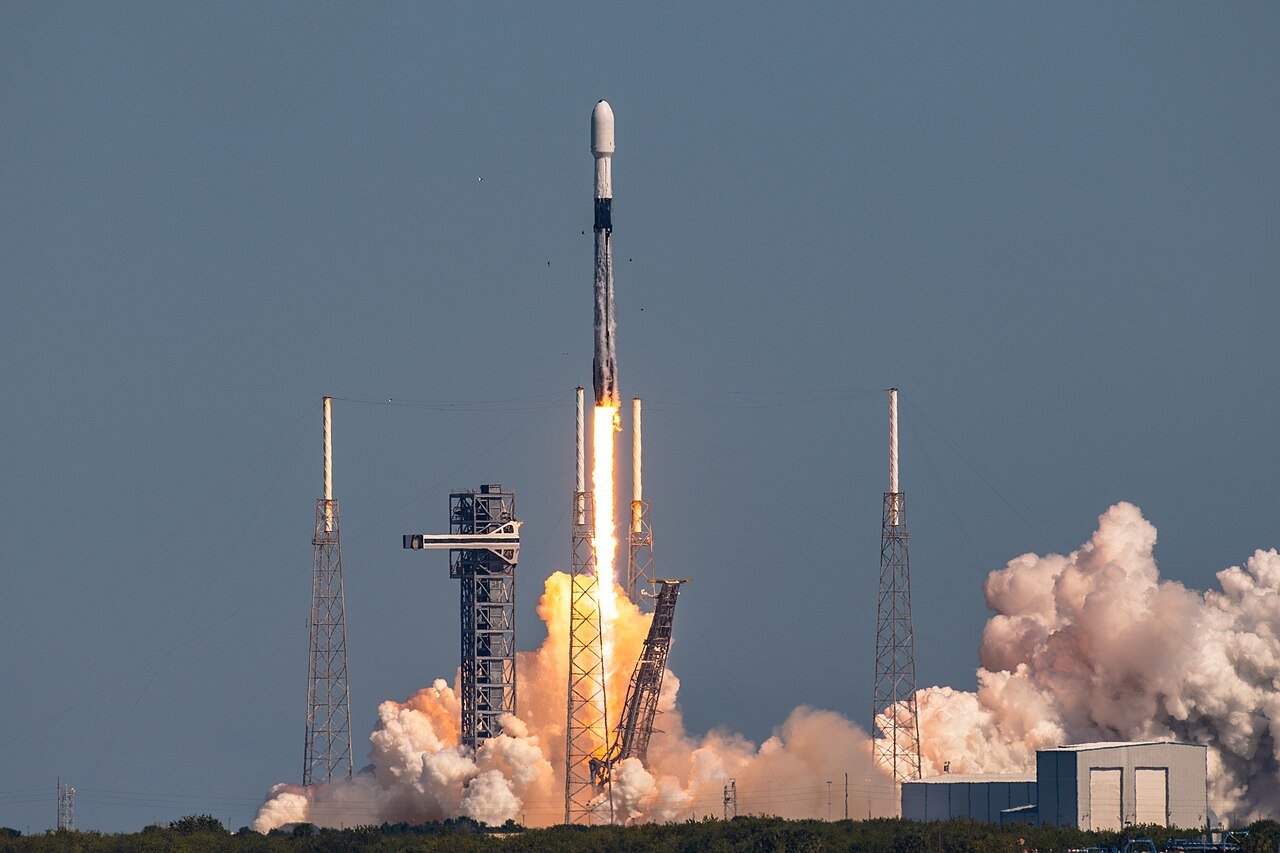
A Falcon 9 landing can be the loudest aspect of a mission that the public is least allowed to witness. A Friday night launch from Vandenberg Space Force Base brought the show twice: first during the climb out from Space Launch Complex 4, and then again more than seven minutes later when the booster returned to Landing Zone 4, producing sonic booms that echoed across the Central Coast of California.

The purpose of the payload was easier to discern than the details. The mission was NROL-105, and the National Reconnaissance Office’s desire to end the live stream after the booster touched down guaranteed that the second stage and the deployment would not be seen. This was a stark contrast to a space industry that had grown accustomed to national security missions that were, by necessity, opaque, with highly visible hardware performing a precise and repeatable recovery, while the details of the on-orbit portion of the mission were deliberately fuzzy.
What is not unclear, however, is the change in architecture behind the veil of secrecy. The NRO has been transitioning away from a paradigm of a handful of highly elegant and long-developed satellites to a “proliferated architecture” with many smaller satellites in multiple orbits. As the agency itself describes it, “A greater number of satellites – large and small, government and commercial, in multiple orbits – will deliver an order of magnitude more signals and images than is available today.” This is, of course, a familiar paradigm to aerospace engineers: spread out the capability, provide redundancy and mitigate single points of failure, and recognize that not every point in the network has to be the very best if the network as a whole provides persistence and responsiveness.
This network is no longer conceptual. At the end of 2025, the number of satellites in the NRO’s constellation had surpassed 200, and this size necessitates different ground systems, different models of automation, and different data streams than the days of bespoke flagships. Maj. Gen. Chris Povak, the deputy director of the NRO, said that the agency is “standing at the precipice of a major transformation” in the coming decade.
The operational advantage, as explained by the agency, is speed and reach. With more platforms on orbit, revisit times decrease, and distribution times can be faster sometimes in minutes, not hours. The downside is that a single small satellite may offer less resolution than the best of the old generation, but the advantage of timeliness and volume can make up for this. The NRO has also highlighted that proliferated architectures enable tasking of collection more directly from customers and facilitate easier sharing, while still pursuing a parallel course of development for high-end satellites for the most challenging sensing requirements.
The significance of Vandenberg’s involvement in this transition is structural, not ceremonial. Launches from the West Coast are compatible with the high inclination and sun-synchronous orbits that are preferred for Earth observation missions, and Space Launch Complex 4 has been established as a reusable launch site for missions that value cadence. On this mission, the first stage, described as booster B1100, completed its second flight and returned to Landing Zone 4, which was originally a Titan II launch site but has been converted to a landing site. The message from NROL-105 was thunder and precision. The message to the industry is that a classified payload can still be a part of an increasingly standardized production line: many satellites up top, one booster back on the ground, and a surveillance architecture that looks less like a crown jewel and more like a mesh.

.jpg)