



Rare Earth Supply Chain Pressures Reshaping Drone Swarm Engineering

“The increasing complexity of drone swarms has propelled these systems fromovelty technology experiments to essential defense, industry inspection, and disaster relief applications. However, hidden beneath the self-driving autonomy codes and mesh networking is an entirely different and much more fragile footing: the rare earth elements that can be used for high-quality motors, optical systems, and robust sensors. As the international politics of rivalries closes supply chains, it is now an intricate race against time for engineers and policymakers alike.
1. Rare Earths as the Performance Backbone
Neodymium, praseodymium, dysprosium, terbium, and samarium comprise the basis of permanent Magnetic designs, including NdFeB and SmCo, making high-performance brushless motors feasible. Dysprosium and terbium provide high coercivity resistant to high-temperature conditions, while SmCo is resistant to extreme high temperatures. In the optical domain, Neodymium Yttrium Aluminum Garnet Lasers and Erbium-Doped Fibers provide long-distance, eye-safe ranging, critical in selforganizing SLAM techniques of swarms of drones or agents. Europium, Terbium, and Yttrium phosphors provide bright and stable images, while Cerium Oxide Polishing
2. Systems for Propulsion and Heat Management
Modern UAV propulsion systems require the use of rare earth magnets in high-power motors. Permanent magnet NdFeB rotors have strong magnetic forces, allowing for compact high-power motors and increased flight endurance. High-power rare earth diffusion processes are able to function well even under thermal conditions, essential for climb flights at high current and in warm environments. Rare earth alternatives to SmCo have higher thermal stability at the cost of magnetic power.
3. Autonomous Swarm Communication Networks
Mesh networks in swarms require channels that are interference-free and interference-resistant. Devices such as Yttrium Iron Garnet filters are used to prevent interference and ensure integrity of signals in an environment dominated by RF signals. Erbium optical communication systems facilitate secure communication beyond ranges of swarm units.
4. Supply Chain Concentration Risks
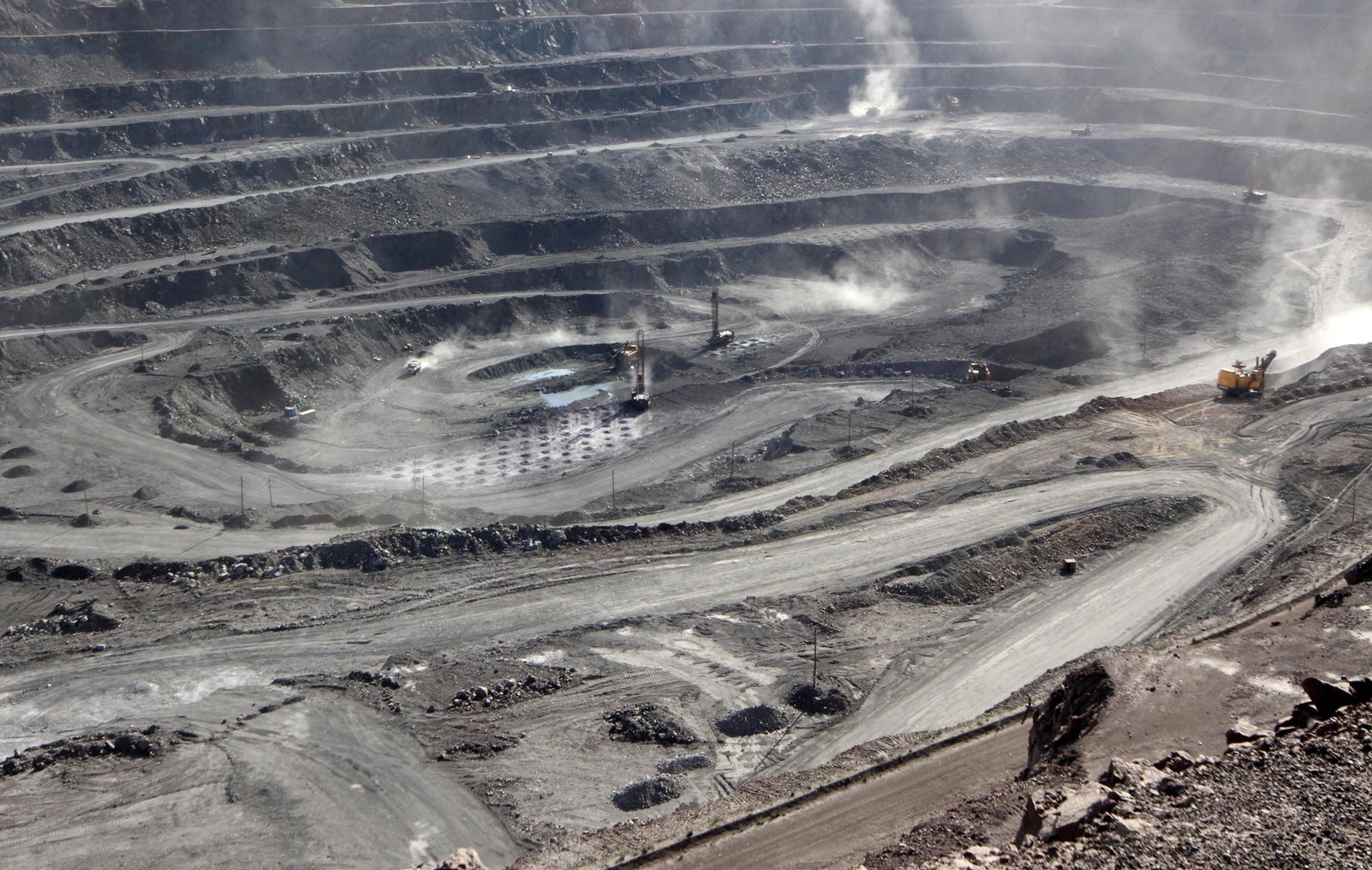
“China dominates about 90% of refined RE production and more than 93% of NdFeB magnet production. RexSeparation, which is crucial for dysprosium and terbium separation, is still geographically regionalized, with Myanmar’s ionic clay production being channeled into Chinese plants. The critical points above can also represent points for leverage, as exemplified by the expansion of 2025 export controls and now requiring magnets with even trace amounts from China for licensing,”
5. Geopolitical Leverage and Policy Response
Chinese actions affect recent Chinese practices subjecting rare earths to the Foreign Direct Product rule. Also, the U.S. Department of War has invested $400m in MP Materials to ensure that a floor price is kept for NdPr production, also intending to buy all products from the proposed “10X Facility.” Collaboration to build rare earth separation and magnetic production capacity within Lynas Rare Earths will ensure that such capacity is not within Chinese control in the future.
6. Engineering Innovations to Reduce “Heavy” REE Use
For managing supply chain risks in this sector, engineers increasingly use grain boundary diffusion, core-shell structures, and hot-deformed nanocrystalline NdFeB to preserve coercivity and reduce the need for dysprosium and terbium. The ferrite magnet has been introduced as a low-performance back-up type, and the erbium-doped system replaces the Nd:YAG in applications requiring optic integrity and safety. Other methods include the secondary supply through the recycling process involving the HPMS and wind turbines.
7. Recycling As a Strategic Buffer
Aging direct-drive wind turbines can yield 400–800 kg of NdFeB magnets each, representing a substantial recovery opportunity. Product take-back regulations and circular economy strategies could increase secondary supply by 701 kt and reduce demand by 2,306 kt over three decades. Defense logistics programs are beginning to map recyclable stocks from decommissioned hardware, linking strategic reserves to upstream material availability.
8. Critical Minerals in UAV Systems
In the broader RE universe, the constituent materials for unmanned aerial vehicles include aluminum-lithium alloys, titanium, carbon fibers, copper alloys, nickel alloys, gallium nitrate, indium antimonide, and mercury cadmium telluride, among others, which may pose challenges in their respective value chains for swarm technology deployment.
9. Industrial and Defense Applications Under Pressure
On the defensive side, swarm systems are able to saturate adversary defenses or conduct low-cost ISR, though they demand safened autonomy and components. Industrial inspection receives enhanced availability and safety, and disaster response receives increased reach and pace. Yet, as witnessed in the Ukrainian situation, all unmanned systems now rely upon Chinese components, and resilience becomes, thereby, a necessity.
10. The Path to Resilient Swarm Capability
A process of vertical integration of mining, separation, and refinement, and finally, magnet production within an alliance of nations, is appearing on the agenda. A combination of this approach and rapid design and deployment cycles, similar to those of Ukrainian drone development, could be an assurance of both security and flexibility. Otherwise, one foreign production plant could mean one point of failure for whole swarms of drones. Securing the chain for rare earths is no longer an esoteric topic but is one of the cornerstones of the feasibility of drone swarms. The crossroads of materials science, geopolitics, and UAV research and development is set to shape the future of coordinated drone systems as autonomy is scaled and mission sets evolve.