

China’s 3D Printing Surge Reshapes Aerospace, Robotics, and Global Markets

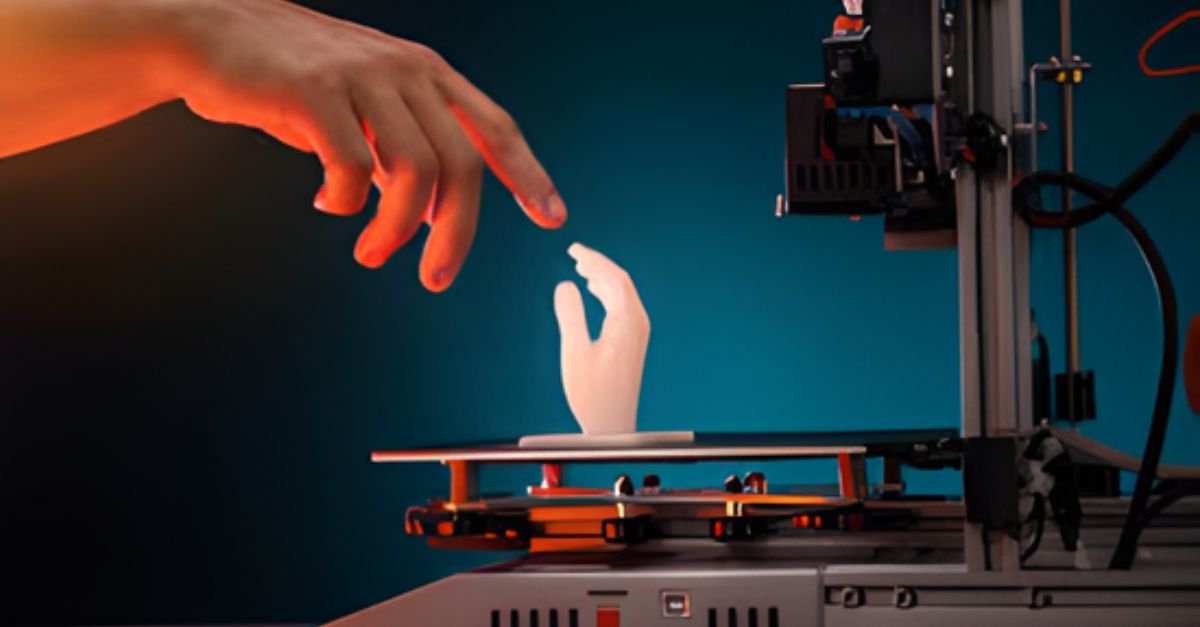
When “over 90% of the world’s entry-level 3D printers originate from one country,” it means that there is more involved than just the realm of manufacturing, since this represents “a shift in the balance of global power.” The “blazing-fast rise of China in the field of additive manufacturing will soon transcend the realm of the hobby 3D printer, enabling innovations in aerospace propulsion systems, humanoid robots, and advanced materials,” among other things.
1. Market Dominance in Consumer Grade
Chinese makers have swept up a massive share of the worldwide consumer-grade 3D printing market and currently account for over 90% of the shipments of 3D printing devices costing less than USD 2,500. According to customs statistics, **3.7777 million units are exported in 2024 with a total export value of 8.9 billion yuan; 2025 exports are poised to top 5 million units and 10 billion yuan**. Chinese brands such as Creality and Bambu Lab have achieved a balance between low costs and high-quality products, much like what happened with DJI in the UAV market. Government subsidies due to the “new digital equipment” classification and massive promotions like “618” of JD.com have caused sales to soar tenfold compared to the previous year.
2. Industry-Based Expansion and Domestic Substitution
Having depended previously on imported products, the industrial-grade market is now home to a **60% rate of metal 3D printer local production and a localized supply chain of over 85% for non-metal 3D printing materials**. The performance of Farsoon’s multi-laser equipment and BLT’s SLM 3D printers equals that found in European and American companies but with a cost 30% lower, breaking into aerospace and new energy vehicles supply chains.
3. Breakthroughs in Materials and Processes
Innovations in material science are a crucial strength for China. Titanium alloy powder prices are now reduced by half in two years, with a price below 300 yuan/kg, and the strength of Carbon Fiber Composites equals Steel with a mere **1/4.5 times the weight** of Steel. In Robotics, Glass Fiber Reinforced Nylon Composites and PA12 Composites help develop lattice-structured components with a diminished weight of over 80%, without weakening the components, as evidenced by the production of humanoid robot limbs.
4. Aerospace Cost Reduction via Additive Manufacturing
In the field of aerospace engineering, 3D printing is making production much cheaper and faster. This is because there are thousands of components involved in the making of traditional rocket engines. But by combining additive components, the component counts can be reduced by 80%, and the price can be lowered by 90%. Production time will be reduced from six months to one. SpaceX’s “Raptor” rocket engine is comprised of 85% 3D-printed elements, while China’s “Zhuque-3” rocket has its core components produced by company “BLT”, which cuts the price of the individual satellites by 150,000 yuan. Aerospace alloys such as “Ti-6Al-4V” and “Inconel 718” are stronger because of their ability to resist
5. Robotics Manufacturing Revolution
“Humanoid and industrial robots are also challenging the boundaries of manufacturing through their complex, biomimetic designs. Selective Laser Sintering (SLS) is used to construct complex geometries without supports, making assembly simpler and allowing designs that cannot be achieved through other processes. For example, TPM3D’s P360 printer was able to print 52 parts for a humanoid robot in a 32.5-hour build, using 80% reused powder to save on material costs. Weight reduction is a key area, as MicroPolis Robotics, based in Dubai, was able to halve the weight of a patrol robot component, cutting it from 27 kg to 4 kg.”
6. AI Integration in 3D Printing Workflows
However, systems for AI-assisted modeling and slicing are reducing barriers to entry. “Ready-to-use” functionality is now possible with Creality’s smart slicers, or 3D models are created using AI software in mere seconds from text or image descriptions. Collaborations, such as that with Dyndrite and Phasio, which provides integration for HP’s Multi Jet Fusion technology, make possible the automation of configure-to-print, which enables customer orders to be transformed into verified printing jobs in one seamless operation.
7. Policy and Capital as Growth Catalysts
China’s Commerce Ministry and regional administrations are pouring subsidies, industry investment funds, and consumption incentives into the sector. Guangdong’s ambition is to achieve a total industry value in excess of 180 billion yuan by 2025, and a 1 billion yuan additive manufacturing fund has been established in Jiangsu. Venture capital funds are also pouring in—as evidenced by Kuaizao Technology’s series B investment of hundreds of millions of dollars from Hillhouse Capital.
8. Strategic Investment Opportunities
For an investor, the three important lines that set out the contours of opportunity are:
– **Core Equipment**: The aerospace metal printing market is led by BLT with a market share of over 40%, and Farsoon’s multi-material solutions are found in the supply chain of BYD and CATL. The consumer market is dominated by Creality with a global market share of 39%.
– **Basic Materials**: AVIC Metmat’s titanium alloy powder complies with aerospace requirements; Youyan Powder Materials’ alloys are priced at 60% of import value; market leadership in zirconia alloy for dental 3D printing belongs to CCTC.
– **Emerging Applications**: The 75 million yuan order for humanoid robot parts by Lizhong Group indicates the growing demand, while the printed parts provided by Yinbang Co., Ltd. to constellation rocket projects are critical.
The additive manufacturing industry in China is no longer a mere follower – it is leading the way in adoption, substitution, and value applications. With the advent of advanced materials, AI-driven workflows, and the support of a majority government, this industry is about to change the world of aerospace and robotics.