

3D Printing Homes on Earth and the Moon
In Austin, Texas, a construction site hums without hammers or saws. Instead, a robotic nozzle extrudes layers of concrete, building walls bead by bead. This is the work of Icon, an eight-year-old company founded by Jason Ballard, Evan Loomis, and Alex Le Roux, which has pushed 3D printing beyond prototypes to full-scale housing. Ballard, often seen in his cowboy hat, calls it a paradigm shift: “Fire resistant, flood resistant… termite resistant, like by a mile this is the best way to build.”

Icon’s process begins with a 1.5-ton sack of dry concrete powder, mixed with water, sand, and additives, then pumped to the printer. Each bead layer hardens in about 30 minutes, with steel reinforcement added every tenth layer. A 160-bead house takes roughly two weeks to print. The technology reduces waste, since only the required material is deposited, unlike conventional framing which leaves truckloads of off-cuts.
The company’s early journey was marked by setbacks, including a failed first printer and missteps during their SXSW debut. Yet persistence paid off, leading to projects ranging from luxury homes to shelters for the formerly homeless. In 2020, Tim Shea became the first person in the U.S. to live in a 3D-printed home, part of Alan Graham’s Community First! Village initiative. Graham noted, “He wanted to make sure that they were the first” to benefit from new technology.
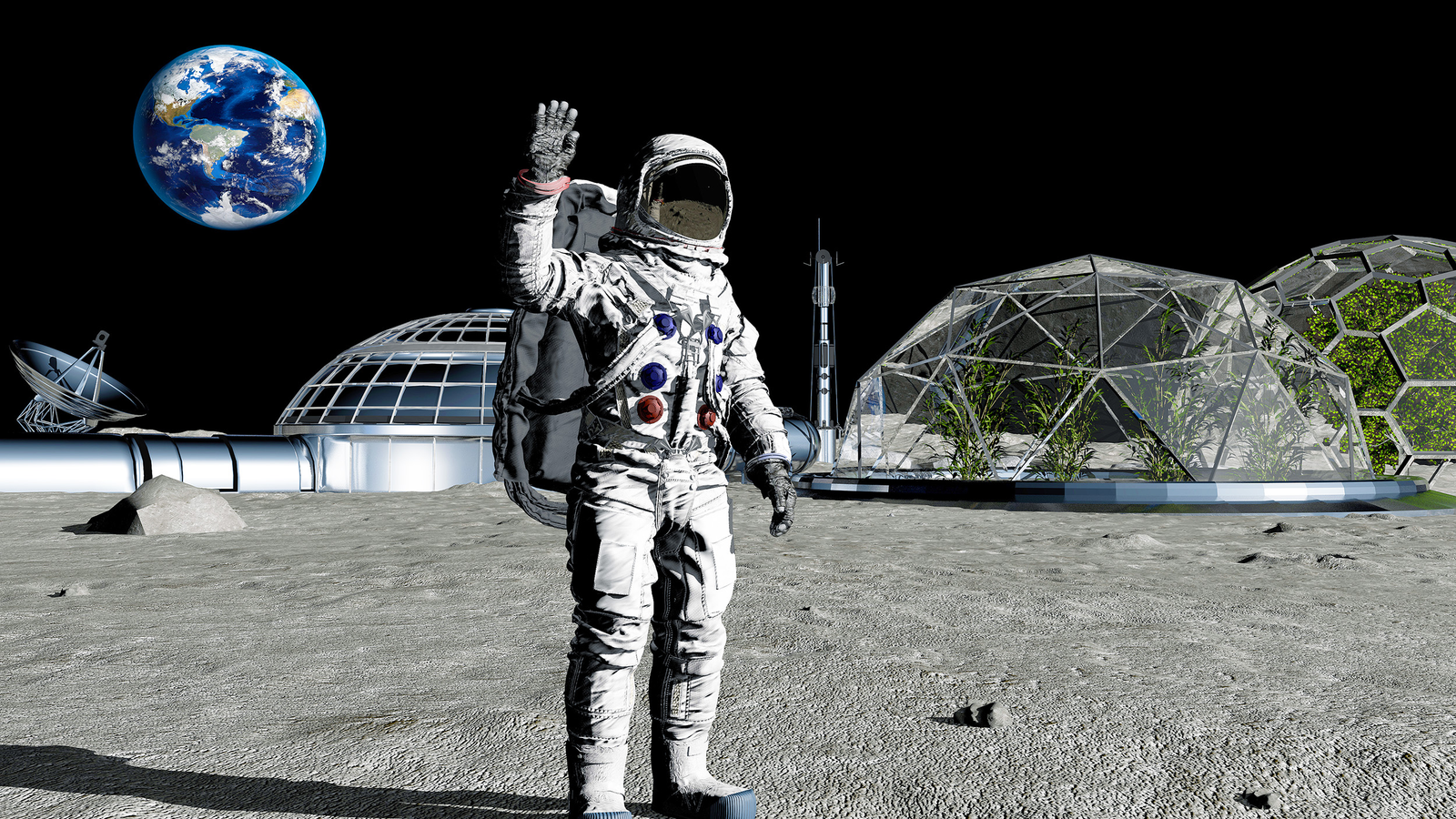
Icon’s ambitions extend far beyond Earth. NASA’s Artemis program aims to establish a sustainable lunar presence, requiring infrastructure that cannot rely on terrestrial materials. In 2020, NASA awarded Icon development funding, followed by a $57 million contract in 2022. The partnership focuses on autonomous 3D printing using lunar regolith—a fine, rock-based dust covering the moon—rather than concrete.
At NASA’s Marshall Space Flight Center, scientists Jennifer Edmunson and Corky Clinton lead the MMPACT program, emphasizing autonomy: “We want to be able to make structures… without having to be tended by astronauts.” Icon’s solution replaces concrete extrusion with laser sintering, melting regolith at around 1,500°C into solid layers. Clinton’s team tests samples with a plasma torch at 4,000°C to simulate rocket exhaust, with recent prints “passing the test with flying colors.”
The next phase involves operating the full robotic arm and laser inside NASA’s thermal vacuum chamber, replicating lunar conditions. Ballard envisions mobile printers roaming the moon, constructing landing pads, roads, and habitats. “If we can do it on the moon, we can do it on Mars,” he says, noting that Mars’ milder temperature swings make it, in some ways, easier.
Icon’s extraterrestrial research feeds back into terrestrial innovation. The company is developing lower-carbon concrete mixes and experimenting with complex geometries, including domes and vaults—forms historically reserved for civic or religious buildings due to cost. Their printers can now produce these shapes efficiently, opening possibilities for affordable architectural variety.
At SXSW, Ballard unveiled Phoenix, a next-generation printer with a 75-foot arm, capable of multi-story construction and faster output. Its design parallels the lunar printer, highlighting the cross-pollination between space and Earth projects. Icon has begun work on 100 more homes for Community First! Village, reinforcing their dual mission to serve both high-end and low-income markets.
Ballard acknowledges the fine line between vision and overpromising. “Part of the job is to get your investors, get your team… to believe the things you are saying. Except the things you are saying don’t exist yet.” He predicts a future where “most buildings will be designed by AI, most projects will be run by software, and almost everything will be built by robots.” For him, the urgency is clear: over a billion people are under-sheltered, and incremental change is too slow. “The future cannot be exciting if we don’t get human shelter right.”