

Global Leaders Driving Industrial Robotics Innovation
Industrial robotics has emerged as a transformative force in manufacturing, reshaping production lines with precision, speed, and adaptability. The International Federation of Robots reports nearly three million industrial robots are currently operating in factories worldwide, taking on tasks that are repetitive, hazardous, or require extreme accuracy. These machines perform duties that are dirty, dull, and dangerous, enabling human workers to focus on higher-value responsibilities.
Mitsubishi Electric, founded in 1921, has consistently demonstrated Japan’s technical ingenuity. Its robotics division specializes in vertically articulated robots designed for assembly, machine tending, and tray handling. These systems address needs in packing, palletizing, assembling, and processing, offering robust solutions for varied industrial environments.
Kawasaki Heavy Industries holds the distinction of being among the first to manufacture and sell industrial robots in Japan. With five decades of experience, Kawasaki Robotics integrates advanced controllers and high-quality mechanical systems into a broad product portfolio, serving applications across automotive, electronics, and general manufacturing sectors.
Epson, widely recognized for its imaging and printing technologies, has also built a strong presence in industrial robotics. For over 35 years, its SCARA and six-axis robots have supported industries ranging from automotive to medical devices. Customers, from Fortune 100 corporations to small-scale manufacturers, rely on Epson’s systems to reduce costs and enhance product quality.
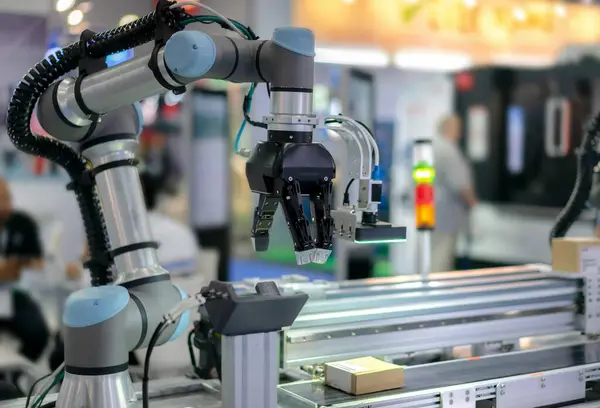
Universal Robots, part of Teradyne Inc., has championed collaborative robotics since introducing its first cobot in 2008. With over 1,000 employees across multiple continents, the company promotes a vision of human-robot collaboration, enabling flexible automation solutions that adapt to diverse workflows without replacing human ingenuity.
Omron Adept Technology focuses on integrating robotics with software and vision guidance systems. Headquartered in Pleasanton, California, and with offices in Europe and Asia, Omron has deployed more than 20,000 robots globally. Its integrated control architecture addresses complex automation challenges, supporting industries in their drive toward smarter factories.
Yaskawa Electric, established in 1915, evolved from motor manufacturing into a leader in mechatronics. Its MOTOMAN brand, launched in 1977, marked Japan’s first all-electric industrial robot. With nearly half a million units shipped worldwide, Yaskawa’s systems serve sectors from automotive to biomedical, leveraging precision and durability to meet stringent production demands.
FANUC, founded in 1956 by Dr. Seiuemon Inaba, pioneered numerical control technology and now offers the widest range of industrial robots globally—over 100 models. These machines accommodate payloads up to 2.3 tonnes and reaches of 4.7 meters, with application-specific options that simplify integration and maximize operational flexibility.
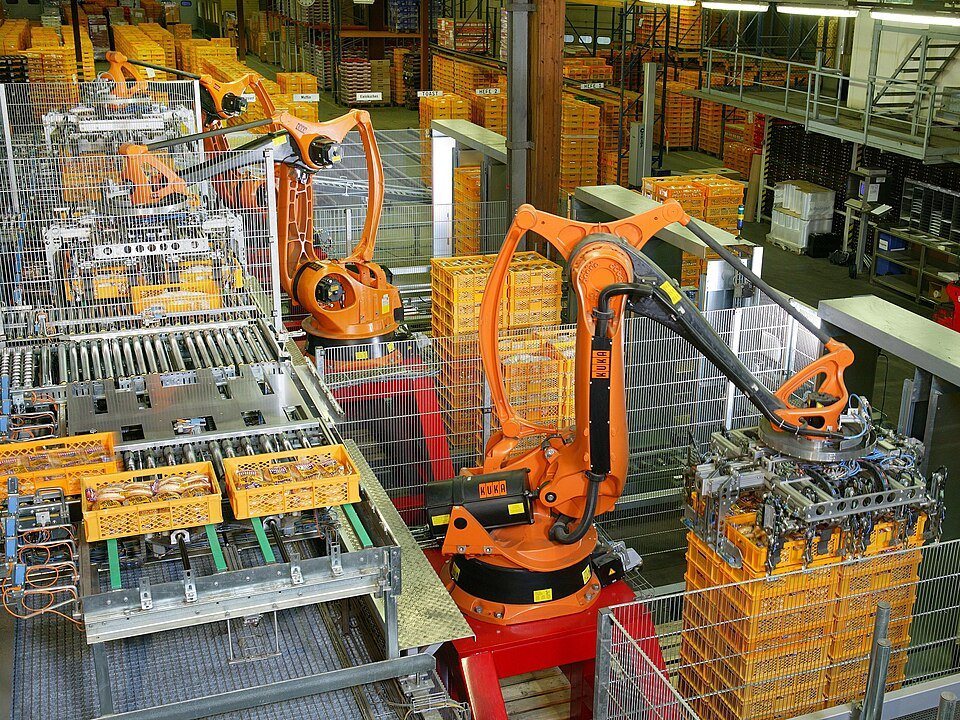
KUKA, headquartered in Augsburg, Germany, is a leading supplier of intelligent automation solutions. Owned predominantly by China’s Midea Group since 2016, KUKA delivers robots, cells, and fully automated systems for industries including automotive, electronics, and healthcare. With sales of approximately EUR 3.2 billion and 14,000 employees, KUKA’s portfolio spans from individual machines to interconnected production networks.
DENSO Robotics began developing robots in 1967 to enhance its automotive manufacturing processes. By 1970, it had introduced its first practical robot, and in 1991, launched its first commercial generation. Today, with over 120,000 robots installed worldwide, DENSO leads the small industrial robot segment, emphasizing reliability, flexibility, and precise assembly capabilities.
ABB, formed in 1988 through the merger of Sweden’s ASEA and Switzerland’s Brown, Boveri & Cie, stands as a global pioneer in robotics and digital services. Its Robotics Division has shipped more than 500,000 solutions, supporting industries from automotive to logistics. Operating in over 53 countries with more than 11,000 employees, ABB’s systems enhance productivity, flexibility, and quality across diverse manufacturing landscapes.