

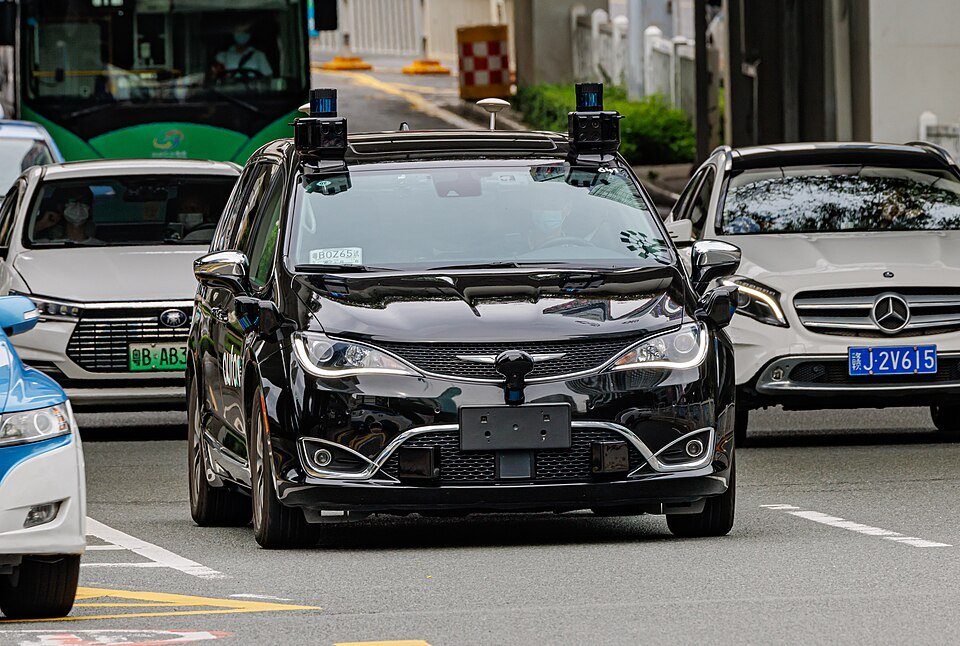
China’s Autonomous Driving Enters a New Competitive Phase
The Chinese autonomous driving sector is undergoing a marked transition, propelled by converging technological, industrial, and policy forces. Catherine Hong, senior market analyst at IDC China, observed, “The rising investment in autonomous driving, continuous advancement of chip processing power, and rapid iteration of software versions have fueled the China autonomous driving market to enter a new phase of development. According to the current market landscape, various brands show high homogeneity in parking assistance and highway NOA functions, but some industry leaders have achieved a significant advantage in the urban NOA. The competition in the China autonomous driving market will become even fiercer, and the establishment of competitive advantages in this field depends on car makers’ long-term investment in the research and development (R&D) of autonomous driving technology, effective management and use of autonomous driving data assets, as well as continuous enhancement of the excellent performance and reliability of their products.” Her remarks underscore a dual reality: while certain capabilities have become commoditized, others—particularly urban Navigate on Autopilot (NOA)—remain a frontier where differentiation is possible.
IDC’s latest assessment situates this evolution within the broader “electric, connected, autonomous, and sharing” trajectory reshaping the automotive industry. In China, this trajectory is reinforced by the rollout of pilot zones for advanced driving trials, the enactment of supportive regulatory frameworks, and steady gains in sensor fusion, AI perception algorithms, and high-definition mapping. These developments are occurring alongside improvements in user experience design, which increasingly determines whether advanced driver-assistance features are trusted and regularly engaged by drivers.
The study’s methodology reflects a blend of technical rigor and user-centered evaluation. Six representative vehicle brands were selected for detailed examination, chosen for their prominence in the domestic market and diversity of autonomous offerings. Data was gathered through structured questionnaires, in-depth interviews, and empirical road testing, enabling IDC to assess performance in real-world conditions rather than relying solely on manufacturer claims. The evaluation criteria aligned with key user concerns: breadth of model coverage for autonomous features, robustness of parking automation, and the capabilities of on-road driving assistance across varied environments.
Parking assistance emerged as an area of relative parity among brands, with most systems delivering consistent performance in standard scenarios such as perpendicular and parallel maneuvers. Highway NOA functions—covering automated lane changes, adaptive cruising, and ramp navigation—also showed a high degree of functional convergence, suggesting that these capabilities are now baseline expectations in the mid-to-premium segments. However, urban NOA, which must contend with dense traffic, unpredictable pedestrian behavior, and complex intersections, revealed clear performance stratification. A handful of manufacturers demonstrated smoother decision-making, more accurate object classification, and better integration of V2X (vehicle-to-everything) inputs, resulting in fewer disengagements during test drives.
From a technical standpoint, these advantages often trace back to the underlying compute platforms and data pipelines. The most capable systems leverage high-throughput automotive-grade SoCs, enabling real-time processing of multi-modal sensor data from lidar, radar, and high-resolution cameras. Continuous over-the-air updates allow these platforms to integrate algorithmic refinements rapidly, a process dependent on both robust software architecture and disciplined data asset management. As Hong emphasized, the ability to collect, label, and utilize vast driving datasets is becoming as critical as the mechanical reliability of the vehicle itself.
The report also notes that policy initiatives in China are accelerating the maturation of autonomous driving. Local governments are designating extended urban test zones, granting permits for higher levels of automation, and encouraging collaboration between automakers, mapping providers, and telecommunications firms. These measures, coupled with public discourse on safety and usability, are shaping consumer expectations and influencing purchasing decisions.
For engineers and technologists, the findings illustrate the interplay between hardware capability, software adaptability, and data stewardship in determining market leadership. The competitive landscape is shifting from feature checklists toward holistic system performance, where urban driving competence may serve as the next decisive benchmark.