

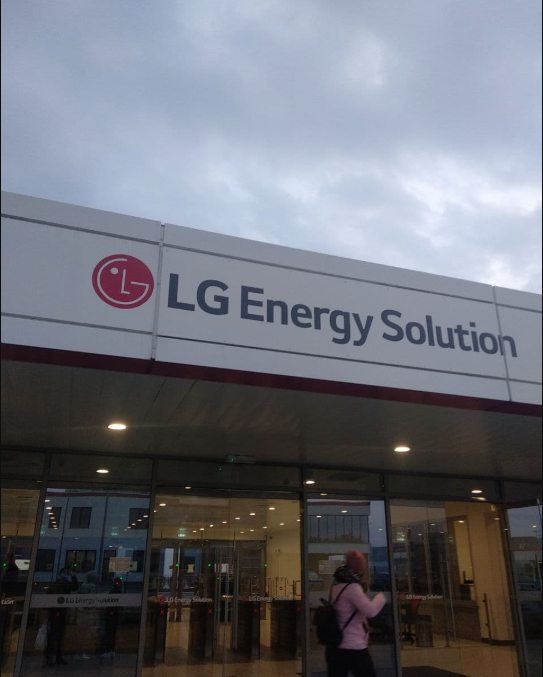
Honda and LGES Advance Ohio EV Battery Plant Plans
Construction is underway in , Ohio, on a major joint venture between Honda and LG Energy Solution (LGES) that underscores the accelerating shift toward electrified transportation. The facility, announced in October 2022 and formally established in January 2023, is designed to produce pouch-type lithium-ion batteries exclusively for Honda’s North American electric vehicles. Mass production is targeted for late 2025.
Robert H. Lee, CEO of the new joint venture, emphasized the strategic alignment between the two companies. “It is an honor to represent two great corporations, Honda and LG Energy Solution, both with a long, proud history of success. LG Energy Solution is the leading battery manufacturer globally and is investing aggressively to meet demand for electrification. We are excited to embark on this partnership with Honda, a leader in the global auto industry with a reputation for quality and reliability,” Lee said. “If we harness these strengths, I have no doubt our joint venture will be the most successful battery plant in the world, and we look forward to being a part of this massive transformation toward sustainability.”
The plant’s output will feed directly into Honda’s retooled manufacturing network in Ohio. The automaker has committed $700 million to upgrade several of its existing auto and powertrain plants for EV production. These facilities will integrate the new batteries into vehicles built on Honda’s forthcoming e:Architecture platform, with production and sales slated to begin in 2026. Honda’s broader corporate roadmap calls for battery-electric and fuel cell electric vehicles to account for 100% of its global sales by 2040, supporting its ambition to achieve carbon neutrality across all products and operations by 2050.
Rick Riggle, COO of the joint venture, highlighted the community’s role in the project. “We have talked a lot about the partnership between Honda and LG Energy Solution, but the communities of Southern Ohio are a part of this venture, too, and we see it not so much as a joint venture, but a tri-venture between our companies and the community,” Riggle said. “We share similar values and perspectives regarding the relationship we want to have with our new workforce, and this spirit of teamwork will be key to our success.”
From a technical standpoint, pouch-type lithium-ion cells offer advantages in packaging flexibility and energy density, making them well-suited for integration into diverse vehicle platforms. The choice aligns with industry trends toward higher-capacity cells that can support longer driving ranges and faster charging times, both critical factors in EV adoption.
LGES brings to the table one of the largest global battery manufacturing networks, with an annual production capacity of 200 GWh and plans to expand to 300 GWh by the end of 2023. The company’s investment in R&D has yielded advances in cathode chemistry, thermal management, and manufacturing efficiency—areas that directly influence performance, cost, and safety. Its operational expertise in scaling production is expected to help the Ohio facility ramp up quickly once equipment installation and commissioning are complete.
The collaboration also reflects a broader industry shift toward localized battery production. By situating the plant near Honda’s assembly operations, the partners can reduce logistics costs, shorten supply chains, and mitigate risks associated with overseas sourcing. This proximity also supports just-in-time manufacturing practices, which are critical for managing inventory and maintaining production efficiency.
For the engineering community, the project offers a case study in large-scale integration of advanced materials, precision manufacturing, and sustainable energy goals. The plant will require sophisticated quality control systems to ensure cell consistency, as even minor variations in electrode coating or electrolyte composition can impact performance and lifespan. Automation, data analytics, and inline inspection technologies will likely play a central role in meeting these standards.
Beyond the technical and operational aspects, the venture’s emphasis on community engagement signals an understanding that workforce development is as important as capital investment. Training programs, partnerships with local institutions, and long-term employment opportunities will be essential to building the skilled labor base needed for high-volume battery production.