

LEO Mega Constellations and the Race to Manage Space
Since Sputnik-1’s launch in 1957, near-Earth space has transformed into a crowded domain, with Low Earth Orbit (LEO) now hosting roughly 80% of all tracked space objects in just 0.3% of the volume below geosynchronous altitude. The surge in LEO mega constellations—vast networks of satellites for communications, navigation, and sensing—has accelerated this congestion. Proposals from the United States, United Kingdom, China, Japan, Russia, Canada, and the European Union forecast up to 100,000 satellites within a decade, far exceeding all launches in human history.
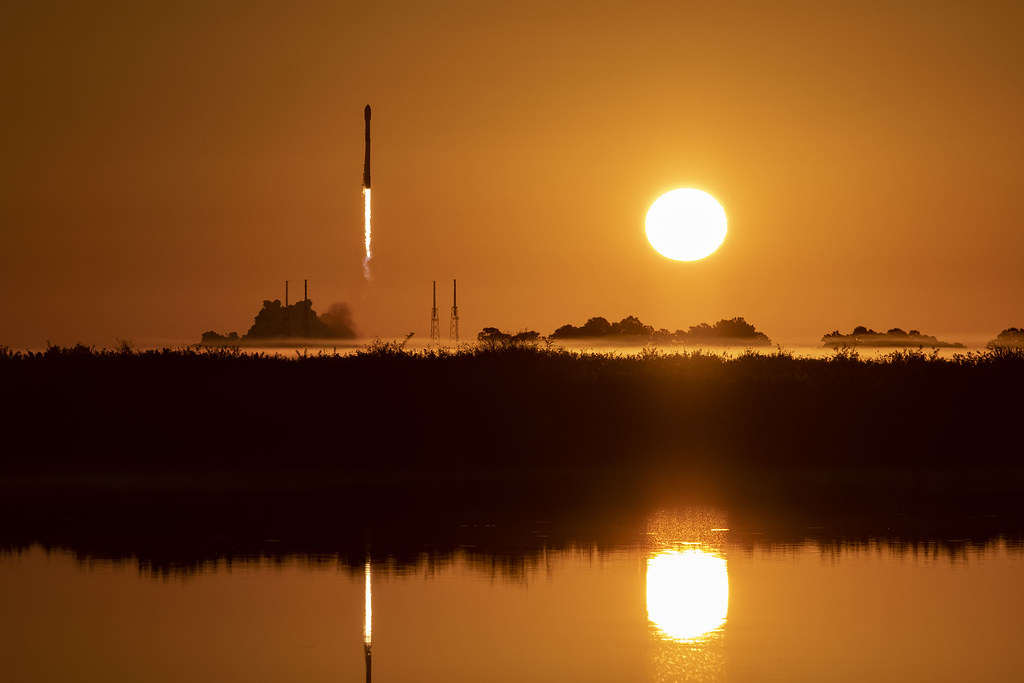
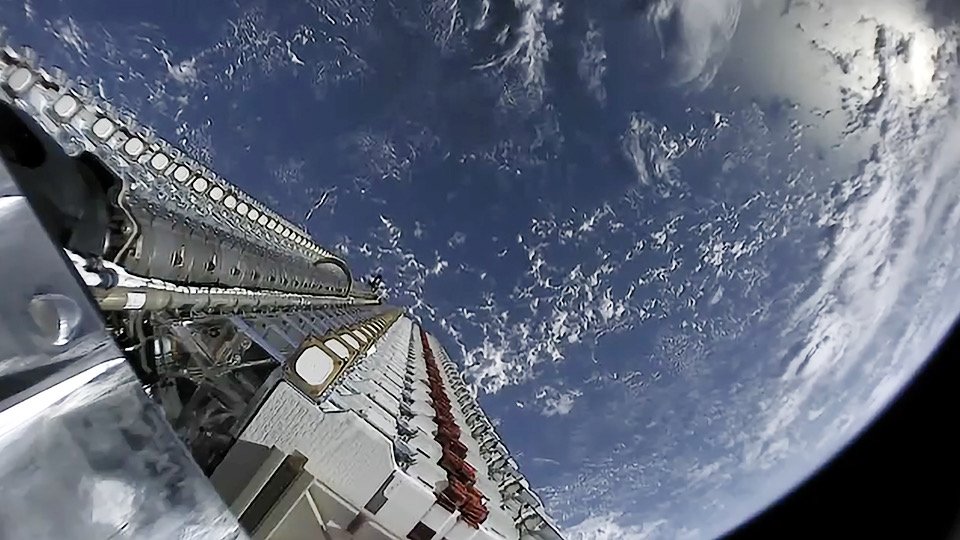
SpaceX’s Starlink exemplifies this scale, aiming for 42,000 satellites in orbits between 340 and 550 km, using laser interlinks and phased-array user terminals to deliver low-latency broadband. “Starlink is an important symbol of the weaponization of outer space in the United States,” noted researchers, referencing its deployment of 5,000 terminals to Ukraine in 2022. OneWeb’s 684-satellite plan, Iridium Next’s 81 satellites, Globalstar’s upgraded fleet, and Planet Labs’ Flock nanosatellites illustrate diverse architectures, frequencies, and orbital regimes. Other entrants—Samsung, Boeing, Telesat, Amazon—are poised to add thousands more.
The impacts are multifaceted. Astronomical observations suffer from satellite brightness streaking optical images and radio interference disrupting sensitive receivers. The International Astronomical Union, American Astronomical Society, and NASA have voiced strong concerns. In-orbit safety is strained: the European Space Agency’s Aeolus had to maneuver to avoid Starlink-44 in 2019; China’s Space Station performed emergency avoidance for Starlink-1095 and -2305 in 2021. Without a formal space traffic management system, autonomous collision avoidance may paradoxically increase risks in dense constellations.
The space environment’s evolution is threatened by the Kessler effect—collision cascades generating long-lived debris. The 2009 Iridium-33/Cosmos-2251 collision produced over 2,000 tracked fragments, some persisting for a century. Failures, such as 40 Starlink satellites lost to geomagnetic storms in 2022, add to uncontrolled targets. The Inter-Agency Space Debris Coordination Committee warns debris pieces over 10 cm could exceed 50,000 by 2050, with LEO collisions increasing sixfold.
Mitigation hinges on surveillance and governance. Space Situational Awareness (SSA) systems integrate ground-based radars, optical telescopes, and space-based sensors to detect, track, and predict object positions. The U.S. Space Surveillance Network, Russia’s Space Surveillance System, and Europe’s EUSST form core capabilities. Ground-based radars like the U.S. Space Fence track 5 cm LEO targets; optical systems such as GEODSS focus on deep-space but are adapting to fast LEO tracking. Space-based platforms like SBSS overcome atmospheric limits, offering high revisit rates and precision.
SSA faces challenges in multisensor management—efficiently tasking diverse sensors—and multisource information fusion, combining heterogeneous data for accurate state estimation. Methods range from heuristic scheduling to information-theoretic optimization, with emerging deep reinforcement learning approaches tackling the “curse of dimensionality.” Commercial actors like LeoLabs operate phased-array radar networks detecting nearly 20,000 targets daily.
Governance methods divide into postmission disposal (PMD) and active debris removal (ADR). PMD devices include propulsion systems, drag augmentation sails or balls, electrodynamic tethers, and solar sails. Starlink uses electric propulsion for deorbiting; CubeSat BP-1B demonstrated a drag ball in 2019. EDTs exploit geomagnetic interaction but face deployment reliability issues. ADR methods—lasers, harpoons, nets, space robots—actively capture or nudge defunct objects. The RemoveDEBRIS mission validated net and harpoon techniques in orbit, though only for cooperative targets.
Future trends point to rapid frequency-orbit resource reservation by leading firms under ITU’s milestone policy, escalating environmental damage to observations and safety, and SSA evolution toward space-based systems with real-time, multi-sensor fusion. Governance must shift from single-target to multi-target, low-cost, high-efficiency removal. Research priorities include equitable international resource allocation protocols, unified space traffic management standards, critical technologies for timely surveillance, and intelligent bulk removal strategies. Without integrated PMD and ADR, the sustainability of LEO—and the infrastructure humanity increasingly relies upon—remains at risk.