


The Environmental Cost of the Billionaire Space Race
When Virgin Galactic carried Richard Branson to an altitude of roughly 86 kilometers, it marked more than a personal milestone. It was a visible signal of a rapidly intensifying private space race, with Jeff Bezos set to follow aboard Blue Origin’s New Shepard. Both have declared ambitions to expand human access to space. “We’re here to make space more accessible to all,” Branson said after his flight. “Welcome to the dawn of a new space age.”
Commercial space tourism is no longer a distant concept. Tickets are already being sold by companies such as SpaceX, Virgin Galactic, and Space Adventures. High-profile customers have included Japanese billionaire Yusaku Maezawa, who in 2018 secured a future lunar flyby with SpaceX, and an anonymous bidder who paid $28 million for a seat alongside Bezos—later forfeited due to a “scheduling conflict.”
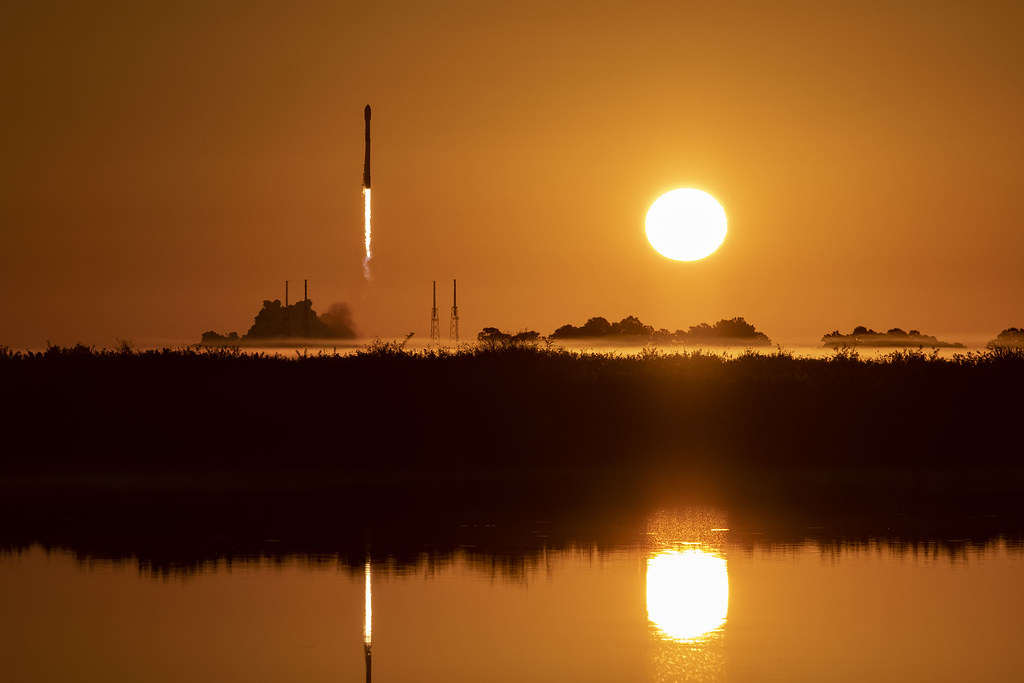
Yet, as this industry accelerates, researchers are warning of environmental costs that could grow as quickly as the market itself. Eloise Marais, associate professor of physical geography at University College London, studies the atmospheric effects of industrial emissions. She notes that rockets burn large quantities of propellant to escape Earth’s gravity. SpaceX’s Falcon 9 uses kerosene; NASA’s Space Launch System employs liquid hydrogen. Combustion releases carbon dioxide, water vapor, chlorine, and other reactive chemicals into the atmosphere.
While current rocket-related carbon emissions are small compared to aviation, they are increasing at about 5.6% annually. Marais has modeled scenarios over a decade to determine when spaceflight emissions might rival those from familiar sources. “For one long-haul plane flight it’s one to three tons of carbon dioxide [per passenger],” she says. A single rocket launch can emit 200–300 tonnes of carbon dioxide, divided among just a handful of passengers. “So it doesn’t need to grow that much more to compete with other sources.”
In 2020, there were 114 attempted orbital launches worldwide, according to NASA. Aviation, by contrast, averages over 100,000 flights daily. The difference in scale is stark, but rockets inject their exhaust directly into the upper atmosphere, where it can persist for two to three years. Even water vapor at those altitudes can form clouds that contribute to warming. “Even something as seemingly innocuous as water can have an impact,” Marais explains.
Closer to Earth, rocket exhaust generates intense heat, fostering ozone formation in the lower atmosphere, where it acts as a greenhouse gas. Hydrocarbon fuels such as kerosene and methane also produce soot particles. In the stratosphere, exhaust compounds can catalyze ozone depletion. Jessica Dallas, senior policy adviser at the New Zealand Space Agency, has described ozone loss as “the most studied and most immediately concerning” environmental impact of launches.
A 2019 analysis from the Center for Space Policy and Strategy drew parallels between launch emissions and orbital debris, framing both as existential risks to the industry. “Today, launch vehicle emissions present a distinctive echo of the space debris problem. Rocket engine exhaust emitted into the stratosphere during ascent to orbit adversely impacts the global atmosphere,” the report stated.
Market forecasts suggest the suborbital transportation and space tourism sector could reach $2.58 billion by 2031, with annual growth exceeding 17%. Drivers include new launch platforms, emerging startups, and development of lower-cost launch sites. Historically, space transport focused on cargo resupply and satellite deployment. Now, attention is shifting toward crewed missions, planetary exploration, and suborbital tourism.
Critics argue that the billions invested in luxury spaceflights could address urgent terrestrial crises. Former US Labor Secretary Robert Reich questioned, “Is anyone else alarmed that billionaires are having their own private space race while record-breaking heatwaves are sparking a ‘fire-breathing dragon of clouds’ and cooking sea creatures to death in their shells?”
Marais acknowledges the excitement surrounding new space capabilities but stresses the need for environmental responsibility. She points out the absence of global rules governing rocket fuel types and their atmospheric effects. “We have no regulations currently around rocket emissions,” she says. “The time to act is now – while the billionaires are still buying their tickets.”