


Key Drivers Behind the Surge in Industrial Robotics
Industrial operations are undergoing a profound transformation as automation technologies permeate manufacturing plants and production facilities. Robotics, once confined to specialized applications, is now central to the Industry 4.0 vision, where artificial intelligence, machine learning, and the Internet of Things converge to deliver unprecedented efficiency and productivity. Market projections underscore this momentum: Fortune Business Insights™ estimates the global industrial robot market will reach USD 81.42 billion by 2028, expanding at a compound annual growth rate of 16.6%.

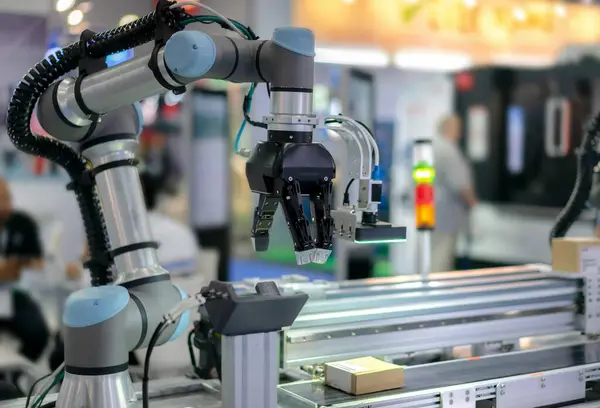
One of the most dynamic developments within this field is the rise of collaborative robots, or cobots. Designed for safe interaction with human workers, cobots are particularly attractive to small and medium-sized manufacturers constrained by capital and floor space. Their compact form factors, lower power requirements, and, in advanced models, the ability to mimic human motions, make them versatile additions to diverse production lines. In February 2021, ABB expanded its cobot portfolio with the GoFa™ and SWIFTI™ families, complementing its existing YuMi series. These new models can handle larger payloads and operate at higher speeds, broadening their applicability to sectors from logistics and transportation to consumer goods and food processing.
Universal Robots, a Danish pioneer in this segment, has maintained a leading position through strategic partnerships and portfolio diversification. In March 2021, the company integrated its cobots into Siemens’ Totally Integrated Automation portal, enabling machine developers and system integrators to incorporate robotic arms into complex manufacturing environments with greater ease. Such advancements are accelerating adoption rates and reinforcing cobots as a critical growth vector for the broader robotics market.
Beyond the factory floor, robotics is reshaping logistics. The sector’s expansion is fueled by globalization, urbanization, and the explosive growth of e-commerce, all of which demand faster, more reliable warehouse operations. Automation offers a direct response to labor shortages and the need for high-throughput material handling. In May 2021, JASCI Software acquired NextShift Robotics to strengthen its warehouse automation capabilities, positioning itself to address both workforce gaps and operational efficiency. That same month, BMW i Ventures invested in Plus One Robotics, whose vision software enhances robotic perception in logistics environments. XPO Logistics has also committed substantial resources—around USD 500 million annually—to research and development aimed at optimizing warehouse performance through intelligent systems. The integration of specialized robots into transport and logistics networks is opening new operational frontiers.
The COVID-19 pandemic acted as an unexpected accelerant for industrial robotics. While it disrupted supply chains and labor availability, it also underscored the value of automation in maintaining operations under restrictive conditions. According to Fortune Business Insights™, the industrial robot market grew by 13.5% in 2020 despite the global downturn. Investors quickly recognized the opportunity: early in the pandemic, Lux Capital and Pegasus Ventures signaled strong interest in automation-focused ventures. Teradyne pursued acquisitions in robotics, while ABB targeted labor shortages in construction with robotic solutions. In Kansas, FANUC’s SR-6iA SCARA robots, equipped with machine vision, were deployed by Interactive Design to automate the orientation, feeding, and packaging of medical swabs—an application that directly supported pandemic response efforts.
Despite these advances, the notion of robots entirely supplanting human labor remains beyond current technological capabilities. Machines excel at precision, repeatability, and endurance, but human judgment, nuanced interaction, and complex decision-making are not easily replicated in silicon and code. As the technology matures, the emphasis remains on augmenting human capabilities rather than replacing them, channeling robotics’ potential toward applications that enhance safety, efficiency, and societal benefit.