

Why Ford-Class Carriers Bet Big on Electricity Over Steam
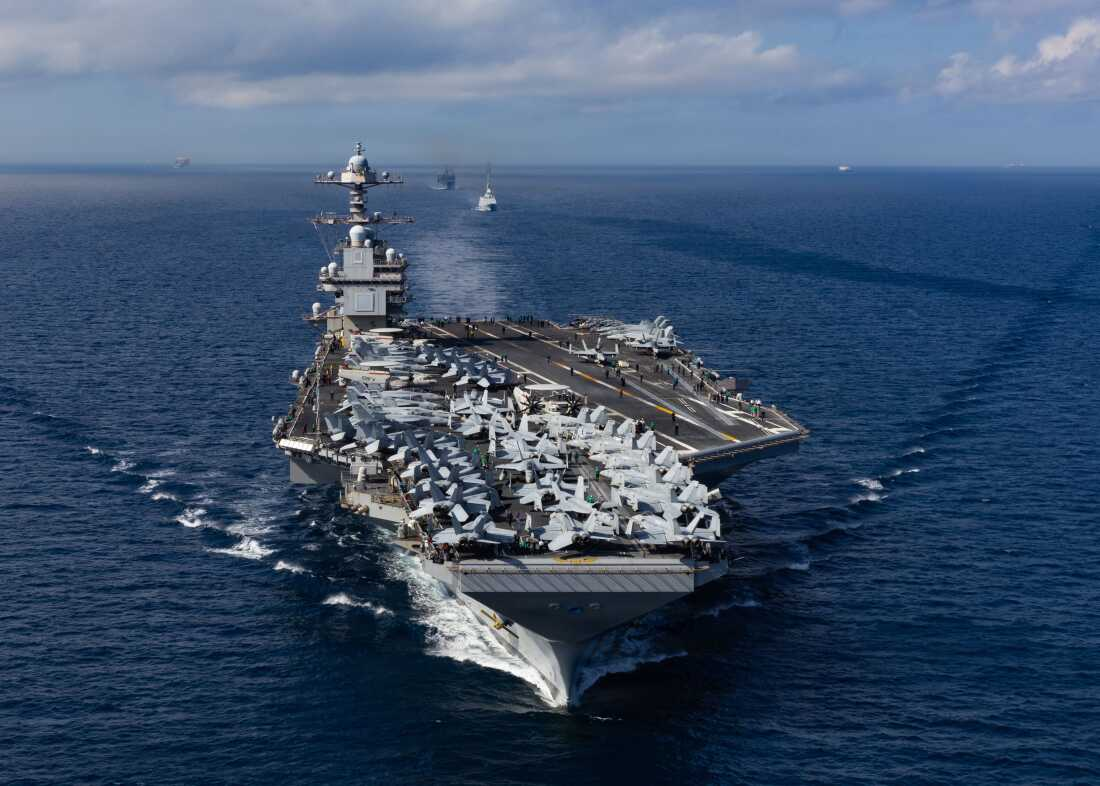
The Gerald R. Ford class isn’t designed around a new catapult. It’s designed around a different idea of what an aircraft carrier should be when electricity, not steam, is to be the dominant language of its operation. To understand this, let’s take a look at the Electromagnetic Aircraft Launch System. In this system, instead of relying on the steam pressure to shoot the airplane down the flight deck, the system relies on the linear induction motor and electricity to shoot the airplane.

As you can clearly see, the payoff for this system is obvious, as it allows for a smoother operation, less stress on the airplane, and the ability to handle the entire range of airplane weights, from the heavier strike airplanes to the lighter unmanned airplanes. Although the older steam catapults of the Navy are considered to be the most tested and reliable in the world, they are also considered to be the most difficult to calibrate and are becoming less and less compatible with the expected future air wing and the variety of airplane types.
This same concept is also seen in the other half of the flight process. Although the Gerald R. Ford class of carriers does have the aforementioned EMALS system, the ship also has the Advanced Arresting Gear system, which replaces the older hydraulic arresting gear system with the digital energy absorption system. This allows for a smoother operation, less stress on the airplane, and the ability to handle the expected future air wing and the variety of airplane types.
The payoff here is not an aesthetic one. The value of the aircraft carrier is directly related to the efficient processing of jets in the landing, fueling, re-arming, and then re-launching process. However, it is not the launch and recovery systems that have been modified with the Ford-class carriers. For example, the island has been moved to the back of the ship, weapons handling has been moved off of the weather deck, and fueling stations have been incorporated into the flight deck. The value of these modifications was discussed in an information briefing for the press on board the ship.
The value of the modifications was discussed in general terms by Ford Assistant Air Officer Cmdr. Richard Rosenbusch. “It increases our sortie generation rate.” He then went on to describe it in more detail. Picture the aircraft carrier like a revolver. It’s how fast you can reload those rounds in the revolver. This is what was said about the value of the aircraft carrier. Not individual innovations, but the overall process of decision-making that guarantees that the flight deck is always in motion.
The electrical system is significant in that it was designed with the future in mind from the beginning. The Ford-class carriers have A1B reactors that provide many times more electric power than the Nimitz-class carriers. This is why it is thought to be valuable in the future. All of the above is true, but none of it addresses the problematic beginning of the program. As everyone knows, the EMALS and AAG systems came on line with reliability problems, software instability, and all the problems that come with complex systems in their early days, especially complex systems at sea and not on land. As the government tests continue to show, there is still a problem in the reliability that the Navy can achieve versus the reliability that the Navy can mandate. The reliability goals are not expected until the 2030s.
However, the system is no longer defined in terms of the problematic beginning of the program. The USS Gerald R. Ford has now achieved 10,000 successful catapult launches and arrested landings. This means that the system is now past the lab stages of its development. The importance of the achievement, however, is not the ship but what it portends in terms of the design of the USN. The Ford-class aircraft carriers show that launch, recovery, and ship power generation are now considered a system.