

Webb Found Why Saturn’s Day Kept Giving Scientists the Wrong Answer
How is it possible for a planet to appear to be rotating at different rates without breaking any laws of physics? For Saturn, the answer had remained a puzzle for decades. The standard tricks for measuring the rotation rate of a gas giant do not work well. There is no surface on which to make observations, and Saturn’s magnetic field is aligned with its spin axis in an unusual way. That made radio pulses and magnetic signals seem like an obvious solution, but observations from spacecraft indicated that their clocks were not accurate. The problem is that something above Saturn’s surface is somehow interrupting the signal.

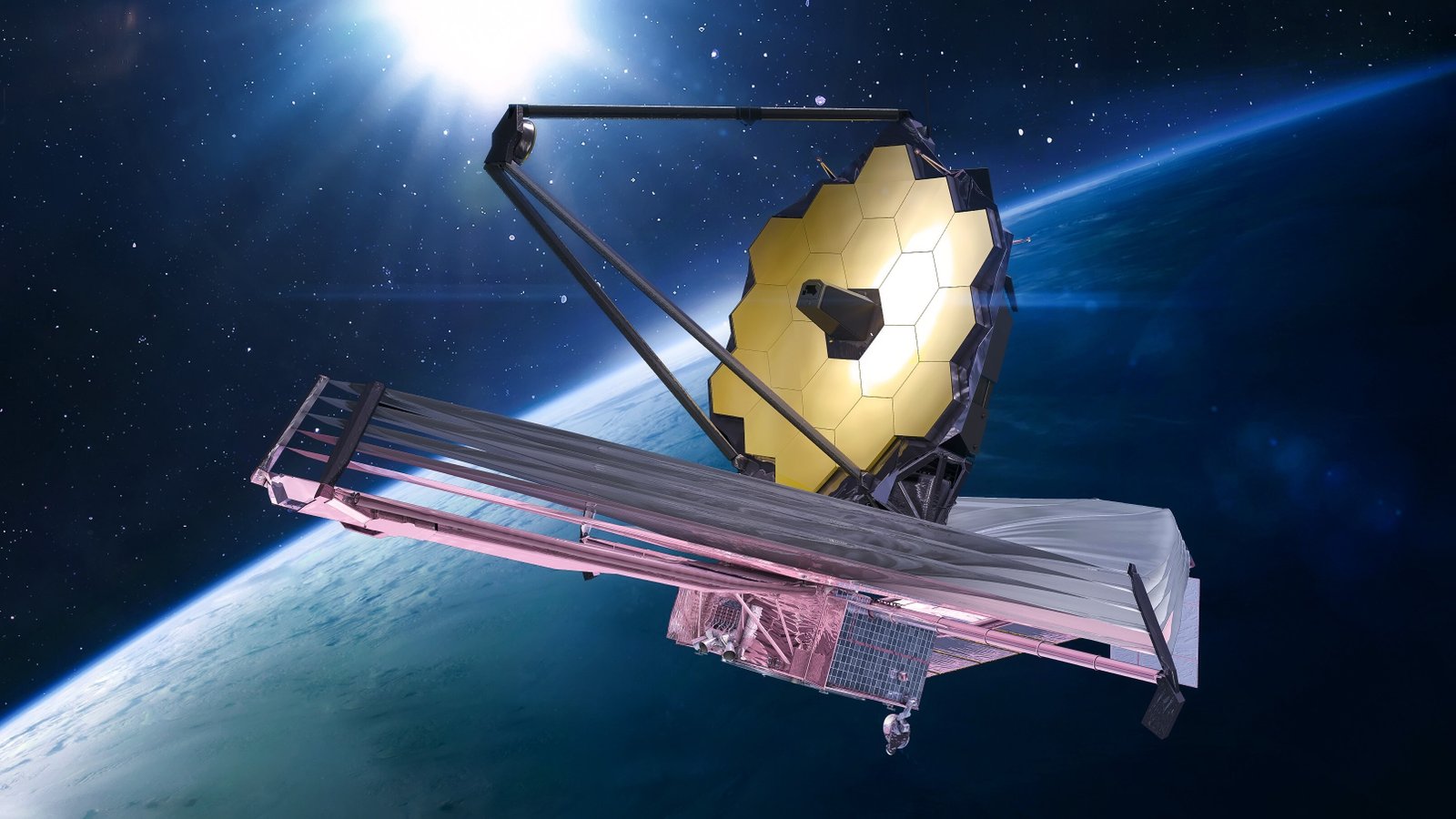
Saturn’s own aurora is what’s been causing the interference, according to new data collected by the James Webb Space Telescope. By focusing on Saturn’s north pole for an entire day on Saturn, scientists were able to get a much clearer picture of the trihydrogen cation, or H??. H?? is a molecule that is used as a thermometer in space. What we have discovered is that Saturn’s aurora is not just pretty lights in the sky. It is actually transferring heat into a particular part of Saturn’s upper atmosphere. That heats up gases in that region, which creates winds. Those winds then push electrically charged particles around, creating electric currents that feed back into the aurora. What we are seeing is essentially a planetary heat pump. Saturn’s aurora heats its atmosphere, its atmosphere drives winds, its winds produce currents that power its aurora, and so on ad infinitum.
This loop is important because these currents are what scientists had previously observed as a proxy for the planet’s rotation. So, the apparent change in rotation speed was not that the planet was speeding up or slowing down. It was that the planet’s upper atmosphere was modulating the magnetic and radio signals that spacecraft could detect. The new study, published in Journal of Geophysical Research: Space Physics, presents the first evidence of the link between the auroral heating and the currents.
What gave the Webb team an edge was precision. The previous temperature maps of the auroral region of Saturn had a margin of error of around 50 degrees Celsius. That’s a pretty big range, and it effectively masked the fine detail that scientists wanted to observe. The new results are ten times more accurate, showing the zones of heating and cooling. And these zones matched the long-standing models only if the heat source was placed where the particles of the aurora enter the atmosphere.
This does not, of course, give us the best estimate of how long a day really is on Saturn. A previous study, also based on Cassini data and using ring seismology, found that the internal rotation rate of the planet was 10 hours, 33 minutes, and 38 seconds. That study used the waves in the rings as a kind of “microscope” for the planet’s interior. The Webb study, however, reveals why the magnetic and auroral activity seemed to be drifting away from this underlying rate.
The larger significance of this result extends beyond Saturn. Gas giants don’t keep their energy neatly confined within the atmosphere and the space environment. Instead, on Saturn, it’s a two-way street, where the atmosphere helps control the environment of the magnetosphere, and the magnetosphere powers the aurora. This makes the planet a useful caution for the study of exoplanets, where auroral activity may be influenced by the upper atmosphere instead of rotation.
Webb has already shown us strange features in the upper atmosphere of Saturn’s north pole, including dark “bead-like” features and uneven “star-shaped” patterns. But they are not yet explained. Yet, this discovery of the rotation of Saturn shows that the strangest features of the planet are becoming less mysterious as the atmosphere of the planet becomes clearer.