

Starliner’s Next ISS Run Turns Into a Propulsion Certification Trial
What is it that a crew vehicle must do to regain some trust when it has almost lost control due to its thrusters?

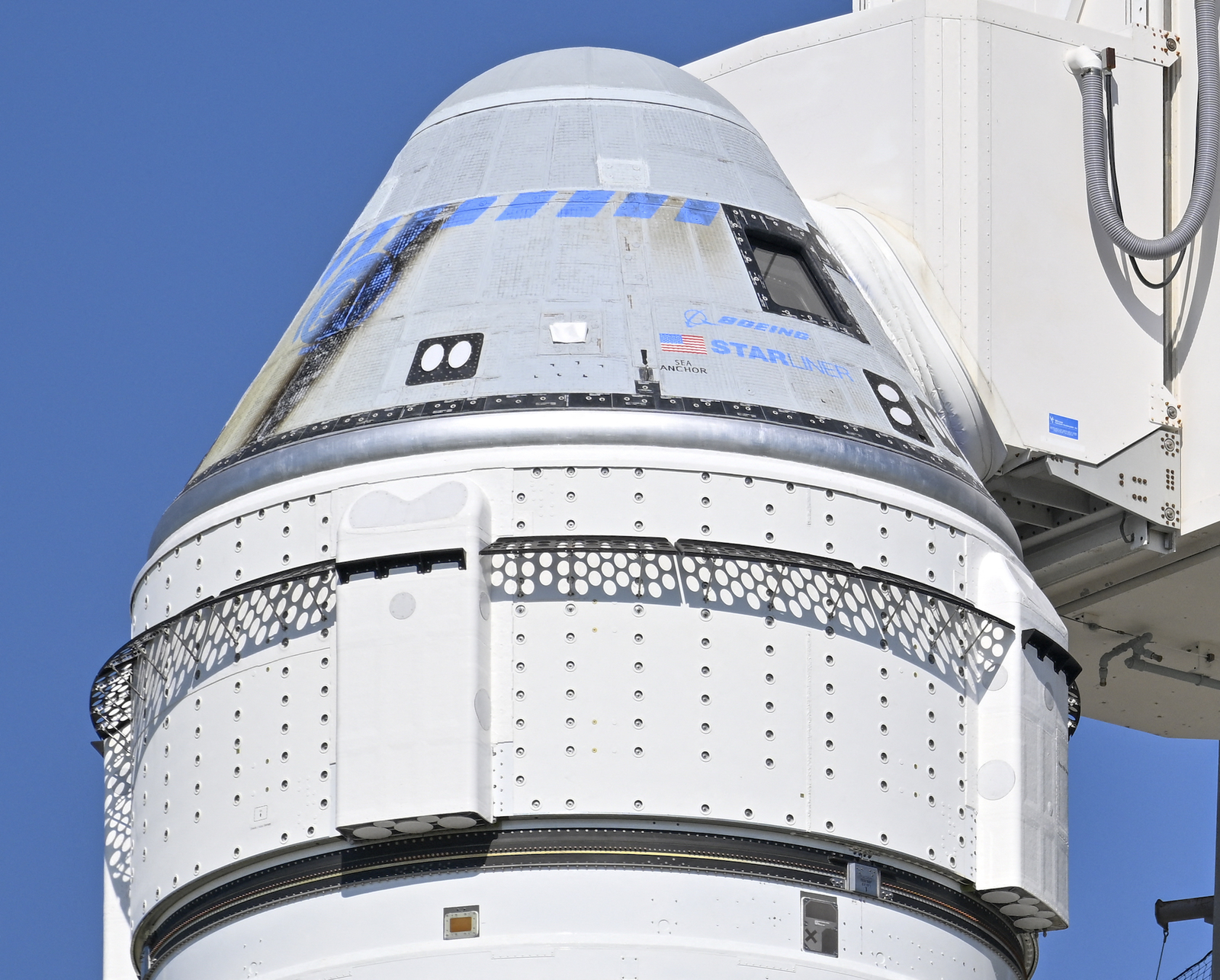
In early 2024, the CST-100 Starliner by Boeing has one simple aim: a successful short-crewed demonstration and the final hurdle to the regular rotations of the International Space Station. Rather, the Crew Flight Test itself showed a propulsion system that might act as well as possible to dock, but might act as poorly as possible to compel NASA to a more conservative and more informative next step: an uncrewed flight that will subject the spacecraft to a rolling test stand.
NASA and Boeing have now repackaged the near-term plan centered on Starliner-1 which will be launched not before April 2026. The value of the mission does not have the same meaning as “cargo,” and is in-orbit demonstration of propulsion fixes without placing astronauts at the top of unverified failure modes. Contract reality is equivalent to that reset: NASA Contract Commercial Crew ordering has been changed to four rather than six operations missions to accomplish, two options are still left, and the overall contract value is decreased to $768 million to $3.732 billion.
Starliner has the technical crux in its service module. Its design is based on 28 reaction control system thrusters to fine point and translate, 20 larger OMAC which can perform orbital maneuvers, and four RS-88 abort engines. This service module is the largest forensic handicap of the program, as well: this is destroyed prior to reentry, and much of the most failure-prone hardware is destroyed along with it. When it appears marginal on the flight, the next closest alternative is rough ground recreation, stringent preflight inspection and flight profile that is aimed at revealing weaknesses instead of hiding them.
In the 2024 ISS approach, five RCS service module thrusters failed. The immediate mechanism was found to be traceable to post-flight analysis to overheating of Teflon “poppet” seals within thruster valves, and the repeated firings and direct sunlight caused deformation to limit propellant flow. The behavior, which NASA scientists had recreated at their White Sands Test Facility through ground work, demonstrated partial recovery following a cooldown, and provided valuable experience, but also an unpleasant reminder that the weakness had not been completely designed away or qualified out of existence.
Next was the second blow: five leaks in the service unit RCS system, one was observed during the groundwork, four in the orbit. Helium pressurizes feed lines of propellant; leaks decrease the buffer engineers use when thrusters malfunction. Teams alone concluded that there was probably sufficient helium to come back. This risk posture changed in combination with thruster instability, and Starliner returned uncrewed.
That is not a decision that took place in a vacuum. The history of the development of Starliner has not been without test-and-check loopholes: Orbital Flight Test 1 failed to rendezvous with the ISS due to software problems and later inspection revealed the lack of a single end-to-end integrated avionics and software test facility and the discovery of corroded oxidizer valves, parachute problems, and flammability issues in wiring tape. “Process escapes,” to which NASA safety advisors have frequently drawn particular attention, have a particular resonance in a vehicle where most crucial hardware is discarded regularly after every mission.
Starliner-1 is supposed to be the countermeasure: a carefully uncrewed proving flight that tests new thruster assemblies of a “doghouse” that helium-plumbed and confirms that the spacecraft will tolerate the thermal and duty-cycle environment which was so unkind in 2024. The declared goal of NASA is still what is termed as “dissimilar redundancy” the fact that there is no one supplier of crews to the low earth orbit- but time is the measure of the truth. As the ISS is set to retire in 2030, every certification delay squeezes the left time frame within which Starliner can play a significant role in terms of operational cadence.
In the case of Starliner the new launch is not a comeback story. It is an engineering examination, the syllabus of which is heat, leakage, and hardness of what may be inferred when the evidence is burnt up, or jettisoned, on the homeward passage.