

Take a City Spin With Mercedes Drive Assist Pro
Urban driver assistance has ceased to be a highway party trick. Mercedes-Benz’s latest system is designed to handle the slow, messy parts of driving – traffic lights, stop signs, speed bumps, construction tapers and the inevitable double-parked delivery van without the need for the driver to “catch” it again all the time when the road stops looking like a freeway.

That change is important because the engineering challenge of the city is no longer raw speed control; it is decision density. In downtown environments, the vehicle must be able to interpret signals, read the intent of other road users and make lane decisions soon enough so as to avoid last-second merges that may feel safe to a computer but terrifying to humans.
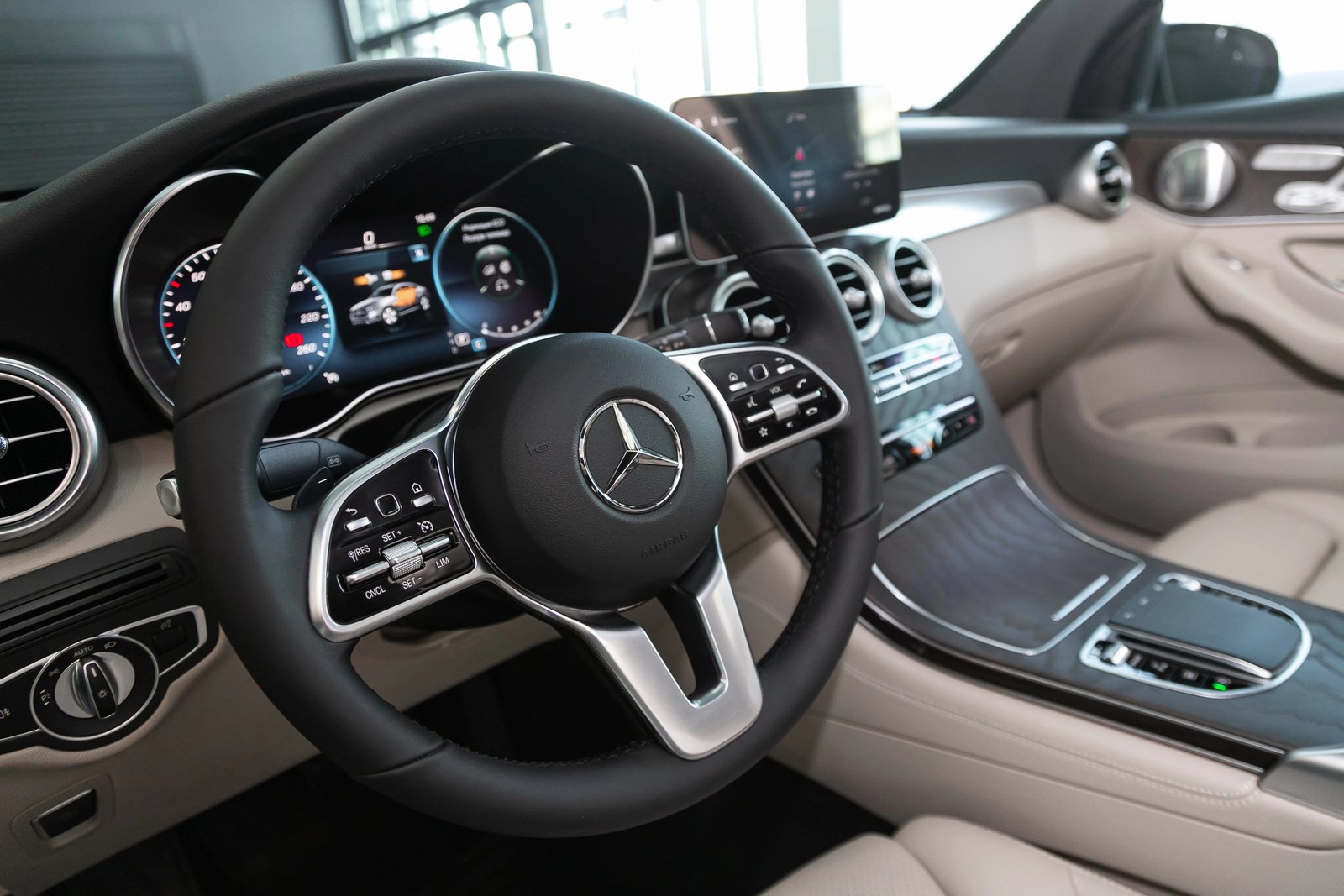
Mercedes’ answer is MB.DRIVE ASSIST PRO, demonstrated on surface streets in San Francisco in a production Mercedes-Benz CLA. The CLA is a very unusual first landing place for flagship automation capability, but not without reason: it is designed as a software-defined vehicle. Instead of dozens of separate electronic control units, the car centralizes major functions in a small number of powerful computers. One such computer is NVIDIA’s Orin platform that is responsible for perception and path planning. The end result is not just a faster chip; it is an architecture that can take wider software upgrades in the future, which is the point of making the vehicle a continuously improving system as opposed to a fixed selection of features.
In the demo drive the system was acting as if designed by people who have sat in real traffic. It came to full stops at stop signs – full stops that are correct, if socially unpopular – and read traffic lights, rather than depending on a lead car to “teach” it what to do. It also slowed for speed bumps and went around construction zones with no telltale indecision that transforms what should be a driver-assist feature into a stress-inducing one.
One small, telling detail from the CLA’s existing driver-assistance suite gives some indication of what Mercedes is trying to do: light brake applications while adaptive cruise is active do not automatically cancel the system. The driver has the ability to trim down speed, allowing the car to smoothly resume, the way throttle override has worked with conventional cruise control for years now. It is a subtle change, but it indicates a “shared control” philosophy – driver and automation working together instead of wrangling for control.
Drive Assist Pro takes that shared-control concept and applies it to city driving. Given a destination, it anticipates lane needs before reactions in late manner. It is dealing with normal urban disruptions such as double-parked cars without freezing in place or insisting on immediate intervention. Mercedes driver’s seat engineer not to take over on the run described, but there can be challenges to the system with edge cases like temporary human-operated traffic control in crosswalks.
The more significant change is within the software stack. Mercedes-Benz chief software officer Magnus Ostberg explained a shift from the rules-based approach to driving logic alone: “We completely elevated our autonomous driving stack. It is no longer on a rule-based stack.” It is no longer on a rule based stack.’ He added that the system now uses “an end-to-end AI model,” citing benefits that show up not only in city driving, but also in tasks such as parking and lane following.
That type of end-to-end AI is often misinterpreted as “letting the neural network do whatever it wants.” In reality, Mercedes combines the learned driving policy with safety constraints. NVIDIA describes this as a dual-stack approach, where end-to-end AI will take on the role of core driving while a parallel and more classical safety stack features redundancy and guardrails via its Halos safety system, that supports what it calls “cooperative steering between the system and driver.” The goal is simple: if the AI suggests a trajectory that violates safety rules, the guardrails prevent it from being vehicle motion.
It also is a reminder of why centralized compute is becoming a requirement, not a luxury. NVIDIA’s Orin is much quoted as being 254 TOPS of capability – part of a wider industry movement to consolidate multiple, distributed vehicles electronics into fewer, more powerful computers to make integration easier, and development cycles faster. Centralization is not nearly as sexy as autonomy, but it’s what makes rapid iteration possible-especially when the system must be able to handle perception, sensor fusion, planning, and driver assist behaviors in real time followed by evolution in the form of updates throughout a vehicle’s life.
None of this changes the legal or operational reality of Level 2 driver assistance: the human driver is still responsible. Mercedes itself draws a very clear distinction between systems such as Drive Assist Pro, and its certified Level 3 “Drive Pilot” that is restricted to certain situations such as approved freeways, speeds under 40 MPH, clear weather, and no construction zones. Drive Assist Pro is nearer to a “Level 2++” experience – capable of feeling like a sense of autonomy, but really just an assistance system that requires supervision.
That is not an academic line, though, but is the tension that is shaping regulation and the design of products. In Europe, the General Safety Regulation already requires an increasing number of assistance technologies (lane keeping, automated brake function) in new vehicles, and a framework for approving automated driving. EU rules are consistent with the UN approach which includes the Driver Control Assistance Systems (DCAS) approach for Level 2. At the same time, safety groups have warned that proposals allowing for “hands-off” operation and system-initiated lane changes could give the impression of trading off who is in control for whom. The engineering implication is clear: For the increasing capabilities of features, manufacturers need both more robust driver monitoring and clearer interaction design so that the driver understands when the system is assisting and when it’s acting.
Mercedes has certificates that its safety certification process for the U.S. is complete, says Mercedes, with Drive Assist Pro to come late in the year on the CLA and spread from there as other models get software-defined vehicle upgrades during midlife refreshes. The larger story is that this capability is here as a result of not only a one-off option package, but the outcome of a new vehicle computing model – one that is centralized, updateable and built to run AI and safety logic side by side.
For the industry, that makes the CLA less of an entry-level anomaly and more of a template: a car where the electronics architecture is finally aligned with the ambition of point-to-point assistance in the city.