

Airbus Scales Certified 3D Printing to Boost Aircraft Efficiency
Could the next leap in aerospace manufacturing be measured not in decades, but in grams? Airbus is proving that certified additive manufacturing can deliver both-dramatic weight savings and accelerated production-without compromising safety or reliability.

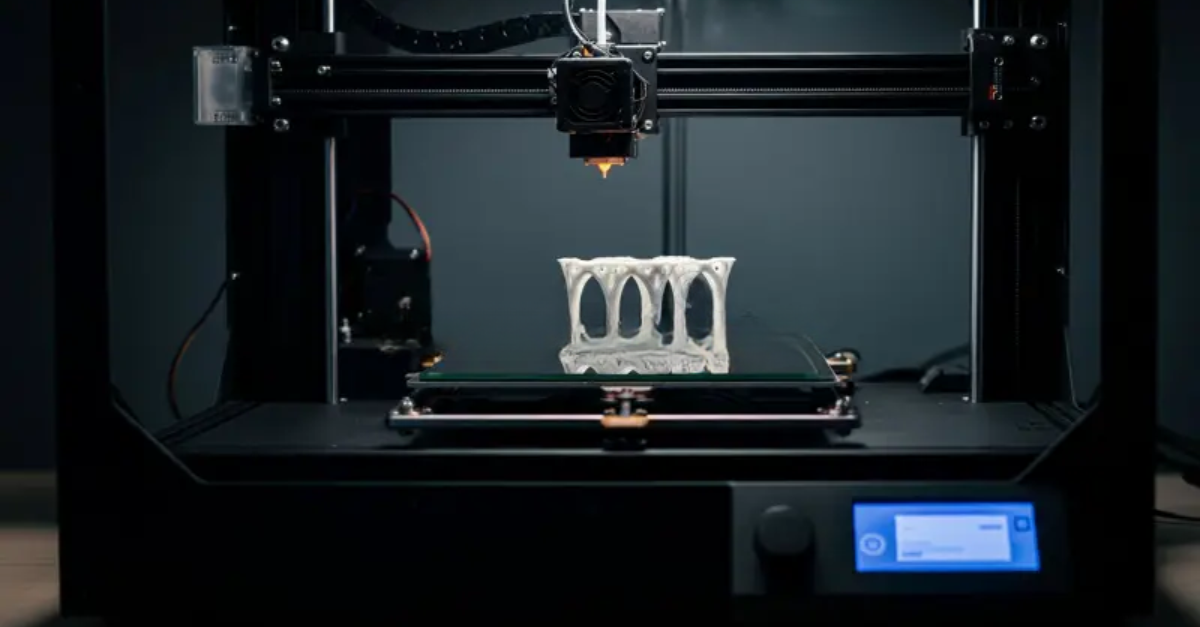
Today, powered by Stratasys industrial-grade FDM platforms, Airbus manufactures more than 25,000 flight-ready 3D-printed parts per year, with upwards of 200,000 certified polymer components already in active service across its global fleet. From humble beginnings with a spare crew seat component, the transformation has grown into the centerpiece of the company’s production and maintenance strategy.
Recent operational data from the Airbus A350 program underlines the effect: a 43% reduction in part weight, no Minimum Order Quantity requirements, and an 85% cut in lead time. Translated, these turn into less fuel burn, reduced carbon emissions, and weeks cut from production schedules. Parts for the A320, A350 and A400M manufactured using Stratasys’ ULTEM 9085 Certified Grade filament-a high?performance polyetherimide, known for being flame retardant, heat resistant and demonstrating low outgassing-critical properties for cabin and structural applications.
“Stratasys’ additive manufacturing technology is part of our dna in terms of safe and sustainable aviation,” said Serge Senac, Airbus Industrial Leader for Polymer Additive Manufacturing. “We are able to produce certified, repeatable parts more rapidly, with less reliance on complex supply chains. This manufacturing flexibility reduces costs and ensures improved response times to meet the needs of our customers anywhere in the world. Last but not least, this technology contributes to Airbus’ roadmap for achieving carbon neutrality by 2050.”
The supply chain implications are potentially just as huge. By having distributed manufacturing, Airbus could make the parts it needs when and where it needs them, reducing aircraft downtime, inventory storage space, and ugly logistical delays. The thinking is similar to that of digital warehousing, where certified designs reside in digital files and are printed only as needed, directly linking production with operational demand.
Additive manufacturing has given aerospace engineers a design latitude that is nothing short of transformational. Geometry is often constrained by traditional machining or casting, while 3D printing allows lattice structures, integrated channels, and single?piece assemblies that optimize strength?to?weight ratios. In many applications, like engine brackets and interior fittings, additive manufacturing has achieved as much as 55% weight reduction with no compromise in structural integrity.
Equally impressive economics: Deloitte’s analysis suggests that additive manufacturing spare parts can be 30–50% less expensive than traditional methods, especially on low?volume or custom components. Eliminating the tooling requirement reduces not just upfront investment but also allows rapid prototyping and iterative design improvements. Airbus has used this capability to shrink development cycles on complex parts from weeks to days, enabling faster validation and deployment.
Additive manufacturing promotes sustainability in that it generates minimal waste because it builds parts layer?by?layer, using only what is needed. The possible inclusion of recycled polymers and bio?based materials in such processes will further enhance its environmental credentials. Lifecycle assessments are showing significant reductions in carbon emissions and energy consumption compared with subtractive processes and supportive of Airbus’ long?term decarbonization targets.
Rich Garrity, Chief Business Unit Officer at Stratasys, punctuated the wider move towards industry engagement when he said, “Our collaboration with Airbus is proof that additive manufacturing is being integrated into true production at scale, and can be a huge differentiator. With tens of thousands of certified parts already flying, we are seeing an inflection point, not just for Airbus but for the entire aerospace industry. Demand for lighter, faster, and more resilient supply chains is accelerating adoption of Stratasys technology worldwide.
What Airbus is achieving today signals the next growth chapter for our industry: certified additive manufacturing as a mainstream production method across aviation globally.” Airbus combines advanced aerospace polymers with distributed manufacturing models and certified production processes to demonstrate that additive manufacturing is no longer constrained to prototyping or niche applications; rather, it is a scalable, economically viable, and environmentally aligned solution for modern aircraft production and maintenance that is reshaping the factory floor and global supply chain.