


Data-Driven Blueprint for America’s EV Charging Future
Nearly seven decades after the launch of the Interstate Highway System, the United States is embarking on another transformative infrastructure effort—this time to build a nationwide electric vehicle (EV) charging network. Unlike the paper maps that guided highway construction, this initiative is grounded in high-performance computing and advanced data modeling. At the center of this effort is a comprehensive study from the National Renewable Energy Laboratory (NREL), which outlines the number, type, and location of chargers required to support between 30 and 42 million light-duty EVs by 2030.

The study, titled *The 2030 National Charging Network: Estimating U.S. Light-Duty Demand for Electric Vehicle Charging Infrastructure*, was developed in collaboration with the Joint Office of Energy and Transportation and the U.S. Department of Energy’s Vehicle Technologies Office. It supports federal clean energy goals, automaker commitments to zero-emission fleets, and the growing consumer appetite for EVs. Gabe Klein, executive director of the Joint Office, emphasized its significance: “The 2030 National Charging Network study ties together two of the administration’s priorities: building a national EV charging network and working toward the 2030 goal for the majority of all new car sales to be battery-electric vehicles. It’s a framework for what is needed nationally, in terms of the types of charging required, their number, and where those chargers should go.”
Estimating infrastructure needs at a national scale required NREL researchers to integrate diverse datasets—projected EV adoption rates, regional travel behaviors, climate impacts, and charging accessibility. The framework spans low-, medium-, and high-adoption scenarios, with the mid-range scenario envisioning 33 million EVs by 2030. Eric Wood, senior EV charging infrastructure researcher at NREL, noted, “The framework we built for the 2030 National Charging Network study exhaustively considers how people in the U.S. use light-duty cars to travel, what their energy needs are for that travel, and how we can meet those needs, given projected EV adoption rates.”
To capture the complexity of American travel, the team employed several specialized tools. EVI-Pro modeled daily charging needs for commuting and errands, factoring in differences between drivers with and without home charging access. EVI-RoadTrip assessed requirements for long-distance travel along national highways, while EVI-OnDemand estimated infrastructure for electrified ride-hailing fleets. The TEMPO model provided adoption projections under varying scenarios. This multi-pronged approach allowed for location-specific estimates, enabling planners to address questions such as cross-state demand for highway corridor charging and local station utilization.
Regional variation plays a critical role in the analysis. Extreme climates, such as Arizona’s heat or North Dakota’s cold, can slow charging speeds and reduce range. High-EV-density areas like Southern California may face congestion at charging stations. Even behavioral factors, such as drivers leaving fully charged vehicles plugged in, were considered for their impact on station availability. Wood highlighted the uniqueness of this granular approach: “City-to-city differences in climate, travel patterns, housing, charging preferences, and demographics aren’t considerations captured in other infrastructure assessments that we’ve seen.”
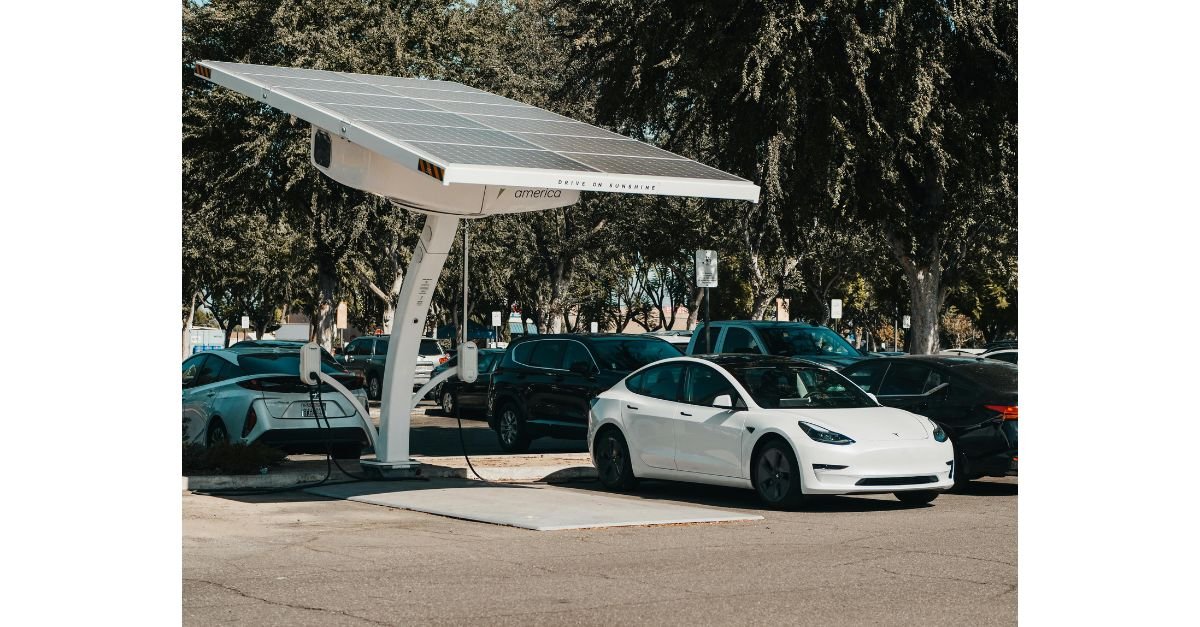
For the mid-adoption scenario, the study projects a need for 28 million charging ports nationwide. Residential chargers—primarily Level 1 and Level 2—will form the backbone of the network, with 26 million units at homes, multifamily properties, and workplaces. Public infrastructure will include 1 million Level 2 ports in accessible locations such as office buildings and retail centers, and 182,000 fast charging ports to support long-distance travel, ride-hailing electrification, and drivers without home charging.
Wood underscored the collaborative nature of the challenge: “In just the past few years, we have seen historic investments into national EV infrastructure… At the same time, the study reinforces the notion that we’re going to need to continue to work together—both public and private entities—to build the national network that we’ll need for 2030 and beyond.” The detailed estimates now available provide actionable guidance for automakers, charging providers, utilities, local governments, and private developers.
While projections will evolve with market conditions, technology advances, and consumer preferences, Klein noted the enduring value of the work: “The 2030 National Charging Network study is a crystal ball reflecting a moment in time… The fundamental contributions that Eric and the team at NREL have made will outlive the study. They will likely go on to shape policy and programs for many years to come.”