

Africa Positions Itself in Global EV Battery Supply Chain
The International Energy Agency has projected a dramatic surge in demand for critical minerals essential to clean energy technologies. By 2040, manufacturers will require forty times more lithium, twenty-five times more graphite, and around twenty times more nickel and cobalt compared to 2020 levels. This forecast underscores the strategic importance of mineral-rich regions, particularly in Africa, where vast reserves of these resources are already known.
In 2021, the government of the Democratic Republic of Congo (DRC) partnered with the United Nations Economic Commission for Africa (UNECA), Afreximbank, the African Development Bank, Africa Finance Corporation, and other entities to explore ways of increasing Africa’s participation in the value chain for lithium-ion batteries, electric vehicles, and clean energy systems. The DRC’s geological advantage is formidable: it holds 51% of the world’s cobalt reserves and possesses substantial hydroelectric potential. According to the African Development Bank’s report *Strengthening Africa’s Role in the Battery and Electric Vehicle Value Chain*, this combination positions the country to become a low-cost, low-emissions producer of battery precursor materials and cells. Alongside Zambia, the DRC is also a leading copper producer, supplying a metal integral to electric wiring and motor assemblies.
A BloombergNEF feasibility study examined the establishment of Special Economic Zones (SEZs) in the DRC and Zambia for manufacturing battery precursors. The findings confirmed both technical feasibility and financial viability, with an estimated total investment of $2.7 billion. Mrs. Oluranti Doherty, Afreximbank’s Director for Export Development, stated, “According to the BloombergNEF report, a precursor facility in the DRC would be three times cheaper than it would cost for a similar plant in the USA as a result of cost competitiveness and proximity to raw materials.” Afreximbank has since engaged ARISE Integrated Industrial Platform, a developer of SEZs across Africa, to conduct a pre-feasibility study.
If implemented, the project could advance several UN Sustainable Development Goals, notably Goal 8 (Decent Work and Economic Growth) and Goal 9 (Industry, Innovation and Infrastructure). It is expected to boost foreign exchange earnings, facilitate technology transfer, enhance local skills, and generate over 40,000 direct jobs and 160,000 indirect jobs in the two countries.
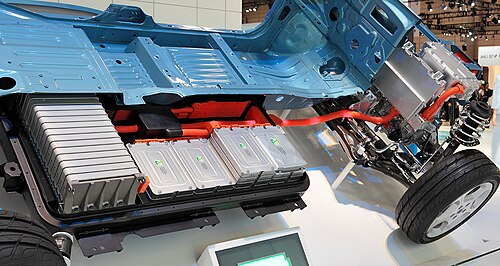
Lithium-ion batteries currently dominate the electric vehicle market, accounting for roughly 49% of the global rechargeable battery segment. Africa’s mineral wealth extends beyond cobalt and copper to include lithium, manganese, nickel, and graphite, with deposits in countries such as South Africa, Madagascar, Mozambique, Tanzania, and Gabon. The DRC alone is estimated to hold several million tonnes of lithium reserves. Geological surveys suggest that known deposits may represent only a fraction of the continent’s potential, as many promising formations remain unexplored.
Global interest in Africa’s role in the EV supply chain is growing. In December 2022, during the U.S.-Africa Leaders’ Summit in Washington, the United States signed a memorandum of understanding with the DRC and Zambia to develop an integrated value chain for EV battery production. Lithium batteries also have applications beyond transport, serving as efficient storage systems for renewable energy sources such as wind, solar, and hydropower, thereby mitigating intermittency issues.
The projected expansion of the EV market, potentially reaching $57 trillion through 2050, presents a compelling incentive for investment. However, achieving a competitive manufacturing base will require substantial infrastructure development and a business environment that attracts private sector expertise and capital.
Morocco has already taken a significant step in this direction. In June 2023, it signed a $6.4 billion agreement with Chinese battery manufacturer Gotion High-Tech Co to build an EV battery factory in the Rabat-Salé-Kénitra region, with an annual capacity of 100 gigawatts. Gotion ranks among the world’s ten largest battery manufacturers and is listed on both the Shenzhen and Zurich stock exchanges, with Volkswagen among its shareholders.
The Africa Investment Forum, an initiative of eight development partners, plays a pivotal role in structuring and advancing such projects. Its annual Market Days event convenes deal sponsors, investors, government officials, and development finance institutions to move transactions toward closure. The 2023 Market Days, held in Marrakech from 8–10 November under the theme *Unlocking Africa’s Value Chains*, prioritised green battery manufacturing alongside renewable energy, agribusiness, and other sectors where African nations hold comparative advantages. The Forum’s founding partners include Africa50, Africa Finance Corporation, Afreximbank, the African Development Bank, Development Bank of Southern Africa, European Investment Bank, Islamic Development Bank, and Trade and Development Bank.