

NASA’s Roman Telescope Cleared a Final Mirror Test With Bigger Stakes Than Hubble
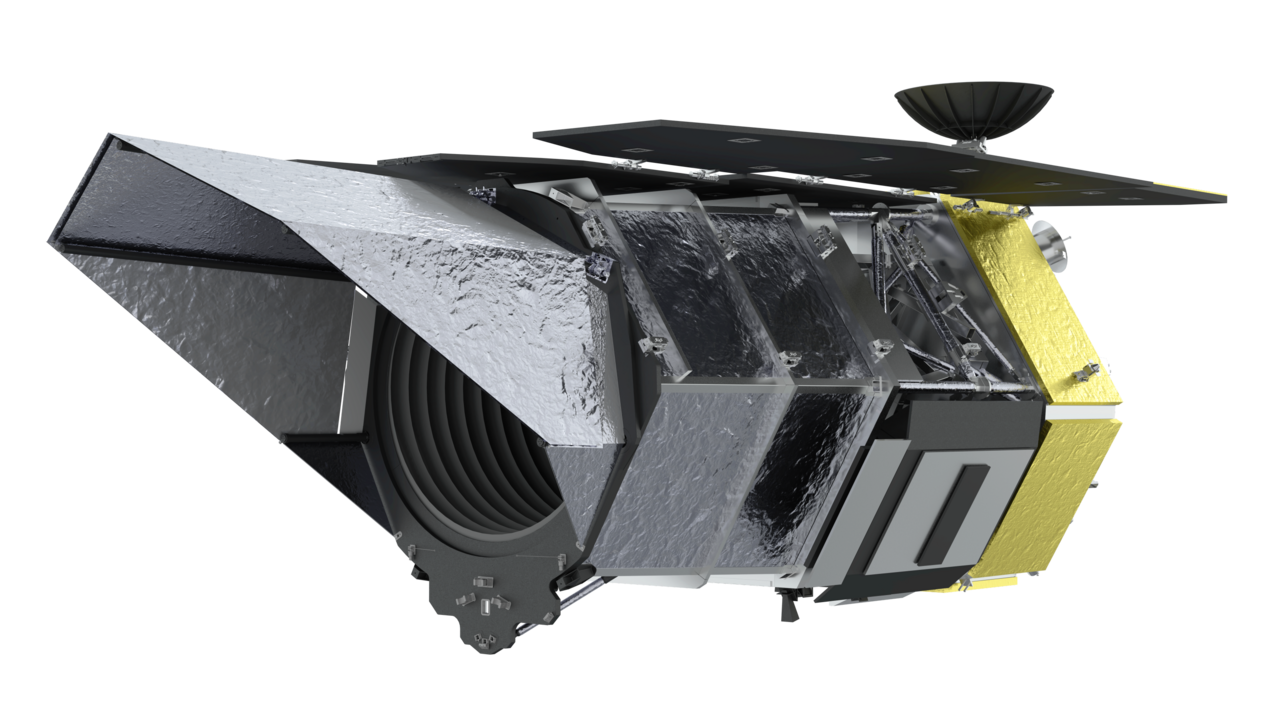
On a surface flatter than dust can show can be up or down a space telescope. This was not just another check list item, but the final prelaunch inspection of the Nancy Grace Roman Space Telescope’s main mirror. Finally, the engineers have looked the mirror in the eye before the observatory moves onto preparatory stages for launching, and believe that none of the vibration tests or handling have made any discernible change to the mirror, and that none of the tests or handling have left contamination on it. “The mirror passed with flying colors, keeping the mission on track for an early September launch.”

Because Roman will retain a similar mirror size to Hubble, it may be hard to recognize just how important the milestone is. What that mirror will feed is what is different. The Wide Field Instrument for the Roman will concentrate on a very large camera some 300 million pixels in total which will see a far greater swath of sky at Hubble resolution. NASA describes the observatory as allowing it to see 100 times more sky that NASA’s Hubble or Webb telescope can in one look. When mapping a set of goals with precision in a large portion of the cosmos, the stability of the mirrors assumes special significance: If something does change in the optical component, it can increase significantly over the course of a mission.
The final inspection was for the purpose of a mechanical stress test to simulate launch and spaceflight loads. The engineers then tilted the telescope on its side and lifted the telescope cover off the top of the mirror that always has been protecting the mirror while it is in orbit, and looked for debris on the mirror; then they traced out the optical path the light would take to the main instrument. There was no need to complain about dirt. The fact that the observatory’s geometric arrangement remained unchanged after shaking and moving shows this.
The other technological change is represented by Roman’s mirror. The primary is only 410 lb (about the weight of Hubble, but much lighter) and the silver on the exterior color was selected because it will reflect the near infrared radiation that Hubble will be most sensitive to. The surface of the mirror was really very smooth with an average height of the bumps of 1.2nm, lesser than required for the mission. The finish is important since Roman will be searching for faint infrared signals that could be associated with some of the most perplexing mysteries of astronomy, including the structure of dark matter and cosmic expansion’s evolution. That’s not what Roman will do and that’s what makes it good.
All Webb does is the deepest faint and narrowest range possible. Roman is designed to scan widely, look for patterns, populations and anomalies throughout vast areas of the sky. NASA’s comparison materials state a match-up is the complimentary one: Outlier galactic environment, planet candidate, or transient event can be found by Roman and then followed up by Webb. This division of labour can have an impact on astronomers as much as any single discovery, made by Roman, has an impact on them.
The telescope is also transporting another essential piece of equipment that will have a profound impact in the long-term. It will directly image planets around distant stars with a technology that defors mirrors to reduce the glare of the star’s light and will also be a pathfinder for future observatories that will hunt planets around other stars, NASA says. The mirror test was a test of readiness for one telescope and it was a test of readiness for Roman.However, the mirror test was also a test for Roman. A test was done to determine whether the New General Space Astronomy is getting off to a start.