

Why Better Batteries Could Decide Which Delivery Drones Scale
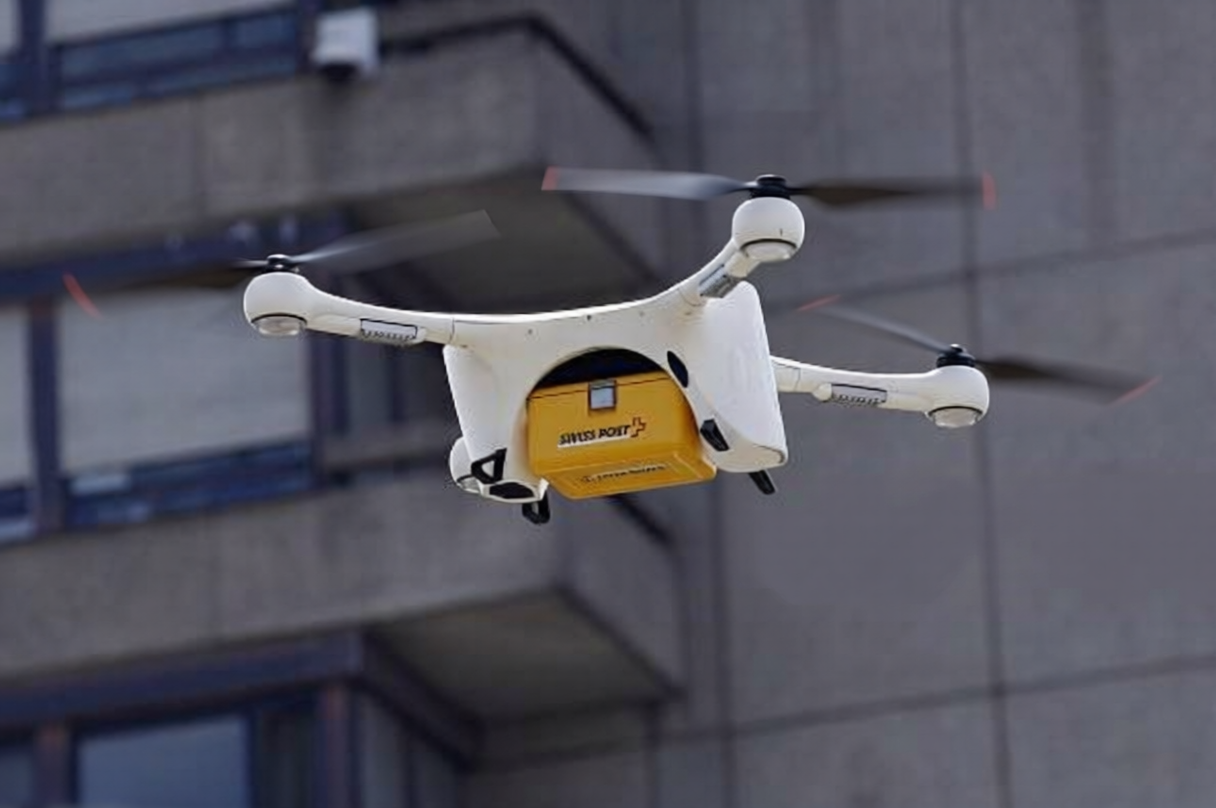
Battery technology has come to represent one of the key constraints facing drones in delivery. While the issue used to be one related mostly to flight duration, now it is shaping the way networks can be scaled without losing their financial viability and efficiency. This is where the importance of the Amprius deal enters. Not only does Matternet use Amprius cells, but the two companies have partnered on batteries for Matternet’s next-generation aircraft set to launch in 2027. Moreover, rather than using the pack as an interchangeable piece, the two are collaborating to build a battery customized to work with both the aircraft and the drone delivery network. Why does it matter?

For aircraft, every gram matters and every minute counts. Andreas Raptopoulos, CEO and founder of Matternet explains: “Every additional mile of range expands our network coverage. Every minute saved in charging increases fleet utilization. And every gram saved can translate into greater payload capacity.” In other words, not only does the battery affect how far and how fast an aircraft flies, but it may also determine how many more aircraft will be needed or the size of service areas. In turn, all this translates into a fundamentally different business model on the ground. This is why instead of talking about flight endurance, Matternet and Amprius collaborate on cell selection, thermal management, charging rates, energy density, and cycle life.
According to Amprius, its cells with silicon anodes could offer double energy density compared to conventional lithium-ion cells with graphite anodes, reaching up to 800 Wh/kg. This is important in the context of small UAV design because the endurance advantage offered by such batteries is even more pronounced due to the way conventional battery design works. According to estimates, above the mark of roughly 300 Wh/kg, adding extra mass to a battery may start reducing the flight endurance as a result.
However, Amprius is not alone in this regard. Indeed, as mentioned above, the company provided its cells for industrial drones by Nokia. What is interesting here is that according to the company, the battery had to provide sufficient endurance to maintain power supply to various subsystems of the drones during their whole mission duration, not just provide additional range. This may differ somewhat from the package delivery use case, but the underlying principle is still the same: endurance matters if it is accompanied by power management, thermal stability, and reserves for autonomous flight and safe return to base functionality.
Thus, Amprius collaboration with Matternet comes at a moment when the latter has accumulated significant experience. Having logged more than 60,000 commercial flights, Matternet operates in the highly regulated healthcare and urban delivery markets. In such cases, reliability and durability become just as important as endurance numbers, making battery design a key consideration for actual drone networks.
In this light, perhaps the key conclusion about the drone delivery segment is the following. As the market matures and grows, it moves away from the issues of airframe design, autonomous software, and certification toward those of scalability, economics, and logistics. Battery design seems to be one of the key factors in this competition.