

NASA’s Next Moon Rocket Faces a Bigger Test Than Launch
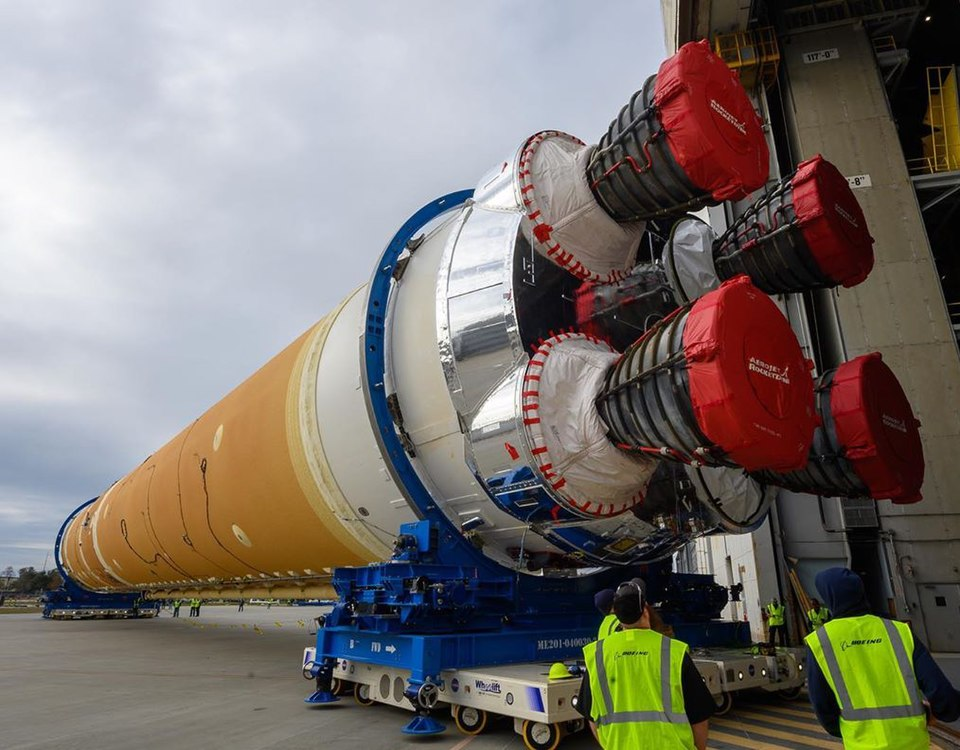
However, NASA’s upcoming Moon rocket, known as Artemis 3, is currently in the process of being assembled at the Vehicle Assembly Building. Nevertheless, this is no longer considered to be just a launch operation. This mission has now turned into the systems test for virtually everything within NASA’s lunar exploration approach after Apollo. The assembly of the Artemis 3 Space Launch System core stage into High Bay 2 at Kennedy Space Center is underway. This is where the technicians convert a large engine-and-tanks vehicle into the launch vehicle that will take the astronauts into space in 2027. The physical attributes alone are quite impressive the core stage is 212 feet tall, and the whole SLS will grow up to 322 feet with a thrust of 8.8 million pounds.
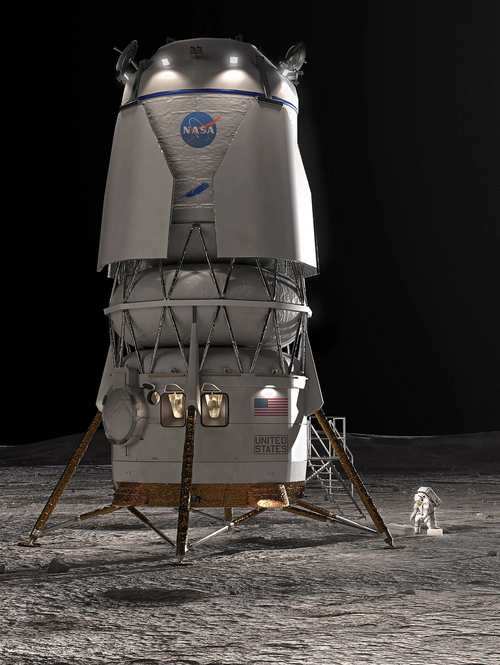
While such an achievement may still seem remarkable, the key focus is no longer there. In reality, the mission used to be considered as the first crewed lunar landing of the Artemis program. However, the recent modification of the overall mission architecture means that Artemis 3 will be a crewed demonstration of the docking capabilities at low Earth orbit with the purpose of validating either one or two commercially built landers that are supposed to be used in future missions. Thus, Artemis 3 will serve as the mission which will verify whether NASA’s exploration efforts will result in the functional transportation infrastructure.
It does seem pretty clear what caused such a shift. The Orion spacecraft has completed its maiden voyage in 2022, proving the capability of NASA’s crewed spacecraft to travel beyond the low Earth orbit. At this point, NASA needs to confirm that crewed astronauts will be able to conduct safe operations within a multistage mission architecture, relying on accurate orbital maneuvers, successful docking procedures, and lander readiness provided by commercial companies. NASA officially classified Artemis 3 as the low-Earth-orbit demonstration mission slated for mid-2027, while the Artemis 4 mission will take the first astronauts to the lunar surface in 2028.
However, the above statement provides another explanation why NASA continues with the SLS assembly. The mission is crucial for NASA since the government-funded SLS launch vehicle, the Orion spacecraft, and two lander tracks need to align in terms of schedule and performance. According to NASA, work on Orion is progressing rapidly, including the installation, curing, and inspection of all 186 Avcoat blocks for its updated heat shield. Meanwhile, booster segments have arrived at Florida, making Artemis 3 transition from planning to hardware flow.
Nevertheless, the latter is still the critical point for NASA. Artemis 3 will use whichever vehicle is ready, which demonstrates that the launch-readiness of the crewed vehicle and mission-readiness of the entire lunar exploration architecture is no longer the same thing. NASA and SpaceX have conducted more than 200 docking simulations for the Starship lunar lander’s docking system using the full-size hardware. These exercises show clearly why Artemis 3 is so important for the agency the mission is more about testing the docking capabilities rather than launching astronauts to the Moon. Thus, the Artemis 3 rocket is now being assembled according to the current schedule. However, its purpose and significance has changed significantly.