

Why Two Navy F-14s Rushed a Mach 2 Concorde
How difficult would it be for an aircraft traveling faster than the speed of sound to become an unidentified target for a couple of moments? It took place during the hot summer days of 1990, when two U.S. Navy F-14 Tomcat fighters were dispatched to track an unknown aerial object moving at an alarmingly high speed over the Red Sea. The contact proved to be a British Airways Concorde flying at approximately Mach 2 at an altitude of over 60,000 feet. Although the story never developed into an aggressive encounter, it illustrates a response of modern radar detection systems to a rapidly moving contact with an uncertain identity.
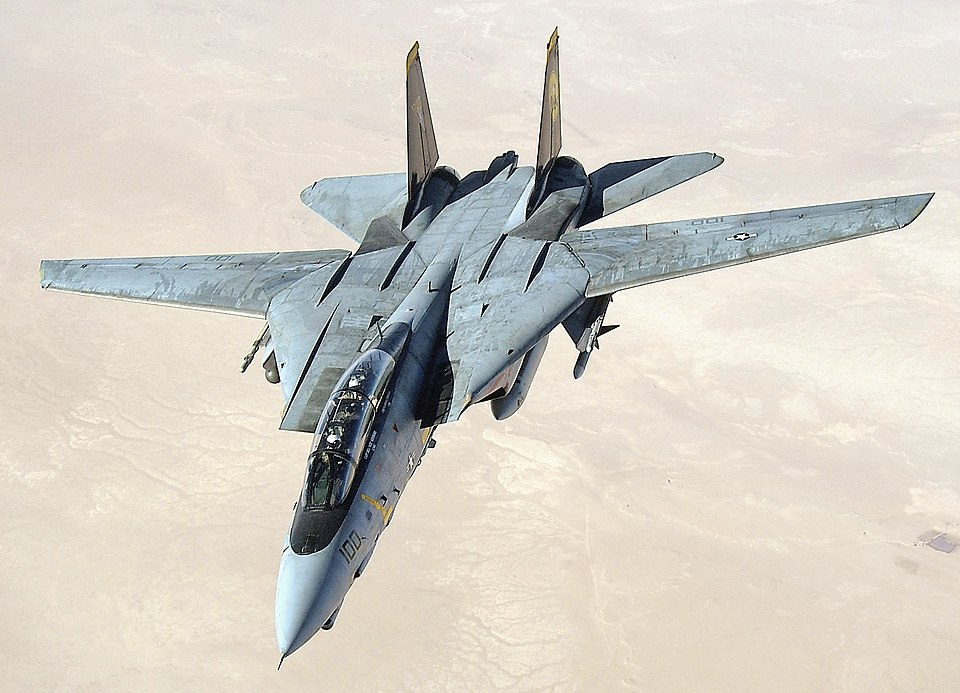
In fact, it was the purpose of this aircraft to address such situations. Well before its widespread cultural popularity, the F-14 was created to solve one specific problem of its age defense against long-range bombers and anti-ship missiles. The Tomcat could fly at an incredibly high speed, surpassing Mach 2 mark, but the key to its capabilities was twofold: first of all, it featured a two-man crew, and secondly, it had one of the most advanced radars of its era, AWG-9, which allowed to keep track of multiple contacts simultaneously and cover large areas of airspace. In essence, the whole point of existence of the Tomcat was to answer the ship commander’s primary question: what is that contact, and how quickly can it be intercepted and eliminated? This task was particularly urgent after the 1987 attack on the American warship USS Stark in the Persian Gulf waters, making Navy even more sensitive about ambiguous targets approaching its maritime units.
This is why, in a situation like described above, where a ship detected a potentially hostile fast airplane approaching, an intercept is not that exceptional in terms of naval doctrine, although it became such in retrospect. Radar data never provide any additional context, and a very fast aircraft flying very high creates problems not only at night but also in the region whose air defense was particularly concerned with ambiguous targets.
For instance, RIO David “Hey Joe” Parsons described his team’s reaction to such an alarm: “The TAO’s (Tactical Action Officer) voice was several octaves higher than normal, and they were going into ‘warning red, weapons tight’.” However, when the two planes started closing to the contact, Parsons noted: I immediately locked on to an extremely fast, high-flying aircraft. While radars guided them to their destination, the ultimate conclusion was achieved via visual confirmation of the white contrail and peculiar delta-shaped silhouette: Concorde.
Here we should emphasize the fact that intercepts follow very specific and strictly defined procedure. The fact that radios, transponders, and other devices are unreliable creates the need for a very well-defined visual identification protocol. Modern intercept procedures involve highly coordinated maneuvering and a strict set of guidelines regarding visuals provided in ICAO interception procedures. In this particular case, the Concorde proceeded with no change in its route, oblivious to the fact that it became a subject of interest.
As a matter of historical record, the most notable outcome was the photo, which is often cited as the only known image of Concorde flying at Mach 2 during commercial flights. Nevertheless, the greater importance belongs to the Tomcat and its interception procedure as an example of actual air defense rather than Hollywood fiction. Variable sweep wings, powerful engines, radar-missile capability all these characteristics transformed the aircraft into not only a dogfighter but also an airborne interceptor.