

Falcon 9 Debris May Carve a New Moon Crater in August
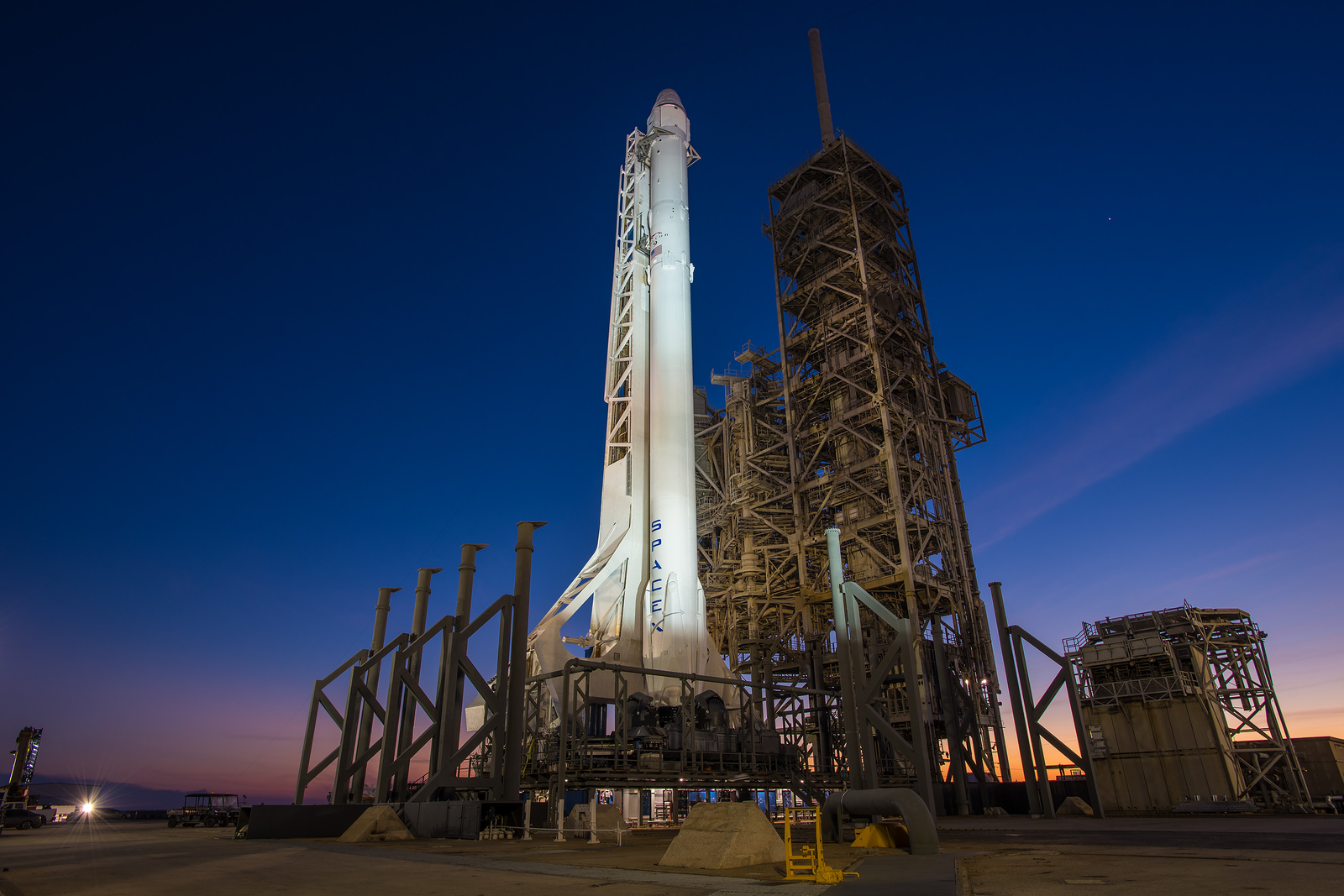
We have another upper stage which is going to hit the Moon in the near future; it will happen in August, and it will hit the Moon near side, noted Bill Gray, an astronomer who tracks objects in space. This object is not a fragment lost somewhere in space; it is the Falcon 9 upper stage, which was responsible for launching Firefly Aerospace’s Blue Ghost lunar lander and ispace’s HAKUTO-R Mission 2 on January 2025. However, instead of disposing of the stage into an orbit, the company decided to keep it in the cislunar orbit. Bill Gray uses his Pluto tool to track various objects in space and has found more than 1,000 observations concerning this Falcon 9 upper stage.

If everything goes according to the current predictions, the stage will impact the near side of the Moon, quite close to its edge, visible from Earth. This is exactly what makes this situation so unusual. The fact that the rocket stage, which has been abandoned in space, will crash on the Moon gives scientists a rare opportunity to test their models of orbital tracking, impact modeling, and crater hunting against a known object of a known size and trajectory.
The stage is about 13.8 meters tall, and considering the Moon’s lack of atmosphere, the upper stage will remain untouched until impact. According to Gray, the impact speed will reach 2.43 kilometers per second, sufficient to create a small crater. The area of potential impact is Einstein Crater, though the location may shift slightly depending on the tracking data available. For lunar scientists, even a small crater is important since it exposes subsurface material and becomes an object for orbital photography. Moreover, for spacecraft operators, it shows that any hardware left in the loosely monitored cislunar region does not just disappear.
But it does not mean that sky watchers are supposed to enjoy the show. I would not expect to see anything with telescopes, said Bill Gray. In 2009, NASA crashed a rocket onto the Moon. Even with this experiment, nothing was seen. I will observe with my small telescope, but I don’t have an idea why this impact will be brighter than LCROSS. Besides, this object will crash the Moon during bright sunlight.
The more significant implication of this impact is the picture of the Moon’s current traffic. Bill Gray noted that this incident demonstrates “the certain carelessness” with regard to disposing of space equipment. The term “certain carelessness” means something different now than it meant ten years ago. Currently, various commercial landers are starting to visit the Moon, and numerous national programs are developing plans for their prolonged presence on the Moon’s surface, and cislunar spaceflight trajectories are becoming overcrowded.
This discarded rocket stage is not a threat to anybody right now, and Bill Gray said that the object is far away from current Moon surface facilities. But the acceptable standard, which existed before the Moon became a popular destination, becomes more relaxed as the Moon turns from a temporary station into an operational environment. There is already a solution: rocket stages can be diverted to a solar disposal orbit.