

SpaceX’s 600 Falcon Landings Show Reusability Has Become Routine
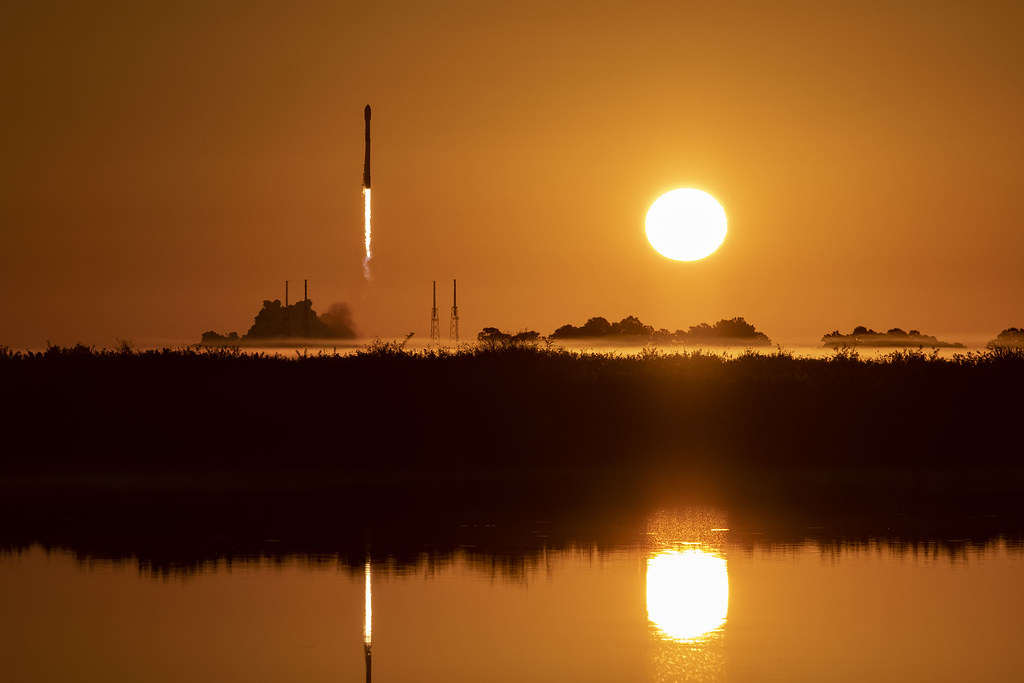
What makes this event really impressive is the fact that SpaceX has mastered and incorporated the process of booster recovery into its standard operating procedure, which is what has brought the company a huge step forward. Namely, after the booster detaches from the Falcon 9 stack and the upper stage/payload combo separates, the booster flips and ignites engines in order to make the descent as smooth and stable as possible and land vertically. To achieve that, the rocket relies upon the highly accurate work of the flight computer, engines, grid fins and landing legs the combination which has proved strong enough to make this almost impossible task doable.

In addition to everything mentioned above, there are autonomous drone ships involved, which play a key role in boosting the company’s efficiency. Being specially designed to stay put in certain parts of the Pacific Ocean, these platforms allow SpaceX to land boosters even when it is impossible to do it on the ground due to excessive burning of the remaining fuel. In accordance with some information released by SpaceX regarding its technology, sea recovery is used on approximately three-quarters of missions because it is essential to preserve payload performance at maximum while maintaining the first stage. Moreover, Of Course I Still Love You is one of the most significant drone ships utilized by SpaceX on the west coast.
Navigating towards a certain point where the booster is intended to land requires great accuracy. Namely, while the booster heads in this direction as well as tries to approach that very point to eventually land there, the ship remains in its exact position in the ocean thanks to station keeping systems. Some details regarding the process can be found in public statements issued by SpaceX for instance, it is claimed that while the platform holds a precise GPS position, the booster approaches with its onboard navigation instruments.
It goes without saying that reusing rockets cannot bring any economic benefit without fast and reliable ways to recover and prepare them again for flights. SpaceX managed to incorporate such process as well; namely, according to independent estimations, turnaround time for booster recovery has been reduced to 21 days, which is already a decrease from the previous figure of 27 days. Moreover, there is a public evidence that several booster vehicles were used for dozens of missions. Needless to say, this affects SpaceX’s strategy greatly.
At last, reusable rockets cannot be of any help without corresponding technological achievements. In particular, Falcon 9 booster belongs to a partially reusable medium lift launcher which has demonstrated a remarkable experience in performing commercial, civilian and manned launches. Besides, SpaceX focuses on reliability, self protection measures and recoverability. In light of that, with SpaceX launching becoming increasingly frequent, milestone of 600 landings seems like an additional proof of how the company has developed.