

Second Starlink Breakup Puts Orbital Debris Risks Back in Focus
But low Earth orbit (LEO) may not be so forgiving anymore. Just last month, it was revealed that a second Starlink satellite has broken up while in orbit. In fact, SpaceX claims that satellite number 34343 lost contact when its altitude reached around 560 kilometers from Earth. LeoLabs radar data, on the other hand, suggested there were dozens of pieces near the Starlink satellite. SpaceX claims that this breakup likely stemmed from an internal explosion.

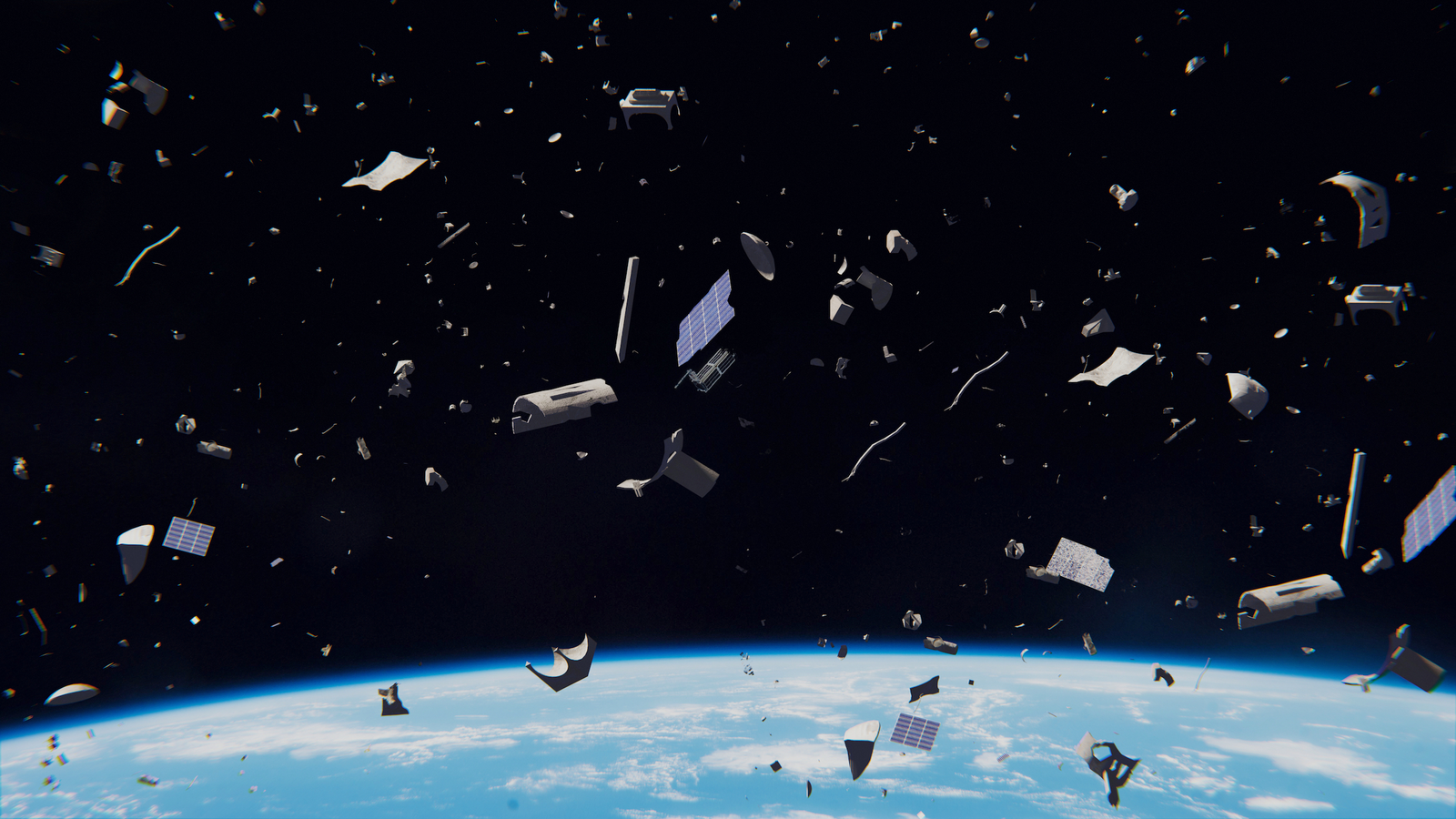
It would seem that such a case would not pose any danger to space missions as they would have been destroyed by the atmospheric drag within weeks. According to NASA, most LEO space debris reenters the atmosphere in about five years from orbits that do not exceed 600 kilometers. Even those lower than 600 kilometers may re-enter faster. However, this means little to nothing if it takes hours and days for tracking programs to assess the situation and determine whether other satellites or vehicles have been endangered by this debris. This case is just one of many, which makes things worse.
NASA says explosions and collisions are the main sources of space debris. The problem is not so much that satellites break down. Rather, objects moving in LEO can attain very high speeds which make even the smallest fragment extremely dangerous. That is why nowadays space industry leaders are discussing “space safety” from a different angle. While once space safety involved a single operator, the current situation with hundreds, maybe thousands, of satellites in orbit changes the discussion.
In addition to that, operators report incidents in which their spacecraft nearly collided with satellites launched by other operators. SpaceX reported on a close approach with an object operated by another company in December of the previous year. In light of this, it becomes evident that the number of close approaches increases with the number of satellites in orbit. Moreover, it becomes harder to predict such conjunctions because of possible failure in communication.
Hence, in the current conditions, finding the reasons for the failure is a way to ensure that the accident will not recur in other satellites of that constellation. In turn, this is necessary in order to maintain confidence that LEO can sustain larger amounts of satellites and spacecraft. There is an ironic twist, however.
SpaceX claims that its satellites are designed to safely disintegrate upon reaching reentry levels and leave no trace behind. This is undoubtedly an excellent way to deal with space debris as it avoids creating additional objects that stay in orbit for decades. Still, until the moment of reentry, there is a possibility that the vehicle will experience some issues and start disintegrating. As a result, the space industry faces a problem in which the number of satellites in LEO defines the number of conjunctions, close approaches, and emergencies. It becomes more difficult to predict such situations and handle any anomalies or accidents.