

Why a Major Solar Flare Isn’t Delaying NASA’s Artemis 2 Launch
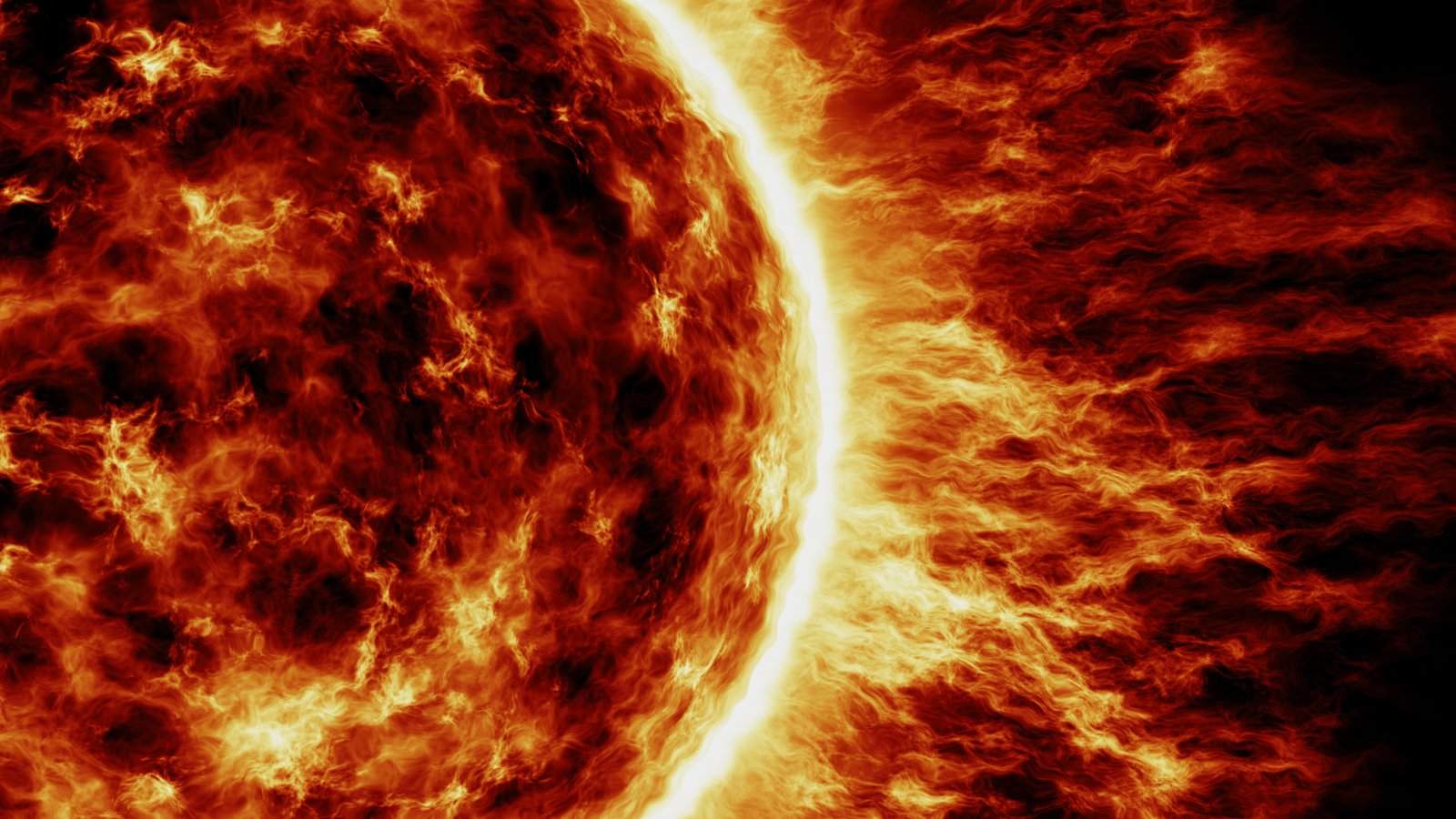
A violent outburst on the sun is the kind of problem that should, in theory, halt the mission to the moon dead in its tracks. Yet, the X-class flare and the Earth-directed coronal mass ejection have done the opposite, drawing attention to the degree to which the success of the Artemis 2 mission now depends on accurate predictions of solar radiation as much as the rockets and spacecraft themselves.

NASA’s official position is that the flare and coronal mass ejection are not expected to affect the launch window for the Artemis 2 mission, as the worst of the radiation should have cleared the sky by the time the mission is launched. The problem is that the mission is not simply another launch into space. The mission is the first manned mission to the moon in more than 50 years, and the spacecraft will carry four astronauts beyond the protection of the Earth’s magnetosphere on a 10-day journey around the moon and back. It is then that the space weather becomes more than merely the news headlines.
While astronauts in the International Space Station are protected somewhat by the weak Earth’s magnetic field, the same is not true on the way to the moon. Once the Orion spacecraft leaves lunar orbit and heads out into the solar system, the astronauts will be exposed to the radiation produced by solar energetic particles, cosmic rays, and the passage through the Van Allen radiation belts, NASA officials have explained. The expected radiation levels for the baseline case are within the acceptable limits, and the data from 5,600 passive sensors and 34 active radiation detectors on the Orion spacecraft during the uncrewed mission have helped confirm that the spacecraft is designed to keep the astronauts within acceptable levels of radiation. The mission also revealed that the levels of radiation inside the spacecraft vary depending on the location and orientation, much as the Sun varies in its own radiation patterns.
NASA is not depending on a single warning flag on the flight deck. NASA’s Moon to Mars Space Weather Analysis Office works with NOAA and other teams to monitor the sun’s activity in real-time with a group of orbiters and models designed to detect solar eruptions before they pose a threat to the crew. One of the interesting tools in this system is the view of the sun’s far side from Mars, which can aid forecasters in viewing active sun areas currently invisible from Earth. Of course, the idea is not to completely avoid the solar threat, which is impossible on a deep space mission. The idea is to gain some time, assess the threat level, and determine when it’s safe to tell the crew to take cover.
This is just one of the tests built into the flight of the Artemis 2 mission. Orion has radiation sensors on board, and the crew has dosimeters on their bodies and can adjust the cabin configuration if the solar flare intensifies. Emily Nelson, the flight director of the Artemis 2 mission, said: “Basically, we’ve got a section of the spacecraft that we would set up in and the crew would stay in that area until we gave them the all clear that the radiation event had passed.”
The deeper meaning is easy to overlook. Artemis 2 is seen as an historic “return to the moon” mission, but it is also an experiment in how humans will survive on routes where Earth’s protection is not an option and rapid return is not possible. Launching a mission after a recent solar flare is not an indication that space weather is not a big problem. It is an indication that going to the moon now involves an even closer integration of prediction, spacecraft, measurement, and crew procedures than was ever required for Apollo.