

Astronomers Just Caught Two Giant Planets Taking Shape
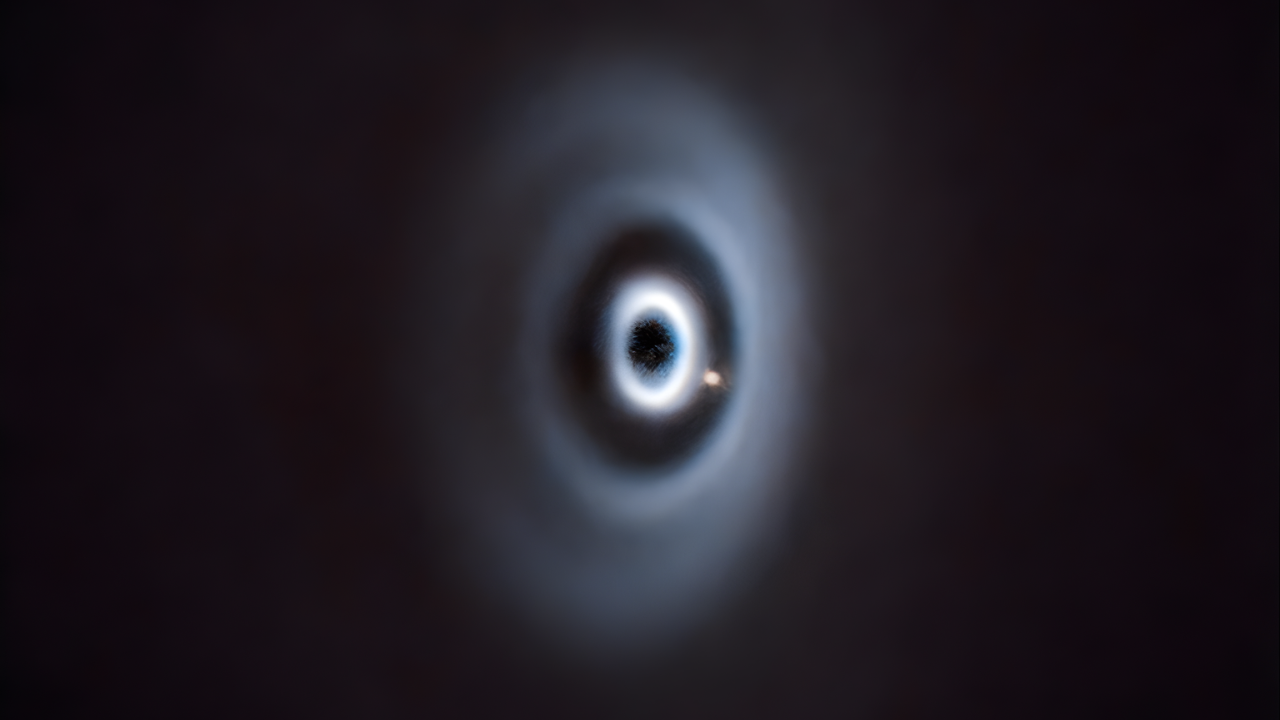
What does a solar system look like before it settles into the orderly architecture we see in our own neighborhood around the Sun? In the case of the young solar system WISPIT 2, we are getting one of the clearest looks yet. It is only 5 million years old, and observations suggest that two giant planets are still in the process of formation within its disk of gas and dust. This is important because it is extremely difficult to image planets in such an environment. Most exoplanets are only found through their effects on their star. In this case, we can observe them directly, and the entire planetary system is still under construction.

The newly discovered WISPIT 2c is much closer to its star than its companion WISPIT 2b, which was discovered in 2021. WISPIT 2c is 14 times closer to its star than Earth is to our Sun, while WISPIT 2b is 57 astronomical units away. Both are enormous. Current data suggest WISPIT 2b is five times more massive than Jupiter, and WISPIT 2c is ten times more massive than our largest planet. It feels almost as though we are getting an early draft of what might have been in our own planetary history.
In order to confirm WISPIT 2c as a planet and not some random clump of dust, scientists used direct imaging and spectroscopy with the European Southern Observatory in Chile. By breaking down light passing through WISPIT 2c into its various parts, scientists found evidence of carbon monoxide. This is evidence of a hot young giant planet. Observing its position also eliminates the possibility of it being something in the background. “WISPIT 2 is the best look into our own past that we have to date,” said Chloe Lawlor, lead author of the research at the University of Galway in Ireland.
The broader lesson, however, goes beyond this particular star. Astronomers are increasingly discovering that the features that were once thought to be the result of later stages of disk evolution may actually form much earlier than expected. Another star, for example, was observed by ALMA to have rings and spiral arms that are only 300,000 years old. That’s a very early time, and this star’s disk may not have had time to evolve into a giant planet. Yet another star, HOPS-315, appears to have retained the earliest signs of solid particles that are just starting to form. This star, then, may be a kind of “snapshot” of the earliest stages of planet formation. Planet formation is not a clean-up operation that occurs in a peaceful environment. It’s a rapid, chaotic, and visible process from the very start.
So, why does the discovery of WISPIT 2 stand out from all the rest? It’s simply that this is only the second time that astronomers have observed a disk where multiple giant planets are forming simultaneously. Finding two planets at such an early stage at the same time is almost like witnessing a rare twin birth. This shows that planetary systems do not develop one after the other, but in parallel much like our own solar system once did.
The disk itself still bears the marks of unfinished business. The bright rings, dark gaps, and central cavity all suggest that the two planets we’ve seen may not be the whole story. And one outer gap in the disk is already intriguing astronomers with the possibility that it might be the sign of another small planet. Similar complexity has been seen in another place. Hubble just imaged a giant and lopsided disk of gas and dust around a star 1,000 light years away that looks like the planet nursery might be in a state of turmoil.
But for the field of planetary science, this might be the real revolution. Systems like WISPIT 2 aren’t just telling us where the planets are. They’re telling us how quickly the disk evolves into a dynamic system, how giant planets affect the environment around them, and just how chaotic the early solar system might have been.
.jpg)