

NASA’s Starliner Probe Shows How Two Astronauts Got Stuck in Orbit
A spacecraft does not have to blow up to provoke the most fateful mishap designation in NASA; it just has to momentarily approach the options removal. That is what NASA has concluded about the completed mission to certify a second U.S. crew taxi to the International Space Station, the Boeing CST-100 Starliner Crew Flight Test, a mission that had an organization-level focus of exploring how technical uncertainty and organizational friction can compound each other. The event was eventually termed by NASA as a Type A mishap, which is the top level of severity in the agency which is only used in instances of significant damage or severe danger to crew. The institutional sting was neatly encapsulated in a single sentence by NASA Administrator Jared Isaacman: We got the crew safely back on the ground, but the journey we made was not NASA at its best.

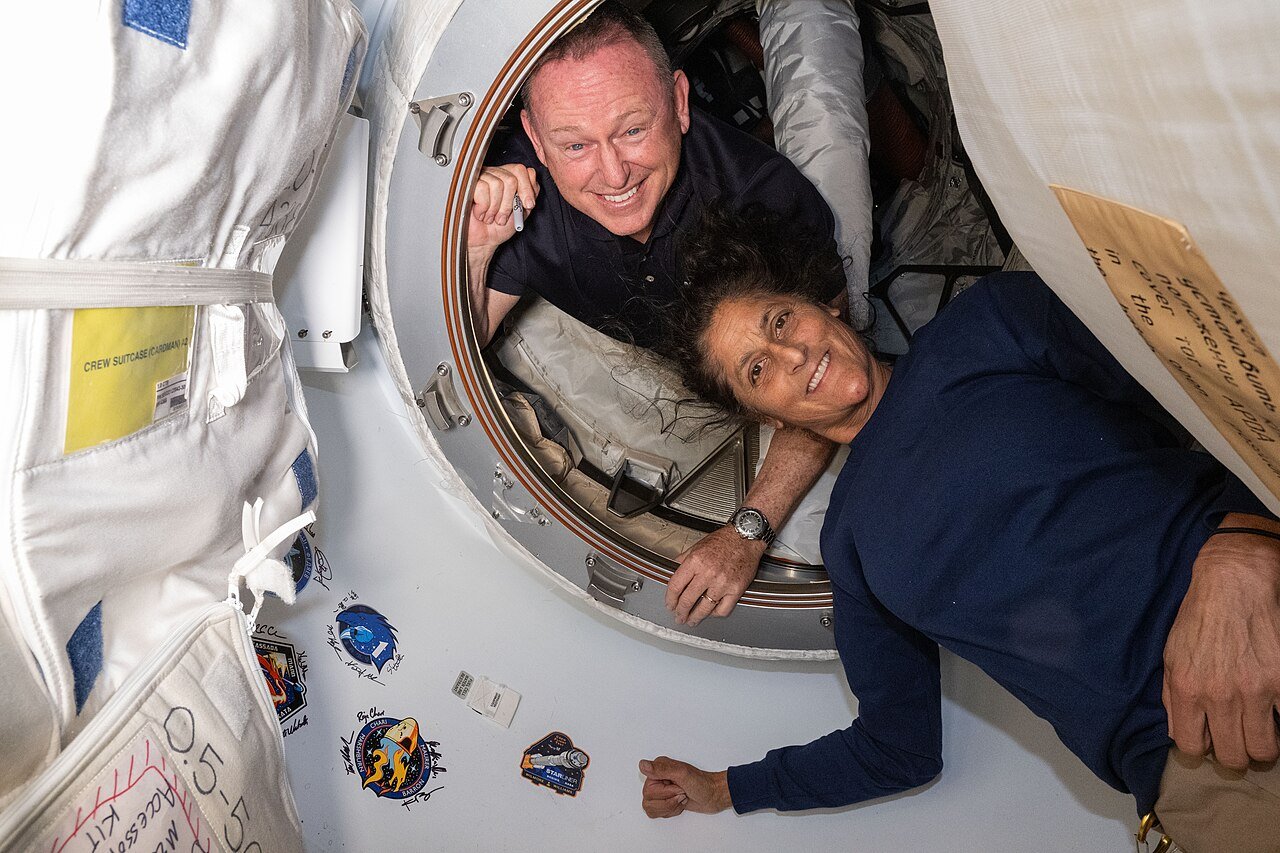
On June 5, 2024 Starliner was sent into orbit with astronauts Butch Wilmore and Suni Williams on board, on what initiative had being billed as an eight to fourteen-day test mission. Rather, anomalies in propulsion-systems became apparent, as the vehicle was ready to meet and dock, such as leaks of helium and thruster malfunctions that drove crews in to a long period of troubleshooting. Following further consideration and ground testing, NASA ruled that the capsule would not be full of its crew and Wilmore and Williams would stay on the ISS until another vehicle can retrieve them. In March 2025, they finally came back on a SpaceX Dragon flight, completing a long and clumsy gap between what the mission was supposed to demonstrate and what it actually demonstrated.
The technical story of the investigation is also awkward in that it gives an account of failure modes that were not delimitated. When Starliner was very near the station-keep, several reaction control system thrusters tripped out under fault-detection logic, briefly putting the full attitude-control authority of the vehicle at risk. The loss of margin was more a flashing light than a footnote and controllers regained sufficient ability to finish docking. A further weakness was noted in the same system later, with a descent-phase thruster that would not start firing, meaning that the element of the architecture would have zero tolerance. The leakage of helium through the majority of the service module manifolds complicated the perception that propulsion performance was instead of guaranteed to be negotiated.
A small fact in the NASA summary explains why the name became even more intense: auditors discovered a combination of simultaneous hardware malfunction and lack of qualification, not a malfunctioning part or one-time workmanship mistake. Their qualification gaps were important since they constrained the degree to which the teams could be certain of the applicability of the ground test outcomes to the thermal, fluid and operational reality of flight. Uncertainty is in itself a risk in human spaceflight; it degrades the capacity to make hard decisions in time-constrained situations.
Nevertheless, even such acute expressions as briefings were not aimed at valves or leak paths. Isaacman said, “Starliner has design and engineering deficiencies that must be corrected, but the most troubling failure revealed by this investigation is not hardware. It’s decision-making and leadership that, if left unchecked, could create a culture incompatible with human spaceflight.”
The report outlined a program environment in which schedule pressure and the institutional imperative to continue to have two commercial crew providers were pushing against dissent and slowed the process of root cause. Researchers deplored instances in which abnormalities in prior flights were addressed not as elements of a comprehensive fix, but as accepted under less rigorous standards than are required to avoid their recurrence, a trend that transformed the crewed test flight into less of a clean certification event and more of a live-fire investigation. Internal dynamics also took a toll in NASA, as the agency noted, as teams argued over what to do to get the crew back home, the agency later cited a “culture of mistrust” amongst the teams.
According to NASA, it will not fly, be it crewed or uncrewed again until technical causes have been made out and remedial acts taken. In its turn, Boeing has claimed that it has achieved “substantial progress” in technical corrective measures and culture alterations after the flight. The bigger picture of the Commercial Crew model is less complex than either of the company reputations: in a case where provider autonomy is entrusted with the safety requirements of NASA, accountability must be clear, testing must be representative, and anomaly closure must be full, since the next flight will not be interested in how busy the meeting schedule is.