

Nuclear Power Could Be the Cornerstone of a Permanent Lunar Presence
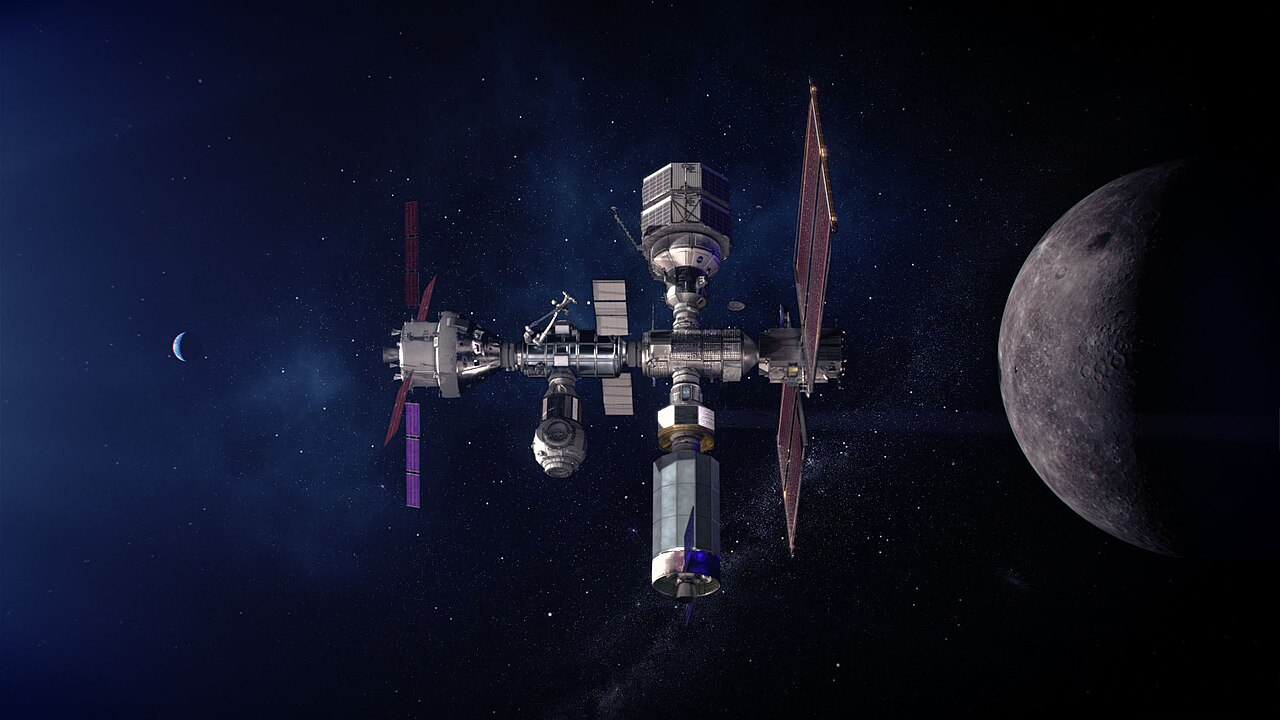
The reason for the absence of exploration on the Moon for such a long time has been the harsh conditions, devoid of power. The Moon has two weeks’ night, and there are areas on the Moon that are always in darkness. This implies that solar panels cannot be used in such a case. NASA is working on having a permanent presence on the Moon as part of its Artemis project, based on nuclear fission.

In January 2026, these two institutions extended their collaboration in their Fission Surface Power Project. This is a technology project that seeks to develop a small and dependable nuclear reactor on the surface of the moon by the year 2030. The project seeks to offer a dependable source of power to habitats and rovers on the moon and Mars missions too. The project is a follow-up to projects like the Kilopower project, in which small nuclear reactors were shown to be dependable in space.
On the other hand, the fission reactor will work both at night and day, whether it is under the shade or under the sun. NASA intends to generate 40 kilowatts of power from the first lunar reactor, which will be sufficient to power a small base for a term of ten years without refueling. This will give the astronauts enough time to work throughout the chilly night and build habitats that will not be near the top of the peak but rather near the ice deposits, which will be found in the polar regions.
It is very difficult to pinpoint a site for such a reactor. One of the most promising places where ice could be harnessed for use as a source of water, oxygen, and fuel would be around the permanently shadowed craters of the polar regions of the Moon. The conditions are expected to be very hostile, with high temperatures and a regolith that could be kicked up by the lander. Prior to the implementation of such reactors, the VIPER will look around for ice. However, there are some technical issues which must be resolved.
For example, the reactor must be designed to fit into a lunar lander but be small enough to be launched into space. Furthermore, the reactor must be shielded so that it doesn’t affect other systems on the spacecraft because of the radiation produced by the reactor. The power conversion systems would be high temperature Brayton cycle turbines. The radiators must be able to remove any excess heat that is produced into space without adding mass to the spacecraft.
Aside from the technical issue, there are law and geopolitical considerations involved in this issue as well. In line with the Outer Space Treaty signed in 1967, there is the non-claiming of territorial space by any state, but then there is the peaceful use of the facilities provided. The nuclear reactor must have a safety boundary around it in terms of definition. However, there are also individuals who claim that a project of this nature could potentially deprive other areas of science from getting their share as well.
Astrophysicist Ethan Siegel stated that in the process of developing a nuclear reactor on the Moon, they could potentially “eat their lunch,” meaning they steal from others so they can develop space science. NASA stated that it is not solar energy but nuclear energy which is needed in the process of space exploration so that mankind can explore space. However, it doesn’t stop there on the Moon. Once the surface energy from the fission process on this hostile and far-off planet is successfully developed, then Mars can be open to the deepest secrets that lie within it.
This is because Mars’ sun strength is weak and the dust storms could potentially rage for months on end. This particular project on the Moon would not only supply energy but would be the first step in the entire solar system’s concept development as well. Whether or not this particular timeline could be seriously considered would depend on the funds and the testing involved. This particular milestone could potentially be the turning point. It is a turning point where the stations on the moon change from being temporary missions to long-term habitats. All these will be powered by nuclear energy.