

Rare Downstream View Reveals Interstellar Comet’s Secrets
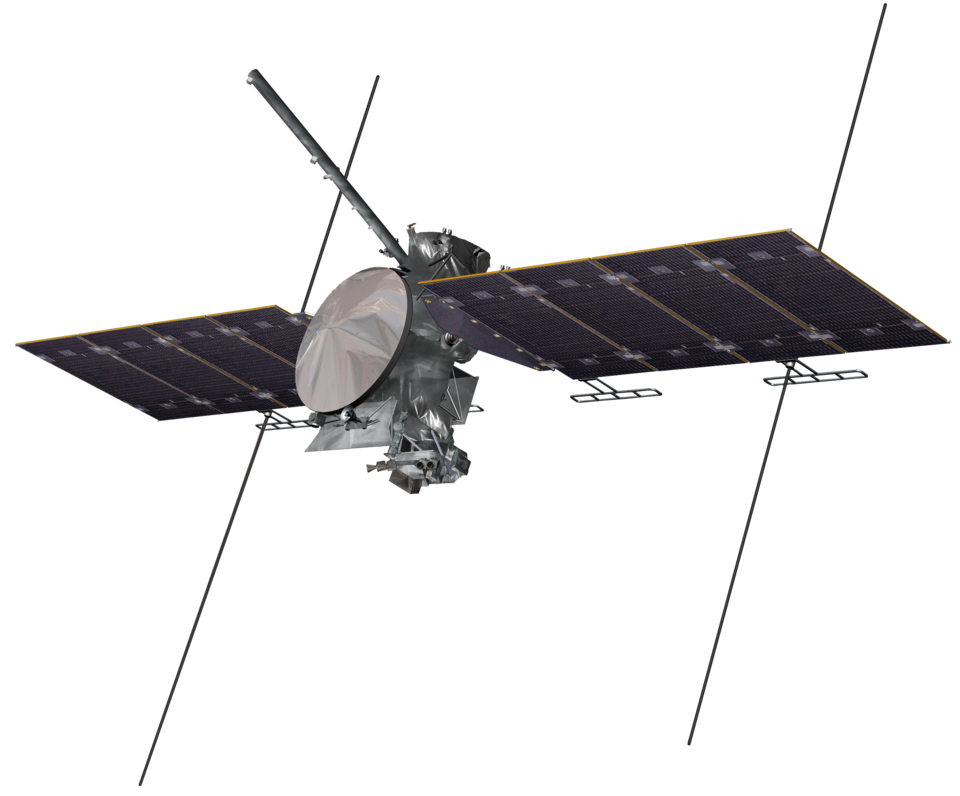
The intersection of an interstellar comet through the Solar System is a very rare occurrence but in November 2025 the spectacle did not only happen: for track the NASA Europa Clipper spaceship with an extraordinary viewpoint that no other observatory could provide. A probe ultraviolet spectrograph recorded comet 3I/ATLAS at an unusual downstream vantage, filling a very important gap in observations, at a time when telescopes on Earth and Mars had been obscured by the closeness of the comet to the Sun. This temporary work of geometry allowed scientists to study the two tails of the comet in the rear, providing a critical dimension to an unprecedented multiple-spacecraft program.
1. A Visitor of Beyond the Solar System
The only third object later confirmed as interstellar among 1I/’Oumuamua and 2I/Borisov, 3I/ATLAS was found on July 1, 2025 by the NASA-funded ATLAS survey in Chile. Coming in the direction of the Sagittarius, it was found to be 6.13 eccentric and 4.51 AU heliocentric distance, and this confirmed its extrasolar origin. The spectroscopic campaigns unveiled a dust-rich coma having red optical continuum, which showed signs of organic-rich material, like the primitive Kuiper Belt bodies. The ESO Very Large Telescope countered observations that found cyanogen and neutral nickel emissions, and release of nickel was no longer linked to iron, which could be a sign of low-temperature organometallic reactions and is only found on extrasolar comets.
2. The Observational Gap
Towards the end of October, 3I/ATLAS was too far behind the Sun in the eyes of the earth so that observations could be made on the ground. Spacecraft at Mars, including the Mars Express probe by the European Space Agency and the Mars Trace Gas Orbiter by the ExoMars, had already achieved their best viewing in the end of September, ten times better at predicting their trajectory. In between these windows was a gap–just at the time that the activity of the comet was changing after the perihelion. Having Europa Clipper near the route to Jupiter was exactly in position to fill this gap and it gave continuous ultraviolet data to a seven-hour observation on November 6 when it was 103 million miles from Jupiter.
3. Downstream Geometry and Twin Tails
The comets produce two types of tails: a dust tail (and it moves with the orbit) and a plasma tail (directly opposite the Sun). Both tails are hardly observed through conventional means. The positioning of Europa Clipper between the Sun and the comet provided its UVS instrument with a view of the nucleus and coma, revealing the entire structures of dust and plasma tails. At the same time, the JUICE spacecraft of ESA has captured an anti-solar output view, which allowed comparing geometries of tails directly on either side.
4. The Working of Ultraviolet Spectroscopy
The Ultraviolet Spectrograph developed by the Southwest Research Institute, which was created to examine the tenuous atmosphere of Europa, was also led by its ability to analyze a comet. It was able to detect oxygen and hydrogen signatures as a result of dissociation of water molecules, and patterns of dust-scattered ultraviolet light. Dr. Kurt Retherford, who was the principal investigator of Europa-UVS, said that we can observe gases being shed off the comet and water molecules are broken apart into oxygen and hydrogen atoms. This ability showed high outgassing activity, which provided evidence of the stellar origin and thermal history of the comet.
5. Incidental Ground and Space Observations
Downstream ultraviolet measurements were combined with nickel and cyanogen measurements of VLT, Mars-based trajectory, and heliophysics mission imaging at a solar conjunction. The Psyche and Lucy spacecrafts provided by NASA provided distant coma and tail imaging, and radio technologies monitored the distribution of dust. This multi-angle dataset created the most detailed three dimensional description of an interstellar comet up to date.
6. Composition and Activities Marks
The findings of Europa Clipper ultraviolet were correlated with findings of JWST which showed a very high CO 2 to H 2 O ratio in the coma about 8:1; one of the highest observed in the universe. Such chemistry implies that it would have been formed in a radiation-rich environment or around a CO 2 ice line. Spectra of multiple observatories show the red spectral slopes which can be attributed to organic-rich dust, which may have been subjected to a long term exposure to interstellar radiation and cosmic ray. The fact that the rates of mass-loss via dust were 0.3-4.2 kg/s (between 0.3 and 4.2) and the fact that the tail was not prominent in certain geometries, points to the existence of large grain size resistant to the solar radiation pressure.
7. Europa Clipper Agile Engineering
Europa Clipper was launched in October 2024 and scheduled to make 49 close flybys of Europa, the moon of Jupiter, beginning in 2030. Its opportunistic view of 3I/ATLAS highlights the power of mission planning flexibility. In less than a week after the comet was spotted Jet Propulsion Lab scientists were able to crunch the numbers and know its path, which allowed them to quickly make corrective moves towards its target. This gave the science the best chance to achieve a return out of science in the cruise phase of the spacecraft, showing how missions to the planets can change direction to capture the rarest of astrophysical events.
8. Conclusions about Future Study of Interstellar
Chemical fingerprints of the disks of planetary nebulae formed during the early history of interstellar objects are also preserved. Such concerted efforts as this ones only display the aspect of the compositional diversity, but also the physical events that have molded these bodies as they travel through the galaxy. What are the operations of chemists, said Dr. Tracy Becker, and how shall we unravel the origin of the comet in its own star system? Did those processes resemble in any way the way we suppose our solar system was created? Those are big questions.” As future instruments like the Rubin Observatory are set to spot dozens more interstellar travelers each year, the techniques that were developed to study 3I/ATLAS will become important to quickly characterize them.
This downstream ultraviolet image of Europa Clipper of 3I/ATLAS has provided a unique and vital insight into the overall world data since it has contributed to the scientific narrative of interstellar comet evolution and provided insight into the formation of planetary systems way out there past our Sun.