

Flying Cars Take Center Stage in Global Race to Reinvent Emergency Response

“What if the difference between life and death during a disaster depended on a flying car?” This is the question propelling a world competition among engineers to innovate the boundaries of Vertical Takeoff and Landing (VTOL) aircraft for emergency services today.
Take a minute to imagine a world where people are dying because they happen to be living in what has come to be known as “ambulance deserts” neighborhoods or regions that don’t get access to medical assistance because of traffic congestion that blocks rescue vehicles’ routes. In this world, a team of engineers would come up with a way to overcome all these barriers standing between a distressed person and rescue with a flying rescue car that can get them there before it’s too late
1. The GoAERO Prize: Engineering for Urgency
The competition, with a GoAERO Prize of 2 million dollars, has attracted 201 teams from 85 countries, with each team required to develop a plane that can transport first responders, medical materials, or evacuate victims from a no-go zone. “On a perfect day with sunny weather, 5 million lives are at risk in ambulance deserts,” quoted Gwen Lighter, CEO and co-founder of GoAERO. “The final fly-off competition and testing will include tasks related to productivity, adversity, and maneuverability,” added Lighter. Austin-based LIFT, which is famous for HEXA, a “personal flying device,” has teamed up with a team from University of Texas and Aerial Robotics and has designed a plane fit for a disaster scenario. “We can provide water or whatever medical supplies they’ll have if we are in contact with that person,” quoted team lead Adam Lang.
2. Advanced Air Mobility for Disaster Response
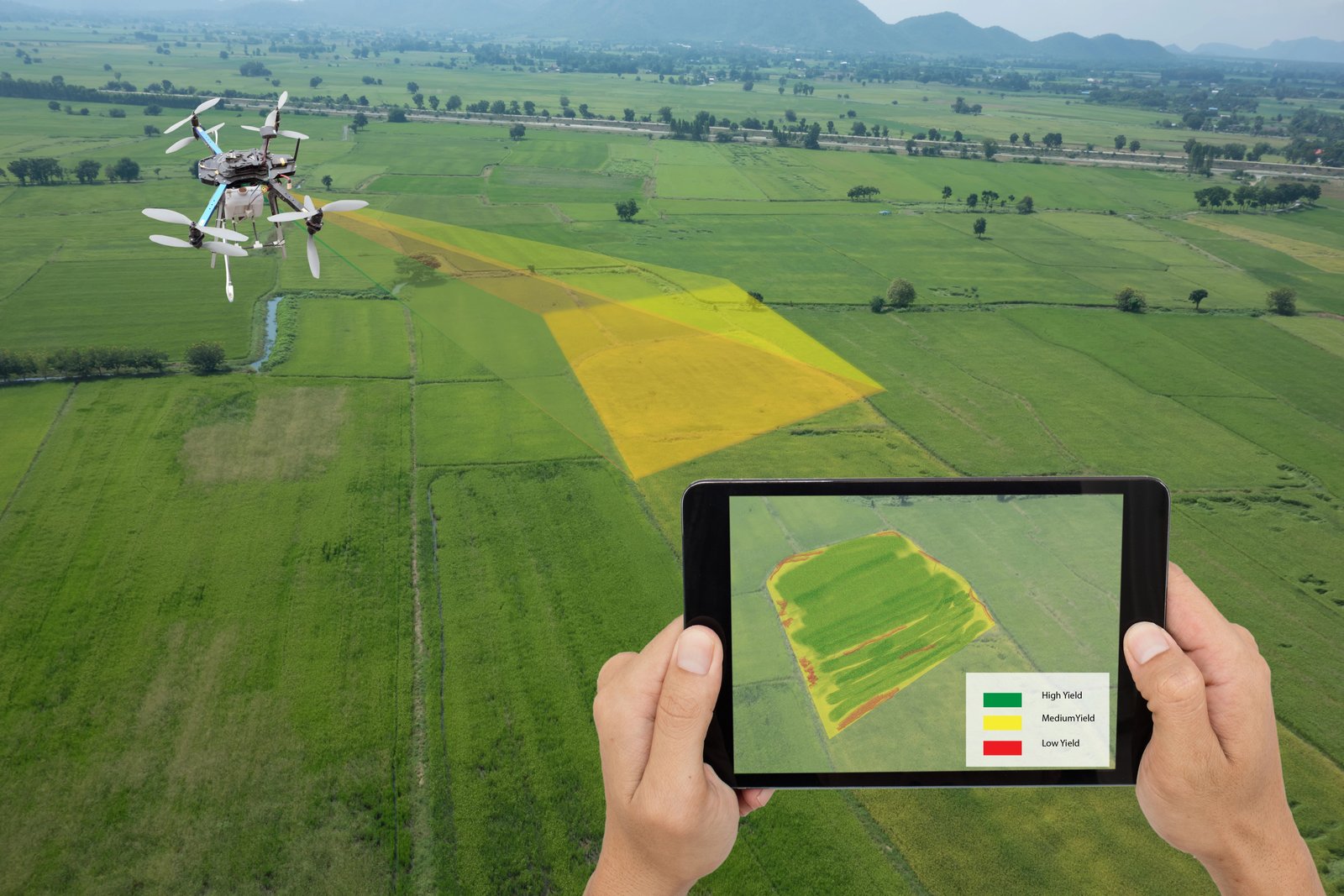
The Advanced Air Mobility (AAM) mission of NASA is already validating the use of aerial resources in disaster situations. Initiatives like STEReO have launched drones in the vicinity of the California wildfires for the purpose of gathering thermal information that helps in firefighting operations. The goal is to create a well-coordinated “highway in the sky” that uses aerial vehicles for the provision of aid and the evacuation of victims in firefighting operations.
3. AI-Enhanced VTOL for Public
The subsequent breakthrough will be achieved through the integration of VTOL aircraft and trustworthy AI. Artificial intelligence will make it possible for aircraft to navigate, avoid obstacles, and make instantaneous decisions during operations. “It is essential that the aerospace industry creates innovative, flexible emergency response systems to provide life-saving assistance and support in an enhanced, efficient manner,” Lighter added. Artificial intelligence-based drones, like Rain Aero’s firefighting drones, can identify and extinguish a fire within less than ten minutes.
4. Engineering Challenges in Rescue VTOL Aircraft Designs
Designing a flying car capable of performing a rescue mission involves excellence in vertical takeoff and landing, the ability to function in adverse weather, and ease of compact transport. “Our aim is to be able to design an aircraft that will be stable when exposed to extreme conditions such as fires and high ground-borne turbulence,” said senior aerospace engineering major Jace Park. The STUART prototype at Ohio State has been developed for easy assembly and can be towed along a highway trailer. It has been supported by GoAERO and NASA.
5. Infrastructure and Regulatory Challenges
A functional rescue fleet will require vertiports on top of buildings or in designated areas, organized flight routes, and connectivity to the National Airspace System. The intricate process from ground to flight will require new rules from the FAA regarding pilot training and qualifications in autonomous aircraft and air traffic management. Cyber security will be an important consideration in preventing hacking attempts on navigation systems in rescue aircraft, while environmental issues will reduce noise and pollution in urban environments.
6. Urban Air Mobility Converges With Emergency Medicine
The use of electric air ambulances such as Airbus’s CityAirbus NextGen aircraft and Jetson’s ONE enables fast transportation of healthcare professionals and patients, reducing response times by up to 70% of traditional ambulance times. Jetson, in collaboration with EuroSets, showcased at the event a mini eVTOL aircraft coupled with the 7 kg Xtreme Rescue solution, which provides cardiovascular and pulmonary care support to far-off locations in Milan, Italy.
7. Human Factors and Public Acceptance
Public acceptance will drive the usage. But common concerns include travel time and reliability improvements in a new system that also accounts for weather conditions, airborne traffic, and the requirement for a human-piloted demonstration before using the autonomous aerial vehicle. There would be willingness to pay even up to $100,000 if individuals are purchasing the vehicle themselves. Overall acceptance for human-piloted ride-sharing would be marginally higher than the autonomous flight mode.
8. Integrating Data and Command Systems
Data and Reasoning Fabric (DRF) is an example of how Future Air Mobility can be enabled with a Decentralized Data Ecosystem operating at high speed. DRF enables first responders by integrating C5ISR, hyperspectral imaging, and micro-weather forecasting. Data and Reasoning Fabric will enable rescue VTOL aircraft to coexist with other aircraft in the air, maintaining interoperability between the government, commercial, and community sectors.
“With the rise of climate change-driven catastrophes and the resultant congestion on the ground preventing the quick mobilization of ground vehicles, the challenge of the development of flying vehicles for carrying out relief operations is no longer a matter of scientific fiction but an engineering challenge.” This was stated by Professor Dato’ Dr. Ajeenah Norris Henare at the Malaysia International Greencity Trilogy Event & Exhibition 2016 on the development of the flying car. Depending on the type of relief work that the vehicle will perform, there could be modification needs either on the design or the materials.