

SpaceX Marks 50th Falcon 9 Launch as Starlink Network Surges
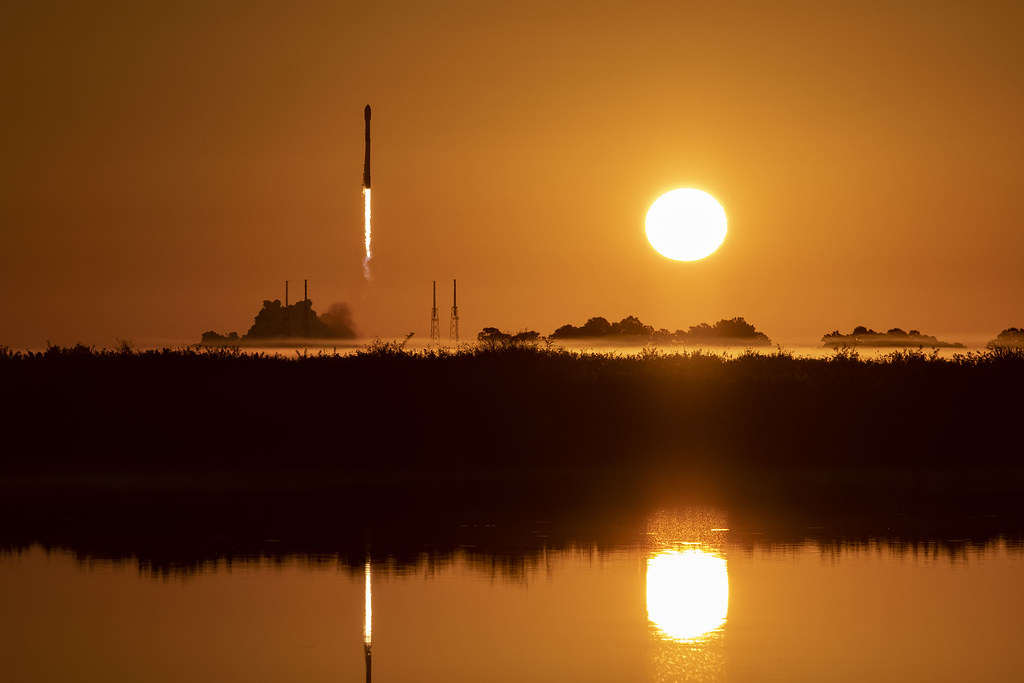
Ten years ago, using rockets again and again was actually like magic; now SpaceX has definitely completed 50 Falcon 9 missions, showing how much more we can launch rockets into space. The record-breaking flight surely took off from Vandenberg Space Force Base at 12:24 p.m., moreover marking a significant achievement in aerospace operations. SpaceX actually sent 28 more Starlink satellites into space, and this definitely increased the total number of working satellites to over 8,600, according to space tracker Jonathan McDowell.

Further, basically, the B1088 rocket booster completed its 19th mission, making it the same rocket that has been reused more than any other falcon rocket, with previous launches including NASA’s SPHEREx and Transporter-12 missions. We are seeing that after 8 minutes and 33 seconds from launch, the B1088 rocket only landed by itself on the drone ship “Of Course I Still Love You” that was waiting in the Pacific Ocean. This booster actually came back from space for the 158th time, and SpaceX rockets have definitely landed 521 times total. The company is working to make space trips cost less money.
SpaceX’s recycling success depends on engineering breakthroughs that are pushed further to their limits, where the technology itself must handle repeated use. Basically, “the new class of reusable launch vehicles is likely to transform the space industry by lowering launch costs and improving space accessibility.” His laboratory surely examines oxygen-safe materials and strong ceramic coatings to find weak points in turbopumps and thrust chambers. Moreover, these thrust chambers must handle extreme heat and pressure during many rocket launches. Further, these developments further help achieve high flight duty cycles with better reliability itself.
Also, starlink’s growth is surely a business success and moreover represents a major technical achievement. As per the year-end data, the network got 4.6 million active customers by 2024 end, which is more than double regarding the previous year numbers. Revenue increased from $2.9 billion in 2023 to $7.8 billion the next year, and the figure itself is expected to reach $12.3 billion in 2025 further according to Quilty Space’s analysis. As per projections, the growth is spread across different areas with consumer services making up 62% of revenue by 2024, government contracts at 28%, maritime at 8% and aviation at 2%. Regarding the U.S. market, this diversified approach shows balanced expansion. The Space Force PLEO contract actually helped a lot, and we definitely think putting this on Navy ships will make the government business grow.
Starlink has surely connected more than 75,000 ships in the mobility markets, including over 300 cruise ships. Moreover, the service has also reached 450 aircraft. As per current trends, maritime adoption has moved beyond the expected legacy GEO VSAT systems to cover fishing boats, inland vessels and leisure craft. Regarding the expansion, it has gone much further than what was originally planned. We are seeing that aviation use is still low, but it is getting help from flexible contracts and quick setup times that only give fiber-like speeds even over ocean routes.
Regarding this topic, this network expansion is actually only possible with the regular schedule of Falcon9 launches. The launch frequency definitely makes this extension feasible. As per each satellite launch, Starlink gets more capacity and coverage for new markets like India, but regarding approval, regulators will only give permission in 2025. Basically, how often they can launch depends on the same material improvements Cordero’s team is working on – from better metal alloys to advanced 3D printing for important parts.
Basically, SpaceX moves fast because they learned the same lessons from their past failures. The 2015 CRS-7 mission failure actually made SpaceX focus more on quality checks and definitely pushed them to reduce risks in how they design and build rockets. Companies are actually working hard to make rocket fuels better and definitely want to reuse rockets like B1088 more than 3 times without spending too much money on checking and fixing them.
For aerospace professionals, these numbers carry meaning beyond the figures themselves, requiring further analysis to understand their true significance. Basically, it’s the same combination of regular flight operations that reusable rockets promise and a satellite network that’s quickly growing – handling not just consumer internet but government communications too. Basically, Starlink is growing and rocket reusability is getting better, so Falcon 9 will keep doing the same important work for business and military missions.