

Origami Antennas and Next?Gen CubeSats Propel JAXA’s Space Tech Leap

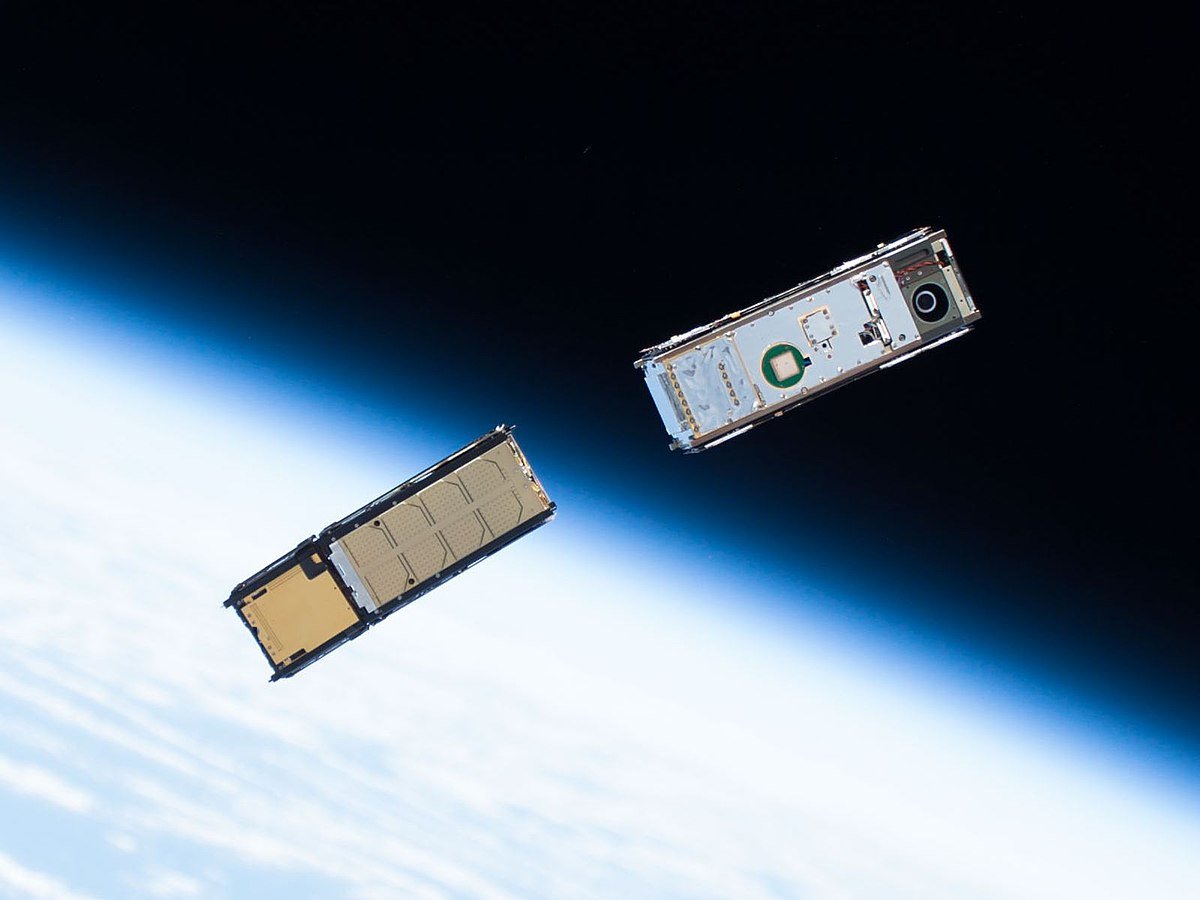
In the silence above the Earth, a 10cm cube unfurls its existence. Paper-thin membranes, folded intricately, expand to a size twenty-five times its nominal stowed size. OrigamiSat-2 is the name of this project that finds itself in the fifteen cargos of Japan’s newest tech demonstration mission. Apart from being an art project that transcends aerospace engineering, it might just change the future of communication satellites in space.
1. The Mission Framework
The Innovative Satellite Technology Demonstration No. 4, developed by the Japan Aerospace Exploration Agency, is a satellite technology mission that belongs to a set of programs that aim to speed up innovation in space technology through the testing of ideas that are submitted from academia and the industry. The Japan Aerospace Exploration Agency calls for proposals to evaluate innovatively, selecting innovating designs that will boost the nation’s space technology capabilities. The mission was launched with a total of sixteen experiments onboard, eight on the RAISE-4 satellite weighing 110kg and eight CubeSats.
2. The Core Experiments
The payloads of RAISE-4 include communication, propulsion, and sensing missions. LEOMI is demonstrating MIMO networking for satellite IoT system development. GEMINI is combining the civilian GPU with fast signal processing and the rapid deployment of software. KIR-X is utilizing water as the propellant, and another mission is evaluating the pulsed plasma thruster for SmallSat platforms. AIRIS is using AI for the detection of orbital bodies and will transmit limited data for enhanced performance through adaptive machine learning. All the missions will run for two months of prep and then thirteen months on orbit.
3. OrigamiSat?2: Folding for Function
The Deployable Array Antenna in the OrigamiSat-2 has a two-layer membrane that is folded utilizing origami design principles, resulting in a very compact design for launch purposes but expanding to a larger size after deployment, enabling the satellite to achieve high-performance communications within the volume restrictions of a CubeSat. As stated in the presentation by Lucille Baudet from Oxford Space Systems, “you can design antennas that you fold in a small compact volume for the launch phase, and then once the satellite is in orbit, it deploys and then creates larger structures.”
4. Engineering Trade-offs and Reliability
Deployable antennas require compromising between their RF and mechanical characteristics and size. Baudet observed that comparisons between the performance of flexible antennas and their rigid counterparts depend on the circumstances. Reliability is the key; unsuccessful deployment may ruin missions. Oxford Space Systems carries out risk reduction through design simplicity, employing proven materials and comprehensive testing in both mechanics and RF characteristics. The use of past flight-proven antennas used in current IoT constellations adds to their effectiveness.
5. WASEDA?SAT?ZERO?II: Debris?Free Design
Another innovative CubeSat is the WASEDA SAT ZERO-II satellite. This satellite uses a 3D printed structure with no screws or other mechanical components that can produce debris. This is a move in the right direction toward more sustainable space designs. Reduced space debris is a crucial component of space mission planning.
6. Advanced Materials for Deployables
Material innovation is the foundation of the performance of deployable systems. Oxford Space Systems has created a fine wire metal mesh made of tungsten that is highly reflective with low weight. The company built an internal knitting factory to manufacture the metal mesh. One could easily be taken aback by the fabric-like process being done in the aerospace industry. The type of materials is essential in the antennas that are exposed to radiation, as well as micrometeoroids.
7. Other Innovations in Cube
MAGNARO-II is validating the use of rotational separation for a chain of nanosatellites to create a constellation. The Mono-Nikko mission showcases a smart power management module that has the functionality to observe battery conditions even while in orbit. The PRELUDE mission has a hybrid sensor designed to observe precursors to earthquakes. Each of these CubeSats has a role to play in the overall advancement in nanosat technology.
8. Propulsion and Maneuvering Advances
Miniaturized propulsion solutions such as TDS-PPT and water-based KIR-X are critical for extending the mission life of CubeSats. These solutions address the future requirements of station-keeping, orbit maneuvers, and deorbiting at the end-of-life stages of satellites, adhering to debris mitigation rules.
9. Market Trajectory & Applications
The deployable antenna is finding its application in sectors such as IoT, as well as maritime tracking for AIS, where a fast constellation launch enables immediate data services. Baudet also pointed out that “commercial constellations represent 70% of the satellite that will be placed in orbit” over the course of this decade. Other areas, such as earth observation, telecommunication, and even 5G communications between satellites, could find useful applications based on deployable designs for scalable satellites beyond CubeSats. R&D on a new application for deployables is also underway for terrestrial defense and security purposes. JAXA’s changeover into the Space Technology Demonstration Acceleration Program (JAXA-STEPS) marks a clear commitment to continuing and enhancing this kind of innovation cycle. By incorporating origami design antennas, debris-free structures, AI sensing capability, and NextGen propulsion systems, it is clear that the mission’s payload experiments would be more of milestones on the road to creating a more agile and better-performing future for the field of space systems engineering.