

NASA Confirms First Martian Lightning Sparks with Perseverance
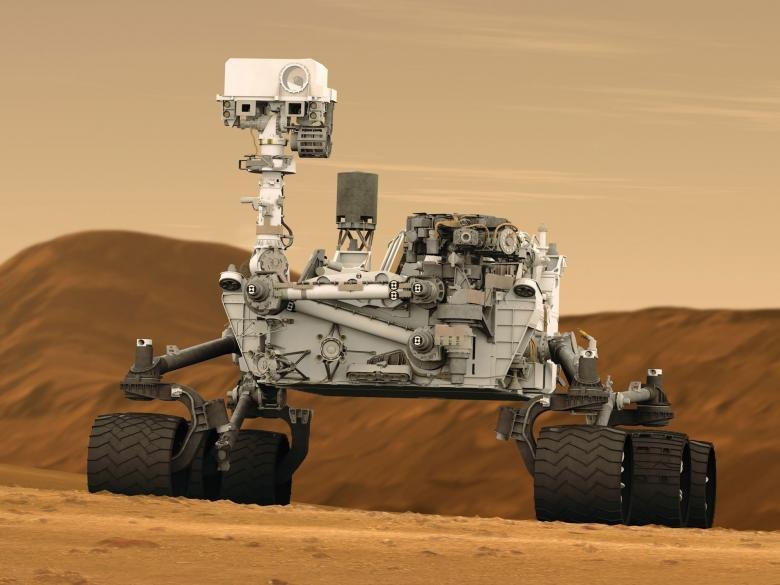
It is no longer a theory but a fact that sparks happen on Mars. For the first time in recorded history, NASA’s Perseverance rover has identified indisputable electromagnetic and acoustic signatures of electrical discharges in the thin Martian atmosphere-a find that recasts understanding of the planet’s weather, chemistry, and even its potential for life.
The SuperCam microphone on the Perseverance rover gathered 28 hours of sound and electromagnetic data over two Martian years-a fraction of mission time, but enough to unmask 55 discrete discharge events. Of those, seven carried the full profile of a Martian “lightning” strike: a sharp electronic blip from electromagnetic interference, followed by an 8 millisecond relaxation and capped with the faint sonic boom of heated air expanding-a miniature thunder clap in Jezero Crater.
These discharges weren’t towering bolts familiar on Earth: most carried just 0.1 to 150 nanojoules of energy, with one exceptional event reaching 40 millijoules–still far below the billion joules of a terrestrial cloud?to?ground strike. “It was a small spark, perhaps a few millimeters long, not really lightning. It sounded like a spark or whip?crack.” said planetary scientist Ralph Lorenz.
These sparks appeared under very particular conditions. A high dust load wasn’t enough; nearly all events coincided with the strongest winds recorded by Perseverance, often at the leading edges of dust storms. Sixteen discharges took place during encounters with dust devils-short-lived whirlwinds that whip fine grains into turbulent motion. Friction between the grains charges them through triboelectricity-a process akin to the static shock from touching a door handle on a dry day. In Mars’ carbon dioxide-rich, low-pressure atmosphere carbon dioxide?rich, low?pressure atmosphere, the breakdown voltage is far lower than it is on Earth, a fact that makes such discharges more likely.
In fact, laboratory work using a replica of SuperCam showed that the recordings on Mars matched the triboelectric discharges produced under controlled conditions. That is to say, electromagnetic interference coupled into the wiring loop of the microphone and created just the same overshoot and relaxation as in the rover data. Finally, the acoustic profiles were consistent with those coming from shock waves induced by laser blasts, reinforcing the fact that the recorded sounds were, in fact, real pressure waves from miniature arcs.
The implications do not stop at meteorology: it is well known that, on Earth, lightning drives the chemical reactions that form oxidizing agents and even prebiotic molecules. Similar processes on Mars could thus affect atmospheric composition and surface chemistry. This would give more credence to the hypothesis that electrical discharges enhance the efficiency of producing oxidants capable of destroying organic molecules and, therefore, the fast disappearance of methane detections by past missions. These events can yield nitric oxide, hydrogen cyanide, and ammonia-all compounds central to prebiotic chemistry models-in some associated spark discharge experiments with a CO?-rich atmosphere.
This finding is also a warning signal for planetary exploration: even small discharges can be a threat for sensitive electronics; thus, protection against electrostatic hazards needs to be considered both for future rovers and, eventually, crewed missions. These discharges represent a major discovery, with direct implications for Martian atmospheric chemistry, climate, habitability, and the future of robotic and human exploration, says lead author Baptiste Chide.
Mars now joins Earth, Jupiter, and Saturn as worlds with confirmed atmospheric electrical activity. Though the sparks are small, their scientific weight is immense. They open up a new investigative front into how dust, wind, and charge interact on the Red Planet-and how such fleeting flashes might have shaped its past and could influence its future.