

SpaceX Pushes Vandenberg to Historic Launch Pace
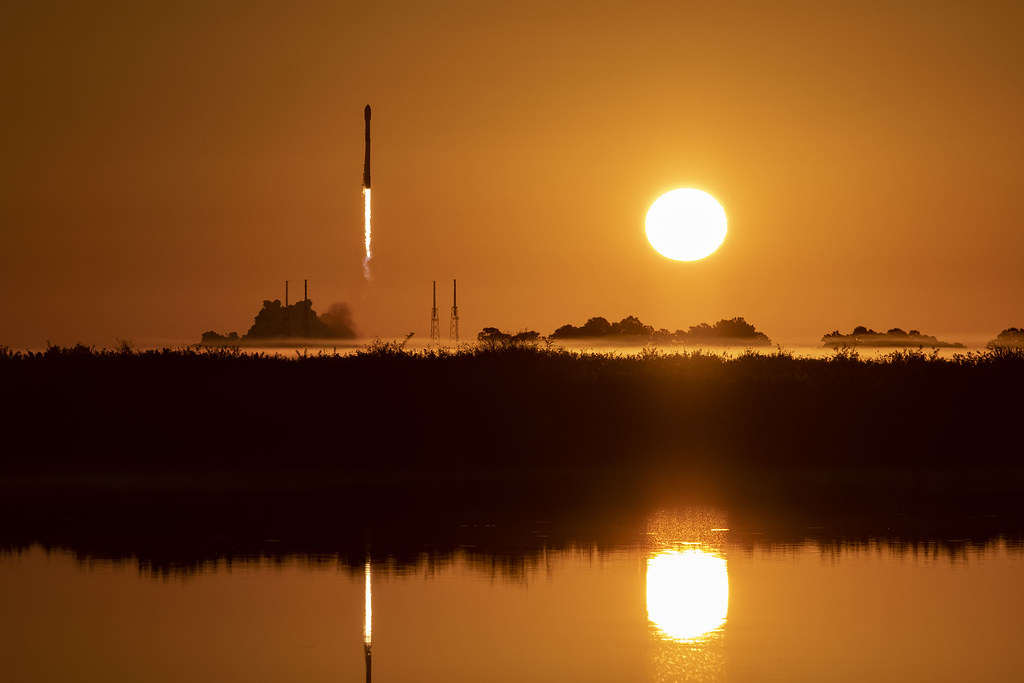
An early morning launch from California’s Vandenberg Space Force Base has set a new annual record for rocket flights from the site, underscoring the accelerating tempo of commercial and military space operations on the West Coast. At 7 a.m. Pacific Time on Friday, October 3, a SpaceX Falcon 9 lifted off from Launch Complex 4E, carrying 28 Starlink satellites into low-Earth orbit. The mission marked the 52nd launch from Vandenberg in 2025, surpassing any single-year total since the 1960s, according to Space Launch Delta 30, the unit responsible for managing the base’s launch activities.

The Falcon 9, a reusable two-stage rocket standing 70 meters tall, has become a workhorse for SpaceX’s satellite deployment strategy. Low-Earth orbit, typically between 160 and 2,000 kilometers in altitude, allows satellites to circle the planet in roughly 90 minutes, enabling rapid data relay and reduced latency for services like Starlink’s broadband network. While Starlink launches have become routine—often occurring once or twice weekly from Vandenberg—this flight carried symbolic weight as the one that pushed the base past its modern-era launch record.
Col. James Horne III, commander of Space Launch Delta 30, emphasized the strategic importance of maintaining such a high cadence. “The dedication of our personnel is unmatched, as is the need to continue to launch in support of our national security driven by the evolving threat environment in space and the need to stay ahead of adversaries,” Horne said. His remarks reflect the dual role Vandenberg plays in supporting both commercial ventures and sensitive national security payloads.
The record-breaking launch came just five days after another Falcon 9 mission matched 2024’s total of 51 launches. That earlier flight also deployed a batch of Starlink satellites, highlighting the dominant role SpaceX plays in Vandenberg’s operations. In 2023, SpaceX conducted only six launches from the base. By 2024, that number had jumped to 36, and in 2025, the Federal Aviation Administration authorized up to 50 Falcon 9 launches from the site. The company has already exceeded that limit through additional missions licensed under separate categories, reflecting the flexibility of regulatory frameworks when demand surges.
Vandenberg’s pace is not slowing. Horne indicated the base is on track for about 70 launches by year’s end, with proposals under consideration that could double SpaceX’s annual Falcon 9 flights from Vandenberg to 100 in future years. Such an expansion would require careful coordination of range scheduling, infrastructure capacity, and environmental considerations, but it would also position the base as one of the busiest spaceports in the world.
Beyond Starlink, SpaceX frequently launches reconnaissance satellites and other payloads for U.S. national security customers from Vandenberg. These missions demand precise orbital insertions, often into polar or sun-synchronous orbits that are best accessed from the base’s coastal location. “Slowing down would compromise the nation’s ability to meet these demands and jeopardize the nation’s strategic advantage,” Horne noted. “We are building the architecture of the future and making sure we’re prepared for what our adversaries might do next.”
Vandenberg’s history stretches back to 1941, when it was established as a military installation. Formerly known as Vandenberg Air Force Base, it transitioned to Space Force control in 2021. Its geographic position in Santa Barbara County allows rockets to launch southward over the Pacific, avoiding populated areas and enabling access to orbital paths that are difficult to reach from other U.S. sites. The base hosts a mix of civil, commercial, and military launches, supporting customers ranging from NASA to private aerospace firms.
The surge in activity at Vandenberg reflects broader trends in the space industry: the proliferation of small satellites, the rise of reusable launch vehicles, and the growing integration of commercial providers into national defense architectures. For engineers, students, and enthusiasts, the numbers tell a story of rapid scaling and operational maturity, with each launch representing a complex choreography of hardware, software, and human expertise.